
Russia ambassador death shocks Washington as veteran diplomat Alexander Darchiev passes
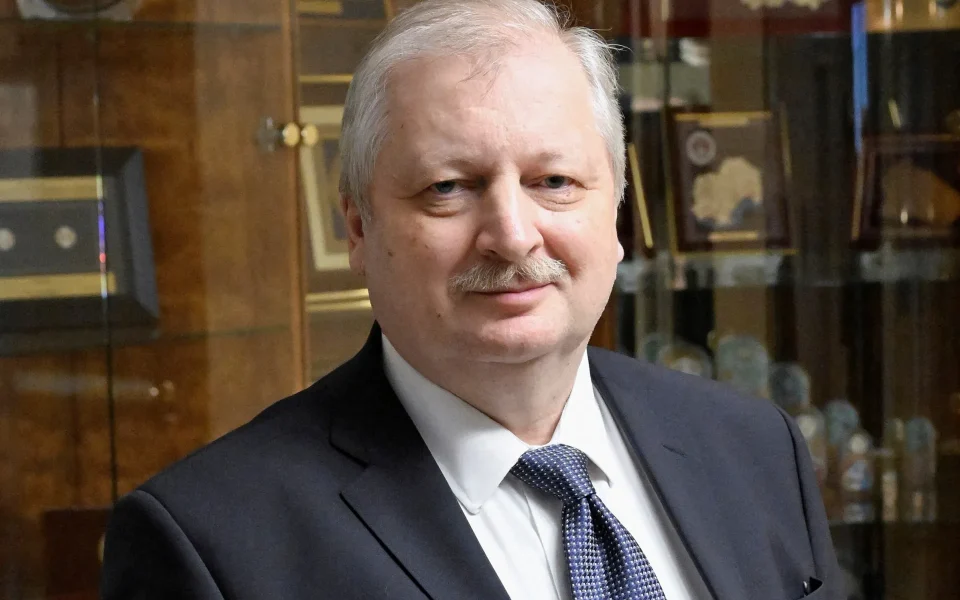
Alexander Darchiev’s sudden death on Wednesday has sent a ripple through diplomatic circles in Washington, confirming the russia ambassador death that the Russian Foreign Ministry announced earlier this week. The ministry said the 66‑year‑old envoy “passed away suddenly,” offering no further details about the circumstances. Darchiev had been serving as Russia’s ambassador to the United States for just a year and a half, having taken up the post in March after a period of heightened tension between Moscow and Washington. His death comes at a time when bilateral relations remain strained over the ongoing conflict in Ukraine.
The statement released by the Russian Foreign Ministry described Darchiev as an “outstanding diplomat, an experienced leader and a kind colleague,” emphasizing his work in “one of the most critical areas of Russian foreign policy.” As a specialist in Russia‑US relations, he had been tasked with navigating a complex diplomatic landscape that includes sanctions, arms control talks, and accusations of espionage. Colleagues noted his calm demeanor and deep knowledge of North‑American politics, traits that helped him manage routine consular matters while also handling high‑profile political dialogues.

Darchiev’s appointment in March followed the return of former President Donald Trump to the White House, a move that Moscow hoped might open new channels for dialogue. The timing also coincided with the broader context of Russia’s full‑scale invasion of Ukraine, which began in early 2022. In that same year, Darchiev publicly justified the military action as a “necessary measure,” aligning with Moscow’s official narrative. His tenure therefore spanned a period of intense scrutiny, with U.S. officials frequently accusing Russia of destabilising activities and cyber interference.
Born into a diplomatic family, Darchiev was the son of Nikita Ivanovich Darchiev, a minister‑counsellor at the Russian Embassy in Hungary. He entered the diplomatic corps in 1992, quickly rising to become first secretary and head of the North America department at Russia’s Foreign Ministry. His early career included a stint as adviser to the Russian Embassy in Washington in 1997, followed by a promotion to minister‑counsellor from 2005 to 2010. These roles gave him a front‑row seat to the evolving post‑Cold War relationship between the two powers, shaping his expertise in bilateral issues.
Between 2014 and 2021, Darchiev served as Russia’s ambassador to Canada, where he oversaw a period of both cooperation and tension, particularly around trade disputes and the Arctic. After returning to Moscow, he resumed leadership of the North America department, first as its director in 2010 and later resuming the role until the year before his Washington posting. His extensive experience in the region made him a logical choice for the Washington assignment, a role that required both diplomatic finesse and a deep understanding of policy nuances.
Reactions to the news have been measured. U.S. State Department officials declined to comment on the specifics of Darchiev’s death, emphasizing the need for “respectful silence” pending official notifications. Meanwhile, several foreign‑policy analysts noted that the vacancy could delay ongoing back‑channel communications, especially those related to prisoner exchanges and cease‑fire negotiations that have been mediated through various international forums. The Russian Foreign Ministry has not indicated any immediate plans to appoint a successor, leaving the embassy’s leadership temporarily in a state of transition.
In the broader scheme, the russia ambassador death highlights the personal risks that senior diplomats face, even when they are not directly involved in conflict zones. While the ministry has not disclosed the cause of death, the phrase “passed away suddenly” suggests an unexpected health event rather than an external incident. Such abrupt losses can test the resilience of diplomatic missions, which rely heavily on the personal relationships built by seasoned envoys. Staff at the Russian embassy in Washington are expected to maintain routine operations while awaiting instructions from Moscow.
Looking ahead, the Russian Foreign Ministry is expected to issue a formal notice to the United States regarding the vacancy and may nominate an interim chargé d’affaires to keep diplomatic channels open. The next steps will likely involve internal deliberations about a permanent replacement, a decision that could be influenced by the evolving geopolitical climate and the need for a steady hand in managing a fraught bilateral relationship. Until then, the embassy’s activities will continue under existing protocols, with senior diplomats and career officers handling day‑to‑day affairs.











Join the conversation