
CNG Bus Fire Leaves 17 Rescued, One Injured on Lagos‑Ibadan Expressway
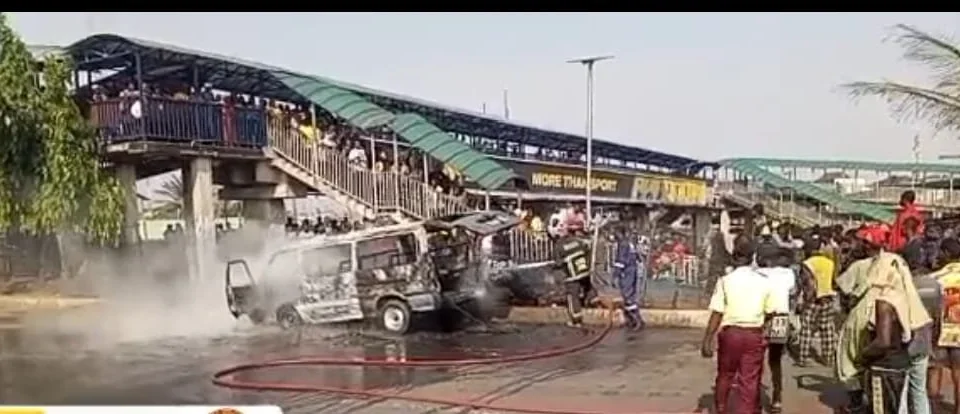
A CNG‑bus fire on the Lagos‑Ibadan expressway forced emergency crews to act quickly, rescuing 17 occupants and transporting a severely burned passenger to hospital. The incident occurred at Berger Bus Stop on the Lagos‑bound stretch of the highway, a busy corridor that links the commercial capital with the interior.
According to a statement released on Wednesday by Adebayo Taofiq, Director of Public Affairs and Enlightenment at the Lagos State Traffic Management Authority (LASTMA), the vehicle involved bore the registration EKY 798 YK. The bus was travelling from the Mowe‑Ibafo axis toward Lagos with a full complement of 18 people on board, including the driver. Witnesses said a sudden gas explosion ignited the interior, prompting panic among passengers and motorists who were already navigating the congested expressway.

LASTMA personnel arrived within minutes of the report. Their swift deployment allowed them to coordinate an orderly evacuation, pulling the driver and 16 other passengers out of the burning vehicle without sustaining any injuries. The only casualty, a male passenger seated in the rear of the bus, suffered severe burns. He was lifted from the scene and taken to the Lagos State Trauma and Emergency Centre at Toll Gate for urgent medical attention. Hospital officials have not disclosed the full extent of his injuries, but they confirmed that he is receiving intensive care.
Firefighters from the Lagos State Fire and Rescue Service also reached the location promptly. Their team managed to douse the flames before the fire could spread to nearby traffic or the surrounding vegetation, a factor that could have complicated rescue efforts. The presence of officers from the Ojodu Police Division helped maintain order, keeping on‑lookers and stranded motorists at a safe distance while the emergency teams worked. Police officers also directed traffic away from the incident site, preventing further congestion on the heavily travelled route.
General Manager of LASTMA, Olalekan Bakare‑Oki, praised the coordinated response. He highlighted the “rapid emergency response, inter‑agency collaboration and the deployment of adequately trained personnel” as decisive factors that limited the loss of life. Bakare‑Oki noted that the incident show the importance of regular safety checks on CNG‑powered vehicles. He urged commercial transport operators to prioritize professional inspections of gas storage and delivery systems and to adhere strictly to prescribed safety standards. “Operators must prioritise regular professional inspections and comply with safety regulations to prevent such tragedies,” he said.
The fire adds to ongoing concerns about the safety of compressed natural gas (CNG) as a fuel for public transport in Nigeria’s densely populated urban corridors. CNG has gained popularity because it burns cleaner than diesel and is cheaper to run, offering economic benefits for operators and lower emissions for city dwellers. However, the technology relies on high‑pressure cylinders and intricate plumbing that require diligent maintenance. Faulty installations, sub‑standard components, or lapses in inspection can turn a fuel advantage into a hazard, as illustrated by the recent explosion.
Lagos authorities have, in recent years, launched campaigns to tighten driver training and vehicle inspection regimes. These efforts aim to balance the environmental and cost advantages of CNG with the need for robust safety oversight. LASTMA’s statement reflects a broader policy thrust to enhance road safety through stricter enforcement and more frequent surprise inspections of commercial buses, especially those powered by alternative fuels.
While the injured passenger remains under treatment, the remaining 16 passengers were taken to nearby clinics for routine medical checks before being allowed to continue their journeys. No additional injuries were reported. LASTMA confirmed that it will continue to monitor the passenger’s recovery and provide support as needed.
In the aftermath of the fire, the authority reiterated its commitment to safeguarding commuters and ensuring the smooth flow of traffic across Lagos State. It announced plans to work closely with the Lagos State Fire and Rescue Service and the Nigeria Police Force to review emergency response protocols. The goal is to fine‑tune coordination among all stakeholders, ensuring that future incidents are handled with equal or greater efficiency.
Investigations are already underway to determine the precise cause of the gas explosion. Authorities have pledged a thorough inquiry and, if warranted, stricter enforcement of safety standards for CNG‑powered transport. The findings could lead to revised inspection checklists, tighter certification of gas cylinders, and possibly new training modules for drivers and mechanics handling CNG systems.
The Lagos‑Ibadan expressway is a critical artery that carries thousands of vehicles each day, linking Lagos to the interior states. Its high traffic volume makes rapid emergency interventions essential to prevent secondary accidents and minimize disruption. The successful rescue of 17 passengers and the prompt medical attention given to the injured individual illustrate the effectiveness of coordinated response mechanisms on such high‑traffic routes.
As investigations continue, commuters are advised to stay vigilant and report any irregularities observed in public transport vehicles. LASTMA officials indicated that patrols along major corridors will be intensified and surprise inspections of CNG‑fuelled buses will be increased. These steps are intended to deter non‑compliance and to reassure the public that safety remains a top priority on Lagos’s busiest highways.








Join the conversation