
US Iran peace talks gain momentum as domestic pressures mount
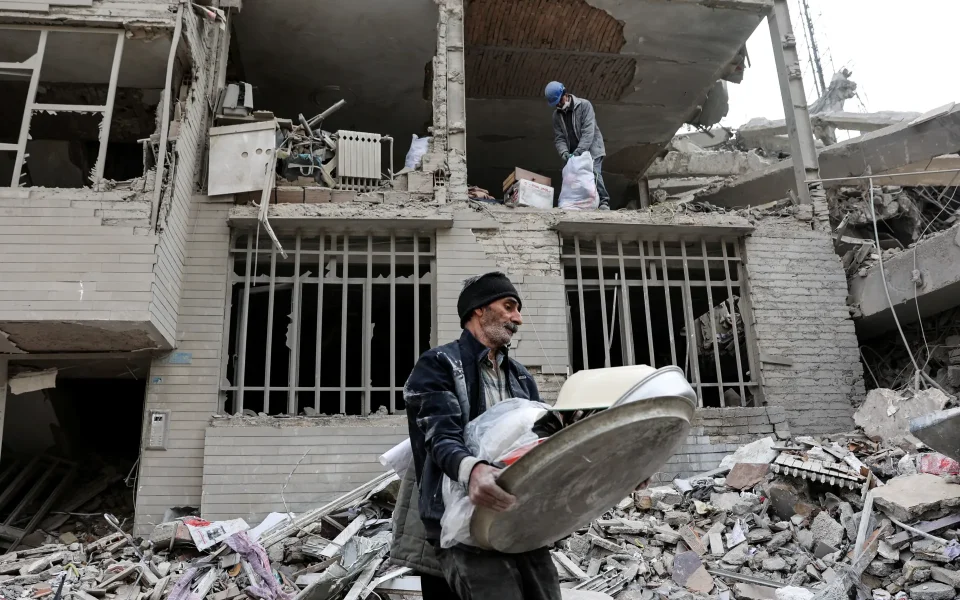
Us iran peace
US Iran peace negotiations see renewed hope amid U.S. election losses and regional diplomatic pushes, analysts say.

Diplomatic efforts to end the United States‑Israel war on Iran moved forward after President Donald Trump and Qatar’s Prime Minister Sheikh Mohammed bin Abdulrahman bin Jassim Al Thani met in the White House on Monday. Trump declared the conflict “effectively” at an end, while both leaders praised the closed‑door talks as a positive step toward a broader settlement. The meeting took place against a backdrop of mounting domestic pressure in Washington following the Republican defeat in the recent midterm elections, a factor that analysts say is reshaping the political calculus around further escalation.
Trump’s remarks highlighted the United States’ readiness to continue military operations if needed, describing the U.S. arsenal as “fully locked and loaded with the best equipment ever made.” Yet he added that the need to deploy that force appeared unlikely as negotiations with Tehran were “going very well.” Iranian Foreign Minister Abbas Araghchi echoed a diplomatic tone, saying the war would not conclude through military means or heightened sanctions, but only by “using the language of respect.” A day later, President Masoud Pezeshkian relayed that Supreme Leader Mojtaba Khamenei had hinted at openness to talks, urging the nation’s leadership to move beyond a “no war, no peace” stalemate. “We can hold talks with dignity and bring the matter to an end with dignity,” Pezeshkian told reporters.
Analysts point to the crushing Republican loss in the midterms as a catalyst for the renewed diplomatic push. Negar Mortazavi, senior non‑resident fellow at the Center for International Policy, argued that the defeat “dramatically raised the political cost of more escalation.” She noted that the Democratic surge, powered by progressive and anti‑war candidates, has given the party a stronger mandate to oppose continued hostilities. Mortazavi told Al Jazeera that the “Democratic blue tsunami” pushed the party toward a more united opposition to war, a sentiment echoed by House Minority Leader Hakeem Jeffries, who said Democrats will “end the war in Iran one way or the other.”
The political shift also manifested in congressional actions. Outgoing Republican lawmaker Thomas Massie moved to impeach Defense Secretary Pete Hegseth over the Iran conflict, setting the stage for a potentially explosive vote in the coming weeks. Mortazavi warned that a united Democratic front could make it increasingly difficult for Trump to sustain the war, pressuring him to accept a negotiated settlement before his political support erodes further.
Regional dynamics add another layer to the evolving picture. Israeli Prime Minister Benjamin Netanyahu, Trump’s main ally in the conflict, faces an uncertain future after the October 27 general election. Rival Gadi Eisenkot was tasked on Saturday with forming a coalition capable of surviving opposition from Netanyahu’s right‑wing bloc, casting doubt on Israel’s long‑term commitment to the war. Qatar’s intensive mediation, involving high‑level engagement with both Washington and Tehran, is seen as a vital diplomatic pathway. Mortazavi highlighted Qatar’s role as a third element that could bridge gaps, noting that a breakthrough could lower oil prices and ease inflation pressures for ordinary consumers.
Despite the optimism, Iranian leaders continue to stress a deterrent posture. Daily U.S. strikes against Iranian targets in the Strait of Hormuz and on Qeshm Island persist, prompting Tehran to down U.S. aircraft and tighten control over marine traffic. The USS Theodore Roosevelt carrier strike group, along with the 13th Marine Expeditionary Unit and its Makin Island Amphibious Ready Group, are slated to arrive in the Middle East later this month, underscoring the ongoing military dimension of the standoff.
Supreme National Security Council Secretary Mohsen Rezaei accused Washington of spreading “fake news” about negotiations and demanded that the United States accept Tehran’s seven conditions, including lifting the naval blockade and unfreezing Iranian assets. Hamidreza Azizi, senior Iran analyst at the International Crisis Group, warned that meeting those demands would entail a “huge cost” for the Trump administration. He argued that securing a diplomatic arrangement without any nuclear concessions would amount to an admission of defeat, a prospect the United States appears reluctant to accept.
Azizi suggested that Trump might resort to a largely symbolic strike on Iran’s nuclear facilities, referring to a “Pickaxe Mountain” site that the U.S. claims houses a deep‑underground nuclear installation. In a recent C‑SPAN interview, Trump hinted at such an operation, saying the United States may have to “hit Pickaxe Mountain.” He also labeled recent attacks on Qeshm Island as “minor strikes” targeting Iranian air defenses and launchers, framing them as limited actions designed to maintain pressure without triggering a larger conflagration.
The prospect of extending the naval blockade remains on the table, with Trump claiming on his Truth Social platform that Gulf states prefer maintaining the blockade over escalating the war, which he described as potentially “approximately five times bigger than the first hit.” Azizi cautioned that while a blockade might seem a lower‑cost option for the United States and its Gulf allies, it is unsustainable because Tehran views it as a continuation of the war. He noted that the Supreme Leader’s recent statements reinforce Iran’s resolve to treat the blockade as an act of aggression, and that Tehran’s rapidly advancing missile program could eventually threaten U.S. warships if the blockade persists.
The overall picture, according to Mortazavi, is that the political and strategic costs of further escalation are climbing, making another round of war less likely. “A diplomatic breakthrough is not guaranteed, but the political and strategic costs of escalation keep growing,” she said. “Ultimately, Trump will have to decide whether to accept a negotiated end to the war or prolong a conflict with diminishing political support.”
As the United States and Iran continue their high‑stakes negotiations, the next few weeks will likely determine whether the momentum translates into a concrete settlement or whether the conflict drifts back toward renewed hostilities. The outcome will hinge on domestic political calculations in Washington, the durability of Qatar’s mediation, and Tehran’s willingness to compromise on its core demands. The world watches closely, aware that any shift could reverberate through global energy markets and regional security arrangements.









Join the conversation