
India Eyes Role in Black Sea Food Corridor as War Drags On
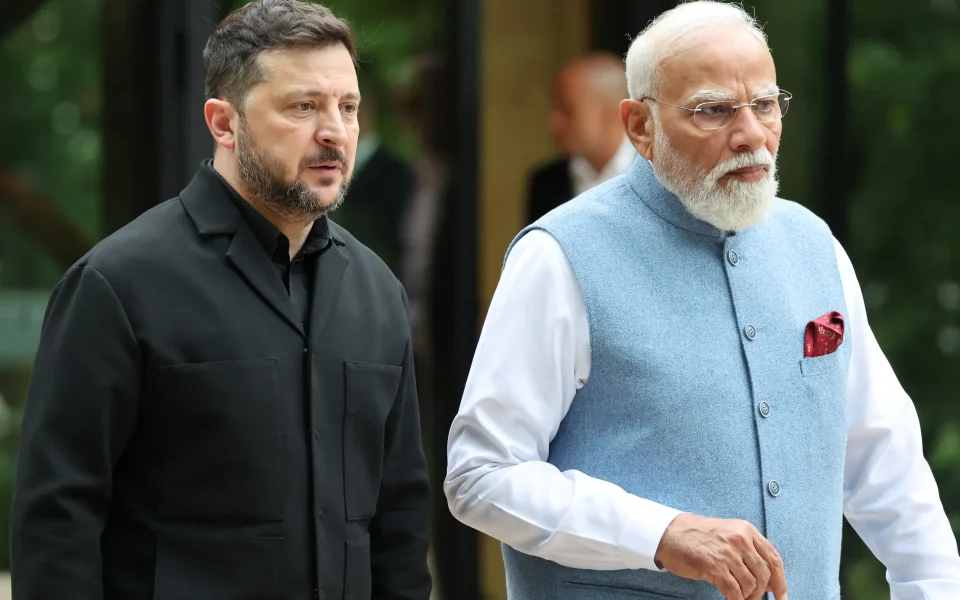
India’s prime minister Narendra Modi and Ukrainian President Volodymyr Zelenskyy spoke on Monday about a “black sea food” corridor, with the Ukrainian leader posting that India is ready to mediate food routes through the contested waters. The call came just hours before United States‑led talks in Abu Dhabi, where Russian and Ukrainian delegations resumed negotiations after a nine‑month break.
Modi did not name the corridor, but affirmed India’s commitment to contribute “in every possible way” toward a peaceful resolution. Shortly after, External Affairs Minister Subrahmanyam Jaishankar spoke with Russian Foreign Minister Sergey Lavrov, focusing on the war and ongoing diplomatic initiatives.

The idea of an Indian‑backed food corridor builds on proposals floated for weeks. During a September visit to Kyiv, Jaishankar raised the possibility of pausing strikes against Black Sea shipping and related energy infrastructure. By early October, Kyiv had received cease‑fire proposals from India, Turkey, Egypt and the United States. Ukrainian foreign minister Andrii Sybiha called India’s offer the broadest because it covered both the sea route and energy facilities, whereas the US plan only halted attacks on energy sites. Russia so far has rejected partial cease‑fires, demanding a comprehensive peace settlement.
For New Delhi, the push has concrete economic implications. On November 3 the Indian foreign ministry reported five Indian nationals killed and two missing after attacks on commercial vessels in the Black Sea. India also imports large volumes of sunflower oil from both Russia and Ukraine. A 20,000‑tonne Russian cargo bound for India was cancelled in October, and another 60,000 tonnes were delayed, contributing to a 7 percent drop in edible‑oil imports in September. “For India, this is a priority because it has caused fluctuations in grain prices,” said Maximilian Hess of the Foreign Policy Research Institute.
Analysts note that India’s unique position, maintaining working relationships with both Moscow and Kyiv, gives it leverage few other powers possess. “India’s strategic autonomy puts it in a position to push for peace because New Delhi is friends with both sides,” observed Ravi Joshi, a visiting fellow at the Observer Research Foundation. Yet Kyiv remains cautious, pointing to India’s continued purchases of Russian oil, which it has defended as unrelated to the war.
Logistical hurdles also loom large. The 2022 grain deal relied on Turkey’s control of the Bosphorus and a joint inspection centre in Istanbul; any new corridor would need ships, insurers and inspection mechanisms that India does not currently control. Moreover, the field is crowded: Turkey, Egypt and the United States have all tabled competing proposals, and the Kremlin says the Abu Dhabi talks are trilateral with Washington as the sole mediator.
The immediate outlook hinges on the Abu Dhabi talks slated for Tuesday and Wednesday. Russian and Ukrainian delegations remain stuck on territorial issues that analysts deem “impossible to negotiate” at this stage. With Russia facing domestic pressure and both sides continuing to target each other’s ports, a viable corridor will require both parties to halt attacks, a condition not yet met.
India’s interest in the corridor also reflects a broader diplomatic calculus. By offering to mediate, New Delhi hopes to enhance its global standing after a year in which it faced criticism for purchasing Russian oil. Senior India analyst Praveen Donthi of the International Crisis Group said that a successful mediation could add to India’s prestige and blunt unwarranted criticism. At the same time, India has demonstrated an ability to act impartially: it summoned Moscow’s charge d’affaires after a Russian strike killed ten people, including four Indian crew members, and later summoned Ukraine’s ambassador after an Indian seafarer was killed in a Ukrainian drone strike.
The practicalities of any “black sea food” corridor are complex. Shipping insurers have warned that vessels are not being adequately covered, and without guarantees of safety, many ship owners remain reluctant to sail through contested waters. Joshi noted that insurance remains a current challenge, and that any corridor would need a reliable mechanism to reassure insurers and cargo owners.
Beyond the immediate commercial stakes, the corridor touches on a larger humanitarian picture. Before Russia’s full‑scale invasion in 2022, roughly a third of the world’s grain exports passed through the Black Sea, with Ukraine supplying about a tenth of global wheat and 15 percent of maize. Disruption of those flows reverberates in import‑dependent nations across Africa and South Asia, where rising grain prices can quickly translate into food insecurity. The loss of the 2022 UN‑Turkey‑brokered grain deal earlier this year left a gap that New Delhi hopes to help fill.
India’s capacity to influence Moscow also stems from financial ties. A sizable amount of Russian money sits in the Indian financial system, and Moscow values access to Indian banks. Hess explained that Zelenskyy approached India because it could leverage that financial relationship to persuade Russia to ease its blockade of grain shipments.
Nonetheless, several obstacles could limit New Delhi’s role. First, India has not publicly confirmed a formal plan; Modi’s remarks were intentionally vague, leaving the exact nature of the offer unclear. Second, Kyiv remains wary of India’s neutrality, given ongoing oil purchases from Russia. Jaishankar defended those purchases as unrelated to the conflict, but the perception of bias could undermine confidence in New Delhi’s mediation. Third, India lacks a physical foothold in the Black Sea region. The previous grain deal depended on Turkish control of the Bosphorus and an inspection centre in Istanbul; replicating that framework would require partnerships that India alone cannot provide.
The diplomatic landscape is also crowded with rival proposals. Turkey, Egypt and the United States have each put forward their own ideas for a safe shipping corridor. The Kremlin’s statement that the Abu Dhabi talks are trilateral, with Washington as the sole mediator, signals that Moscow may prefer to work through a single channel rather than a multilateral Indian initiative.
What happens next will be shaped by the outcomes of the Abu Dhabi meeting. Russian and Ukrainian delegations are meeting on Tuesday and Wednesday, but talks are stuck on the issue of territory, something analysts describe as “impossible to negotiate” at this point. Hess added that Russia has yet to offer any concessions and has increased its own demands, suggesting that the current talks may serve more to influence the positioning of other countries than to produce a concrete deal.
If the negotiations produce a cease‑fire on both sides, the next step would be to secure insurance coverage, establish an inspection regime and coordinate shipping schedules, all tasks that would require cooperation from Turkey, the United Nations and possibly private insurers. Until such a framework is in place, India’s role will likely remain that of a diplomatic conduit, pressing both Moscow and Kyiv to keep channels of communication open while it gauges how far its leverage can be stretched.
The evolving situation means that India’s involvement will continue to be monitored closely, both by analysts assessing its strategic autonomy and by governments looking for any avenue to revive the flow of essential grain and oilseed supplies from the Black Sea.








Join the conversation