
Border Security Warnings Rise as Nigeria Prepares for 2027 Elections
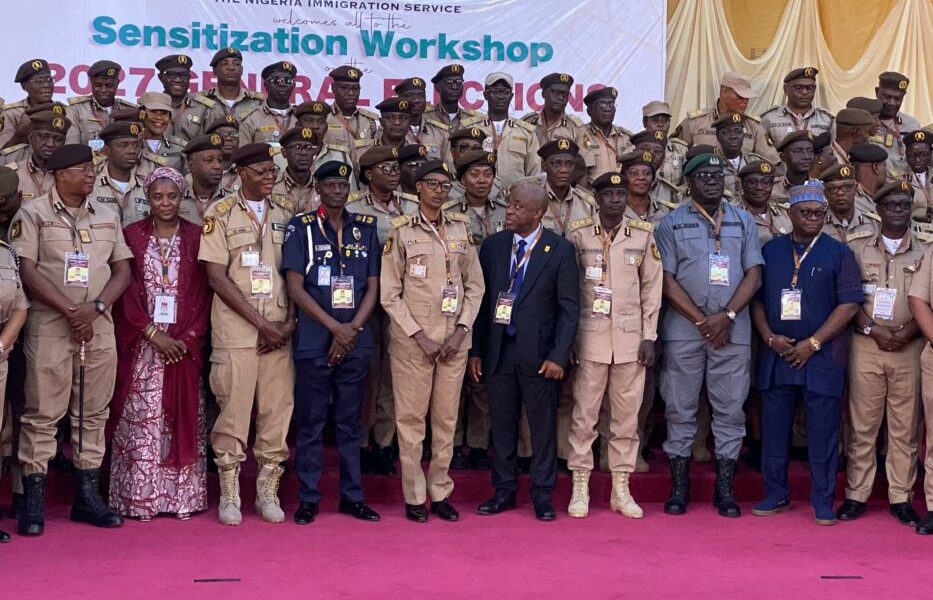
The Department of State Services (DSS) has issued a stark warning that Nigeria’s border security faces increasing pressure as the country moves toward the 2027 general elections. In a sensitisation workshop organised by the Nigeria Immigration Service (NIS), deputy director‑general of Operations and Intelligence, Patrick Ikenweiwe, warned that weak points along the nation’s frontiers could be abused to move illicit weapons, hired fighters and other criminal actors. He said such infiltration would threaten the credibility of the upcoming vote and called for a united response from all security agencies.
Ikenweiwe show the strategic role of the Immigration Service in the broader security architecture. Because the agency controls entry points and manages migration flows, its ability to detect and intercept illegal movements is critical during an electoral cycle. He noted that electoral periods often present opportunities for criminal networks to exploit porous borders, seeking to introduce weapons and personnel that could destabilise the process. In his remarks, he highlighted the need for timely intelligence sharing, joint threat assessments and coordinated field actions, especially along land borders that are traditionally harder to monitor than seaports or airports.

“No single agency can secure the electoral space alone. Our strength lies in absolute synergy,” Ikenweiwe said, emphasizing that the DSS is ready to deepen its partnership with the NIS. He promised that the intelligence arm of the DSS will provide prompt information to the Immigration Service, enabling rapid response to any suspicious activity. The deputy director‑general also praised the NIS’s Performance Evaluation and Results Management Information System, describing it as essential for accountability and measurable outcomes. He argued that effective supervision, clear performance metrics and documented results are vital for institutional efficiency, particularly when the stakes are high.
The workshop’s keynote address was delivered by Deputy Comptroller‑General Franca Nwanneka on behalf of the Comptroller‑General of Immigration. She described the immigration service as a strategic pillar within Nigeria’s security framework, tasked with monitoring irregular migration, human trafficking, smuggling and other transnational crimes that could threaten national stability. Her remarks stressed that the 2027 elections demand deliberate preparations and collective vigilance from all institutions entrusted with national security. She warned officers that political neutrality must be upheld at all times, insisting that official resources must never be used to favour any political side.
“Our success must demonstrate the highest standards of political neutrality, discipline and respect for the rule of law. Under no circumstances should our personnel use official resources to promote partisan interests,” she said. Nwanneka called on zonal coordinators, state comptrollers and senior officers to ensure that their commands are ready before, during and after the elections. She urged improved surveillance, intelligence gathering, effective deployment and coordination with relevant security agencies as key components of that readiness.
In addition to the DSS and NIS, representatives of the Nigeria Security and Civil Defence Corps (NSCDC) took part in the discussion. Assistant Commandant‑General David Idowu Ojelabi, speaking on behalf of Commandant‑General Prof. Ahmed Abubakar Audi, highlighted the importance of the Immigration Service’s duties beyond routine checks. He noted that the agency must identify suspicious cross‑border movements, provide migration‑related intelligence and support joint security operations throughout the election cycle. Ojelabi praised the NIS’s Performance Evaluation and Results Management Information System as a useful framework for setting institutional targets, monitoring performance, documenting results and identifying areas for improvement.
The NSCDC chief affirmed its commitment to partnership with the Immigration Service, offering assistance in protecting critical national assets, gathering community‑level intelligence and fostering peacebuilding efforts. He stressed that properly prepared security personnel, backed by effective supervision and accountability, would be better equipped to protect voters, electoral officials and sensitive election materials. The corps also highlighted the need for timely threat assessment, rapid response, lawful deployment and strict political neutrality among all security personnel involved in election security.
Both security chiefs pointed to the Inter‑Agency Consultative Committee on Election Security (ICCES) as the forum for coordinated action. They reminded participants that emerging security challenges are complex and require robust inter‑agency cooperation. By sharing intelligence, aligning operational plans and maintaining consistent supervision, the agencies aim to pre‑empt any attempt to undermine the democratic process through illicit arms flows or mercenary activity.
Nigeria’s electoral timetable adds urgency to these preparations. The 2027 polls are expected to be tightly contested, and past experiences have shown that election periods can attract opportunistic criminal elements seeking to profit from instability. Strengthening border surveillance and migration control measures is therefore seen as a preventive step, rather than a reactive one. While the DSS and its partners have not disclosed specific deployment numbers, they have indicated that assessments will guide the allocation of resources in the coming weeks.
The DSS’s commitment to deepening collaboration with the NIS includes establishing regular channels for intelligence exchange. Such channels are intended to flag any suspicious movements promptly, allowing immigration officers to intervene before weapons or mercenaries cross into the country. The emphasis on land borders reflects the reality that many of Nigeria’s neighboring states share porous frontiers, where informal crossings are common. By focusing on these points, the agencies hope to close gaps that could otherwise be exploited.
Senior immigration officials were also reminded to maintain the professional standards that earned them recent promotions. Ikenweiwe cautioned against complacency, noting that disciplined performance and continuous supervision are vital for effective border management. He urged newly promoted comptrollers and senior officers to sustain the qualities that led to their advancement, reinforcing that any lapse could open a pathway for illicit actors during a period of heightened electoral tension.
As the workshop concluded, participants were urged to translate the discussions into concrete actions. The next phase will involve regular updates to senior officials and continued monitoring of border activities. By documenting results and adjusting tactics as needed, the agencies aim to ensure that identified threats are addressed swiftly. The overarching goal, reiterated by both the DSS and the NSCDC, is to deliver a peaceful and credible election that reflects the will of the Nigerian people.
With the 2027 elections drawing nearer, the focus on border security remains a central component of Nigeria’s broader strategy to safeguard its democratic institutions. The coordinated effort among the DSS, NIS, NSCDC and other security bodies reflects a concerted attempt to anticipate and neutralise potential disruptions before they can affect the electoral environment.













Join the conversation