
Jesus de Miguel tribute: tears, chants and club pledge support
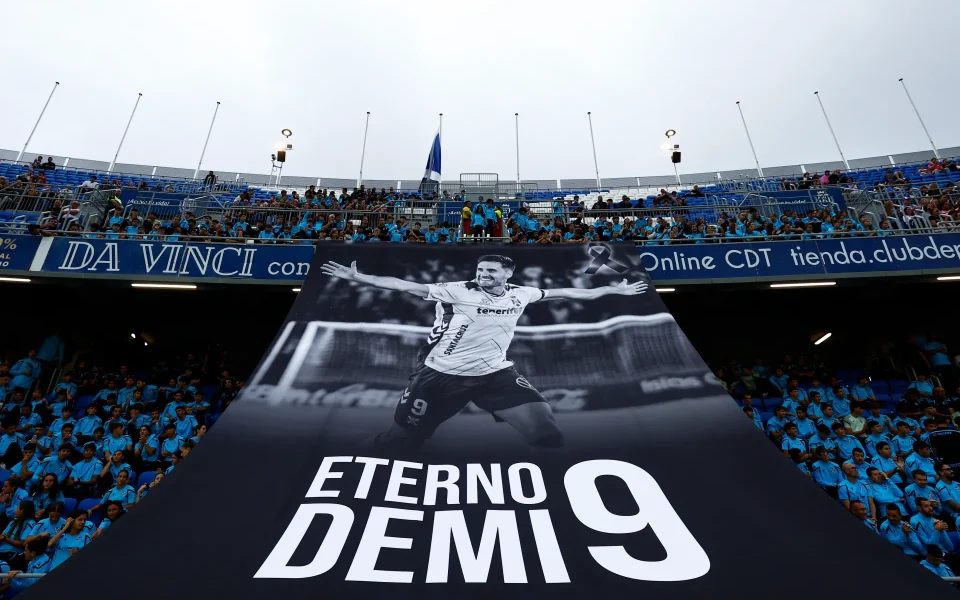
Jesus de Miguel’s memory dominated the Heliodoro Rodriguez Lopez stadium on Saturday as fans, teammates and club officials gathered to mourn the forward who died after a collision on the field five days earlier. The tribute, held in Santa Cruz, the capital of Tenerife, featured a floral bouquet on the spot where he fell, a black‑clad team, a banner reading “Eterno Demi 9,” and a chorus of supporters chanting his name. The club also announced financial assistance for his 18‑month‑old daughter, Carla, until she reaches adulthood, underscoring the personal loss felt by the community.
The ceremony began with a moment of silence that gave way to applause before the CD Tenerife centenary anthem resonated through the stadium. Captain Enric Gallego, visibly emotional, delivered the farewell address, recalling a teammate’s quiet generosity and struggling to speak of De Miguel in the past tense. “It’s still hard to believe that this has happened to us, Demi, you’ll always be one of us,” Gallego said, pausing to regain his composure. His words reflected the shock felt by players who had shared the pitch with the nine‑shirt forward only weeks before.

Family members, De Miguel’s parents, sister, wife and daughter, were welcomed by thundering applause, a gesture that blurred the usual rivalry lines across the islands. Even Ultra Naciente, a supporters’ group from rival club UD Las Palmas, placed a wreath on the grass before the service, signaling solidarity that extended beyond club loyalties. José Díaz Muros, president of Tenerife supporters’ group Peña Ibérica, told Al Jazeera that a player becomes part of daily life, making the loss feel intimate even for those who never met him. “When a player becomes part of your team, he also becomes part of your life,” he said.
De Miguel’s death was confirmed on Tuesday after he was taken to hospital following a collision with Andorra goalkeeper Jesús Owono during a second‑division match. The incident sparked a broader debate about how Spanish football authorities handle grieving periods requested by players. The Spanish players’ union, AFE, reported that footballers across categories voted unanimously for postponement, arguing they were not emotionally ready to compete. Yet the federation’s competition judge dismissed the request as inadmissible, noting that the decision lay with La Liga, which continued its schedule.
Three Segunda fixtures and a women’s match involving Costa Adeje Tenerife were postponed, but no blanket suspension occurred. AFE’s concerns remained largely unanswered as the season progressed. Football expert Albert Ortega told Al Jazeera that while grief was acknowledged through minutes of silence and commemorative shirts, the collective request for a pause was not fully met. Ortega warned that emotional wellbeing still carries less weight than institutional considerations, though he cautioned against attributing the outcome solely to commercial interests.
The tribute also highlighted procedural questions surrounding medical response and emergency protocols. Santa Cruz prosecutor José Luis Sánchez‑Jauregui told EFE that criminal proceedings over the collision appeared unlikely, distinguishing accidental injuries from deliberate aggression. Meanwhile, the Spanish federation’s disciplinary committee deferred a decision on goalkeeper Owono, though EFE reported a possible suspension of up to twelve matches. Ortega emphasized that effective safety depends on clear protocols and coordinated action, recommending independent reviews, regular drills and stadium capacity checks.
These concerns echo earlier incidents in lower‑division football. After the fatal injury of fifth‑division goalkeeper Raúl Ramírez in September, AFE highlighted the absence of doctors or ambulances on site despite a defibrillator being present. AFE president David Aganzo has renewed calls for medical professionals and ambulances across all national categories, arguing that player safety must be consistent from the top tier to the grassroots level. Ortega added that a bereavement procedure, agreed upon with players, should govern postponements, criteria and participation, with psychological support extending beyond the first week after a tragedy.
For De Miguel’s family, the club’s pledge to finance Carla’s upbringing until she turns eighteen offers a tangible measure of support amid the grief. Díaz Muros stressed that while suspending fixtures is complex, addressing players’ concerns should remain a priority. “Minutes of silence are important, but so is giving people space to grieve,” he said. The sentiment resonates with many who fear that once the media attention fades, the families left behind will continue to bear the loss alone.
The ceremony concluded with the Catholic prayer song “Ave María” echoing through the stadium, followed by a final round of applause. A monochrome image of De Miguel’s number nine hung above the pitch, frozen in celebration as tears streamed down the faces of teammates and supporters. As the crowd dispersed, the club’s promise to sustain Carla’s care and the ongoing discussion about player welfare indicate that the impact of this tragic day will extend far beyond the immediate moments of mourning.










Join the conversation