
NYSC Orientation Camps Urged to Expand Capacity to House 5,000 Corps Members
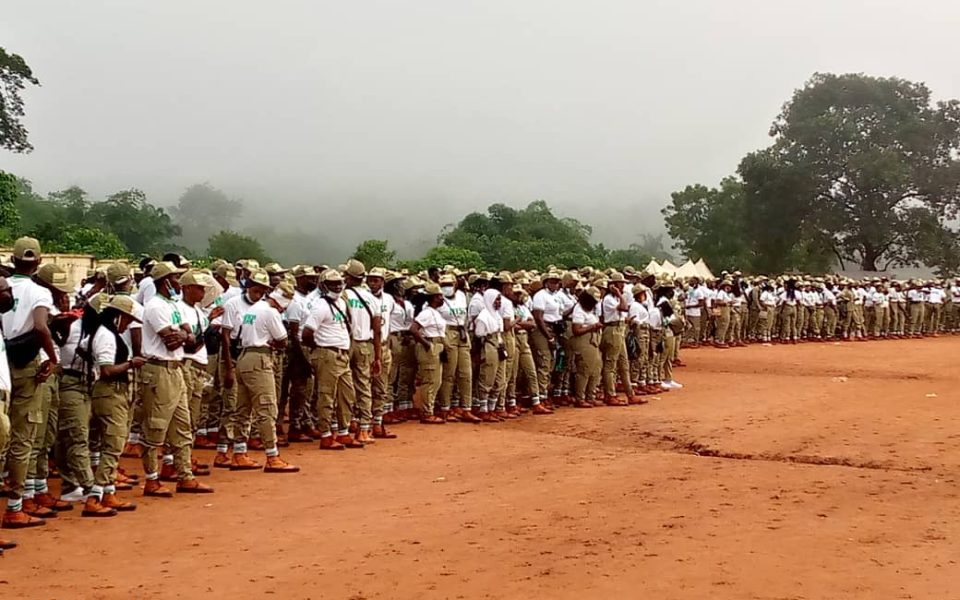
The Director‑General of the National Youth Service Corps, Brigadier General Olakunle Nafiu, used a gathering of corps members in Lagos to press for a rapid expansion of NYSC orientation camp capacity, insisting that each state‑run camp should be able to accommodate at least 5,000 corps members. Speaking to the 2026 Batch “C” Stream II participants at the temporary camp in Iyana Ipaja, he warned that the scheme’s surge in annual mobilisation, now reaching up to 450,000 graduates, is outstripping the accommodation built for a fraction of that number.
Nafiu’s remarks came in a formal statement signed by Director of Information and Public Relations Caroline Embu. He traced the shortfall to the explosive growth of tertiary institutions across Nigeria and the increasing number of Nigerians earning qualifications abroad. When the orientation camps were first constructed, the NYSC was handling roughly 100,000 graduates a year. Today, the figure is more than four times larger, a shift that places unprecedented pressure on the existing camp infrastructure.

In his address, Nafiu praised a handful of states that are already moving to close the gap. He singled out Adamawa, Gombe and Borno, noting that they are at advanced stages of delivering brand‑new orientation camps. In other parts of the country, existing facilities in Sokoto, Kwara, Enugu, Osun and several additional states are undergoing extensive renovations intended to create more conducive training environments for corps members. The director‑general’s call for a minimum capacity of 5,000 per camp is framed as a sustainable response to the “ever‑increasing population of prospective corps members,” according to the signed statement.
Lagos, the commercial hub where the speech took place, illustrates the logistical challenges that Nafiu described. The Lagos State Government is currently constructing a permanent NYSC camp designed to hold 10,000 corps members. Until that project is completed, the temporary orientation camp in Iyana Ipaja can only host 4,380 of the 11,155 corps members deployed to the state for the 2026 batch. Lagos State NYSC Coordinator Mrs Christiana Salmwang explained that the remaining corps members have been temporarily relocated to neighbouring states, including Ogun, Oyo, Edo, Kwara and Delta, to complete their orientation courses. She assured the audience that, after orientation, all displaced members will be posted back to various locations within Lagos State for their primary assignments.
Beyond the pressing need for more beds and barracks, Nafiu reminded the young graduates of the core ideals that underpin the NYSC. Established in 1973, the scheme was created to promote national unity and integration among Nigeria’s diverse peoples. The director‑general urged corps members to internalise these values from the outset of their service, emphasizing that the orientation period is the first opportunity to forge bonds across ethnic and regional lines.
He also highlighted the Skill Acquisition and Entrepreneurship Development (SAED) programme, a component of the NYSC that seeks to equip participants with practical vocational skills and entrepreneurial know‑how. While the programme has existed for several years, Nafiu encouraged the 2026 batch to take full advantage of its offerings, noting that self‑reliance and job creation are essential outcomes for a nation with a burgeoning youth population.
Security concerns were another focal point of his address. Nafiu cautioned corps members to remain vigilant and to avoid travelling alone. He reiterated a standard safety protocol: whenever a corps member must move away from the camp unaccompanied, they should inform the colleagues they share accommodation with, notify their Corps Liaison Officer (CLO) and share their location with fellow members as soon as they arrive at their destination. This advice mirrors longstanding NYSC guidelines that aim to protect young graduates, many of whom are unfamiliar with the environments in which they are posted.
The call for expanded orientation camp capacity arrives at a time when the NYSC is grappling with mounting pressure to accommodate an ever‑growing pool of graduates. The scheme’s mandate, which includes a three‑month orientation followed by a year of primary assignment, depends on a uniform training experience that can only be delivered when facilities are adequate. By urging states to enlarge camp sizes to a minimum of 5,000 corps members, Nafiu hopes to lay the groundwork for a more resilient service corps that can absorb future increases in graduate numbers without compromising the quality of training.
The construction of the permanent Lagos camp and the renovation projects across several states signal a coordinated response to the accommodation gap. While the new Lagos facility promises to double the current capacity once finished, the ongoing upgrades in Sokoto, Kwara, Enugu, Osun and other locations are expected to improve living conditions and training spaces for thousands of corps members in the near term.
As the 2026 batch moves through its orientation phase, attention now turns to the timely completion of these infrastructural upgrades. State governments have been asked to prioritise the expansion of existing camps and to fast‑track the delivery of new facilities, ensuring that every corps member enjoys a consistent orientation experience before embarking on primary assignments across the nation. The director‑general’s appeal show the broader objective of aligning the NYSC’s physical capacity with its expanding mandate, a task that will shape the scheme’s ability to serve Nigeria’s youth for years to come.














Join the conversation