
Tinubu campaign: Senators urge leaner rally team, focus on grassroots mobilisation
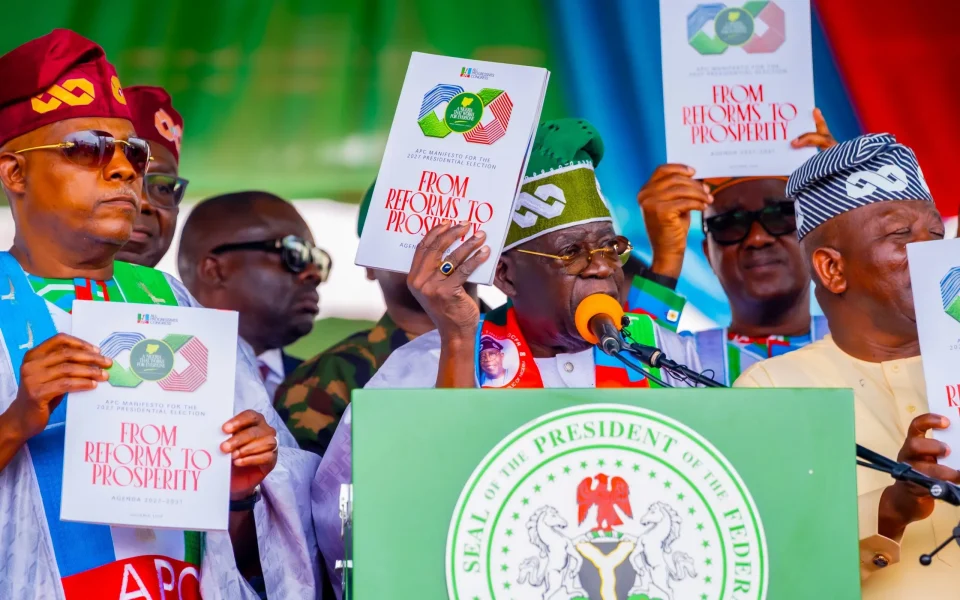
Senator Orji Uzor Kalu, who represents Abia North in the National Assembly, warned political leaders on Wednesday that the upcoming Tinubu campaign should be trimmed to a lean core. Speaking to journalists in Abakaliki, the capital of Ebonyi State, Kalu said the president should travel with a modest team while other APC figures return to their constituencies to rally support at the local level. The call came as the ruling All Progressives Congress prepares for a nationwide push ahead of the election.
Kalu, a former governor of Abia, argued that an oversized entourage adds little value to the president’s appearances. “The president should be allowed to attend campaign rallies without an unnecessarily large number of people following him in the campaign train,” he told reporters. He urged fellow leaders to concentrate on their wards, local governments and states, suggesting that a focused grassroots effort would deliver victory for the APC. In his view, a smaller presidential train would free up resources for more direct voter engagement.

Chief Abia Onyike, an APC chieftain and former Ebonyi Commissioner for Information and Orientation, echoed Kalu’s sentiment. Describing the practice of trailing political figures as unnecessary, Onyike called for leaders to present their manifestos and programmes independently. “Leaders should be seen standing independently to speak to the people and engage them in important conversations, selling their manifestoes and programmes,” he said, adding that the culture of moving about with rented crowds should be abandoned. He believes authentic interaction will boost credibility among voters.
Labour leader Mr Leo Nkah, a former president of the Nigerian Union of Local Government Employees in Ebonyi, also stressed the need for targeted mobilisation. Nkah warned that many politicians who accompany presidential candidates end up neglecting their own grassroots responsibilities. He observed that such behaviour often serves as a symbolic show of support rather than genuine voter outreach. “They want the president or governor, as the case may be, to see their presence as support; this is erroneous,” he noted, urging politicians to focus on their own spheres of influence.
The appeal fits within a broader APC strategy that seeks to solidify its base across Nigeria’s diverse regions. With the election calendar tightening, party officials are keen to maximise turnout in strongholds while also courting swing areas. Historically, the APC has relied on large motorcades and high‑profile rallies to showcase unity and project strength. Critics, however, argue that such logistics can drain campaign funds and distract from substantive policy discussions. By trimming the campaign train, the party hopes to allocate more resources to community meetings, town‑hall dialogues and door‑to‑door canvassing, tactics that traditionally yield higher voter conversion rates.
Supporters of the lean‑team approach contend that it will also reduce security costs and logistical burdens. Deploying a smaller convoy lowers the need for extensive police escorts and avoids the congestion that often accompanies large motorcades in densely populated towns. Moreover, a streamlined presence may allow the president to engage more intimately with local leaders, fostering a perception of accessibility that resonates with ordinary Nigerians. In many parts of the country, voters value personal interaction over spectacle, seeing it as a sign that a candidate respects their everyday concerns.
Opponents, however, caution that a reduced entourage could limit the visibility of the president’s message in remote areas where media penetration is low. They argue that the presence of a sizable delegation signals political strength and can energise supporters who rely on the spectacle of large rallies. In regions with limited electricity or internet access, the visual impact of a big motorcade often serves as the primary channel for political communication. Balancing these perspectives will be a key task for the APC’s campaign planners as they calibrate the scale of events in the weeks leading up to the vote.
The debate also touches on internal party dynamics. Senior figures such as Kalu, who commands considerable influence in the Southeast, use the platform to shape how the party allocates its limited resources. Their push for a grassroots‑first approach reflects a desire to empower local structures that have historically been the engine of electoral success for the APC. At the same time, the party’s national executives must reconcile these calls with the expectations of senior allies who view large rallies as essential to maintaining national cohesion.
Logistical considerations are far from trivial. A typical presidential motorcade can stretch for kilometres, requiring coordination with multiple security agencies, traffic management authorities and local officials. Reducing the size of the convoy could free up police and army personnel for other duties, such as protecting polling stations and preventing intimidation on election day. It may also alleviate the strain on local infrastructure, where narrow streets and inadequate parking often become bottlenecks during high‑profile visits.
Beyond security and finance, the shift to a leaner campaign could influence the narrative presented to voters. By appearing without a massive entourage, President Bola Tinubu may be able to project humility and a focus on direct service, themes that opposition parties frequently use to criticize the incumbent administration. Such an image aligns with a growing public appetite for leaders who are seen as approachable and attuned to grassroots concerns.
The next steps involve the party’s national executives convening to finalize the itinerary for the Tinubu campaign trail. According to insiders, decisions on convoy size, security arrangements and local stakeholder engagement will be taken within the coming days. Observers will be watching closely to see whether the recommendations of Kalu, Onyike and Nkah are incorporated into the final rollout, potentially reshaping how the APC conducts its final push for the upcoming election.








Join the conversation