
Makinde presidential run sparks heated debate over Nigeria’s economic future
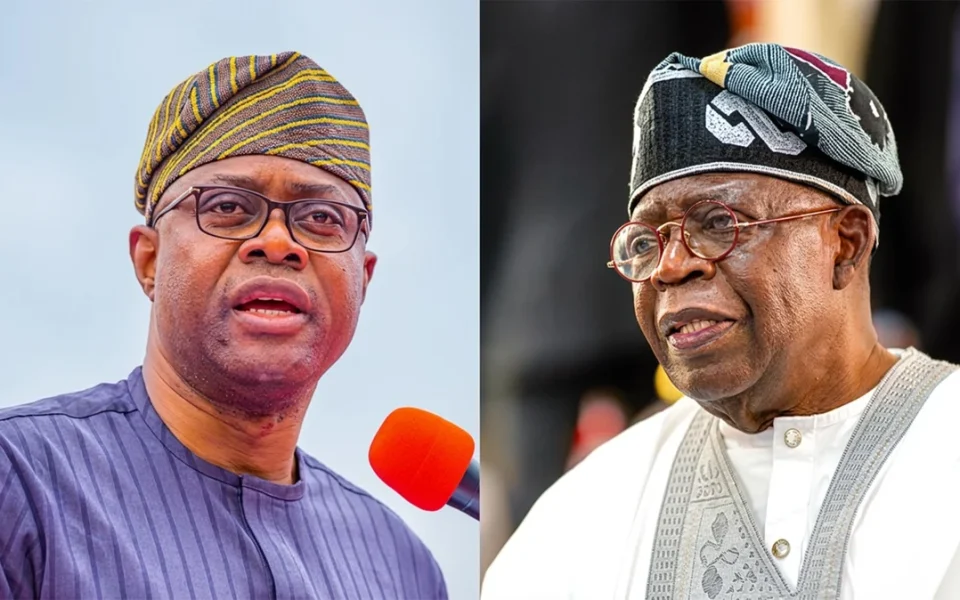
Seyi Makinde, the governor of Oyo State, declared on 14 May 2026 that his “Makinde presidential run” will directly challenge President Bola Ahmed Tinubu in the upcoming 2027 presidential election. The announcement, made during a press conference in Ibadan, was framed as a response to what he described as a deteriorating economic trajectory, shrinking opportunities for young Nigerians and perceived shortcomings in the current administration’s approach to governance. Makinde insisted that his decision was not motivated by personal rivalry or a quest for power, but by a conviction that Nigeria needs a decisive change of direction to secure a better future for its citizens.
When he first endorsed Tinubu in the 2023 poll, Makinde said his support rested on the expectation that the president would build a government of national unity capable of tackling deep‑seated macro‑economic challenges. He cited Tinubu’s political experience and the promise of a coalition that could bridge regional divides as reasons for his backing. Over the three years since Tinubu assumed office, however, Makinde told reporters that he “no longer believed the Tinubu administration was leading the country towards the future I had envisaged.” He pointed to persistent unemployment, rising business costs and the absence of tangible improvement in living standards as evidence that the promised economic stabilisation has not translated into real benefits for ordinary Nigerians.

Makinde’s own life story, he argued, illustrates the possibilities that a supportive environment can create. Born into a lower‑middle‑class family, his father a teacher who later retrained as an accountant and his mother a civil servant and telephone operator, he attended Bishop Phillips Academy in Ibadan before studying electrical engineering at the University of Lagos. After gaining expertise in industrial measurement and safety systems, he founded Makon Engineering and Technical Services at the age of 29, eventually expanding the firm’s operations beyond Nigeria’s borders. “I did not achieve this because I came from a wealthy or politically connected family. I had an education, acquired useful skills, found opportunities and worked to make the most of them,” he said, adding that the current climate threatens the chances of many aspiring youths.
The governor warned that recent federal reforms, especially the abrupt removal of the petrol subsidy, were rolled out without adequate preparation for vulnerable groups. He recalled President Tinubu’s own opposition to the 2012 subsidy removal and argued that a more coordinated approach, such as convening the National Economic Council immediately after taking office, could have mitigated the hardship that followed. In Oyo State, Makinde described his response as a model: within 11 days of the subsidy cut, his administration deployed additional Omituntun buses, retained existing fares and offered half‑price travel for students and seniors. He also launched the Sustainable Actions for Economic Recovery (SAfER) programme, which provides food relief to 200,000 vulnerable households, extends loans and agricultural inputs to small businesses and farmers, and subsidises public transportation. “Our approach was simple: provide immediate relief while developing measures to help people earn a living,” he said.
Makinde’s “Reset Nigeria Agenda” forms the backbone of his presidential platform. He urges voters to scrutinise his record, examine the policies he implemented in Oyo, and assess whether his proposals can deliver measurable progress. Emphasising transparency, he pledged to outline clear timelines, funding mechanisms and performance indicators for each initiative. The agenda covers four broad pillars: reviving productive private sector activity, strengthening national institutions, ensuring inclusive social protection, and fostering a unified political environment that can hold leaders accountable.
In addition to policy details, Makinde announced a self‑imposed limit of one four‑year term should he win the presidency. He framed this commitment as part of a “transitional government of national unity” designed to deliver concrete results without the temptation of prolonged incumbency. “I have committed to serving one four‑year term as President, leading a transitional government of national unity focused on measurable progress,” he said, adding that four years would be sufficient to demonstrate that a different approach to governance could produce better outcomes for the country.
The governor also highlighted the weakening of opposition parties under the current administration, arguing that a robust opposition is essential for democratic accountability and national development. He contended that Tinubu’s political alliances appear to serve personal ambitions more than the broader interests of the nation, a claim that show his belief that the president’s focus on political power has come at the expense of national unity.
Makinde’s critique of the federal government extends to its handling of macro‑economic indicators. While acknowledging that revenues and external reserves have risen under Tinubu, he warned that such gains mean little to ordinary Nigerians if they do not translate into productive businesses, jobs, higher incomes and improved living conditions. “Government revenues and external reserves mean little to ordinary Nigerians if those gains do not translate into productive businesses, jobs, better incomes and improved living conditions,” he said. He argued that economic stabilisation and development should not be treated as separate stages that force citizens to endure prolonged hardship before seeing benefits.
Beyond the economy, Makinde accused the Tinubu administration of repeatedly attributing the country’s challenges to inherited problems rather than demonstrating measurable progress. “Every government inherits problems, but it is elected to solve them. Over three years into this administration, we are still hearing explanations about inherited poverty, insecurity, electricity problems and other challenges, when Nigerians should be seeing more measurable progress towards resolving them,” he said. This criticism reflects his broader concern that the federal government’s response to systemic issues has been reactive rather than proactive.
The governor’s decision to run for president also stems from his personal journey into politics. After several unsuccessful attempts to secure elective office between 2007 and 2015, including two senatorial races and an earlier bid for the Oyo governorship, he finally won the governorship in 2019. He entered office without a political godfather, often noting that he had “only God the Father” guiding his path. This narrative reinforces his claim that effective governance can be achieved through institutional development, deliberate policies and a commitment to public service, rather than reliance on patronage networks.
Addressing the urgency of his candidacy, Makinde said Nigeria cannot afford another four years of what he described as an unfavourable economic and governance trajectory. Some advisers have suggested he postpone his presidential ambition until 2031 or even 2035, but Makinde argues that the country’s prolonged economic difficulties, rising business costs, unemployment and waning public confidence demand immediate intervention. “When I declared my intention to run for President on 14 May 2026, some people asked why I was in such a hurry. They said I could wait until 2031 or even 2035. But I look at the Nigeria we have today, and I wonder what opportunities will remain for our children if we continue on this trajectory for another four years,” he said.
In calling on Nigerians not to lose faith in the democratic process, Makinde appealed to those disillusioned by successive governments. He urged citizens to participate in the 2027 election, to ask questions and to evaluate his agenda rather than accept untested promises. “The Nigeria that gave me the opportunity to live my dreams should not become a country where our children can no longer dream,” he said, concluding that his candidacy is meant to “reset Nigeria and build a country that works for every Nigerian.”
The next procedural step for the Makinde presidential run will be the formal filing of his candidacy with the Independent National Electoral Commission. That process is expected to begin in the coming weeks as the election timeline tightens, setting the stage for a contest that could reshape Nigeria’s political and economic landscape.









Join the conversation