Far‑right gestures spark violence at Marseille Europa League match
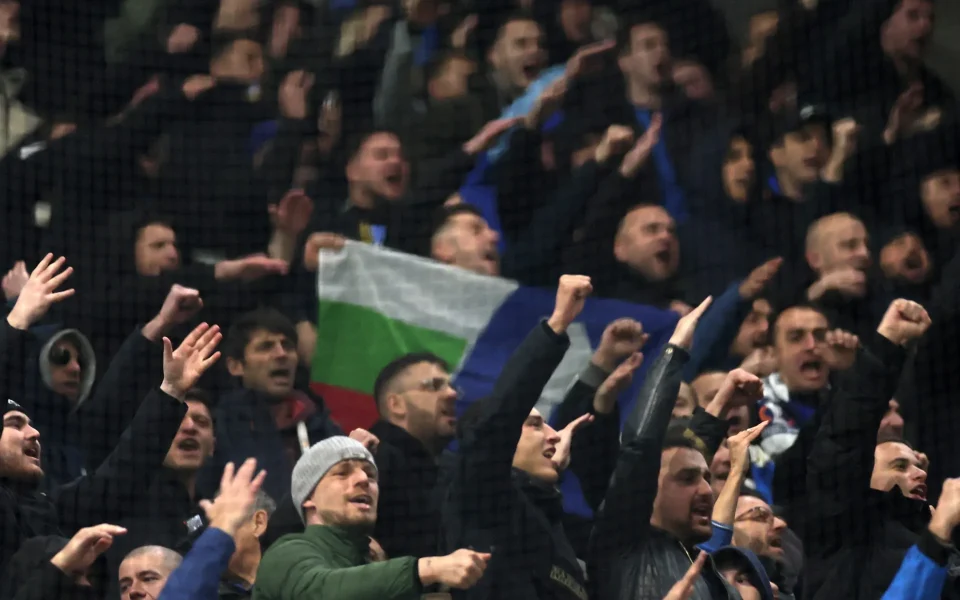
The evening of 27 November 2026 saw violent clashes erupt at the Stade Vélodrome in Marseille during a UEFA Europa League tie between French side Olympique de Marseille and Bulgaria’s Levski Sofia. The brawl began after a supporter in the visitors’ section appeared to give a Nazi‑style salute, prompting masked fans to brandish metal pipes, batons and flares. Eleven Bulgarian fans were injured, five of whom required hospital treatment, according to Marseille police. The incident quickly drew condemnation from the heads of state in France and Bulgaria, who called the aggression unacceptable in a civilised Europe.
Bulgarian Prime Minister Rumen Radev confirmed that he had spoken with French President Emmanuel Macron by phone, both leaders denouncing the assault on Levski supporters. Radev posted on Facebook that aggression and violence “have no place in civilized Europe” and thanked Macron for the medical care provided to the injured and for the measures taken to protect Bulgarian citizens. He also urged that the perpetrators be held accountable. Macron echoed the sentiment, stating that the acts of violence targeting Bulgarian fans were condemned “with the utmost force” and that such behaviour would not go unpunished. The French interior minister, Laurent Nunez, added that “violence, racial hatred and provocation have no place in our stadiums.”

In the aftermath, a protest was organised outside the French embassy in Sofia, reflecting the anger among Bulgarian fans and officials. French lawmaker Manuel Bompard, a member of the hard‑left France Unbowed (LFI) party, reacted to video footage that appeared to show a Levski fan performing a Nazi salute. Writing on the social platform X, Bompard praised Marseille supporters for responding with an anti‑fascist chant and declared that “the far‑right has no place in our stadiums.”
Levski Sofia, which lost the match 1‑0, described the incident as a coordinated attack by masked assailants who hurled batons and set off flares. Some of the aggressors attempted to breach the netted fence that separates sections of the stadium, while security staff struggled to contain the chaos. In the hours preceding the game, French authorities had already reduced the number of tickets allocated to Levski fans by seven‑fold and imposed stricter movement restrictions around the venue in an effort to mitigate the risk of disorder. The Bulgarian Ministry of Foreign Affairs announced it would seek a thorough investigation, while Marseille authorities pledged to conduct their own analysis in close cooperation with law‑enforcement agencies.
UEFA, the governing body of European football, confirmed that its disciplinary committee would review the match reports before deciding on any further action. The organisation has previously imposed sanctions on clubs whose supporters engage in extremist symbolism or violent conduct, ranging from fines to partial stadium bans. The current incident adds to a growing list of recent flare‑ups across the continent, prompting officials to reconsider the adequacy of existing security protocols.
The violence was not confined to France. In the Georgian coastal city of Batumi, a Europa League fixture between Turkey’s Beşiktaş and Israel’s Hapoel Be’er Sheva also descended into disorder. The match, which had been relocated from Istanbul for safety reasons, was suspended in the 26th minute after clashes erupted in the stands. Referee Morten Krogh halted play for a thirty‑minute interval before the game resumed. Georgian police entered the terraces and used pepper spray, according to Turkish outlet NTV, while television footage showed a fan being carried out on a stretcher. Beşiktaş later condemned what it described as “disproportionate force” by security personnel and claimed that several of its supporters were denied entry. The Turkish club nonetheless secured a 2‑1 victory.
The broader political context adds another layer to the unrest. The Turkish Football Federation chair Ibrahim Haciosmanoglu defended the decision to keep Israeli clubs out of Turkey, a stance taken after Israel’s 2023 invasion of Gaza and the subsequent Hamas‑led attacks on southern Israel. While the match in Batumi did not involve Israeli clubs directly, the tensions surrounding the conflict have spilled over into the football arena, influencing fan behaviour and security arrangements.
Incidents such as those in Marseille and Batumi show the challenges European football faces in curbing extremist symbolism and fan violence. Stadiums have traditionally been sites of passionate support, yet the rise of far‑right gestures and the willingness of some supporters to resort to weapons threaten the safety of spectators and the reputation of the sport. French authorities’ decision to limit ticket allocations for foreign fans, combined with heightened police presence, reflects an attempt to pre‑empt further clashes, but critics argue that such measures may not address the underlying ideological motivations.
For the injured Bulgarian fans, medical care was promptly provided by French emergency services, and the French government has assured that they will receive any further assistance required. Legal proceedings against the individuals identified in the footage are expected to follow, although no arrests have been announced at the time of writing. UEFA’s disciplinary panel is set to meet in the coming weeks to evaluate whether sanctions, including fines or stadium bans, will be imposed on Marseille.
In the meantime, both clubs have pledged to cooperate with authorities. Marseille’s management said it would conduct an internal review and work closely with law‑enforcement to identify those responsible. Levski Sofia has called for stronger protective measures for its supporters in future European fixtures, emphasizing that fan safety must be a priority for UEFA and host nations alike. As the investigations unfold, the football community watches closely, aware that the handling of these incidents could shape policy on fan conduct across the continent.






Join the conversation