
Britain rejoin EU urged by Labour leader Andy Burnham
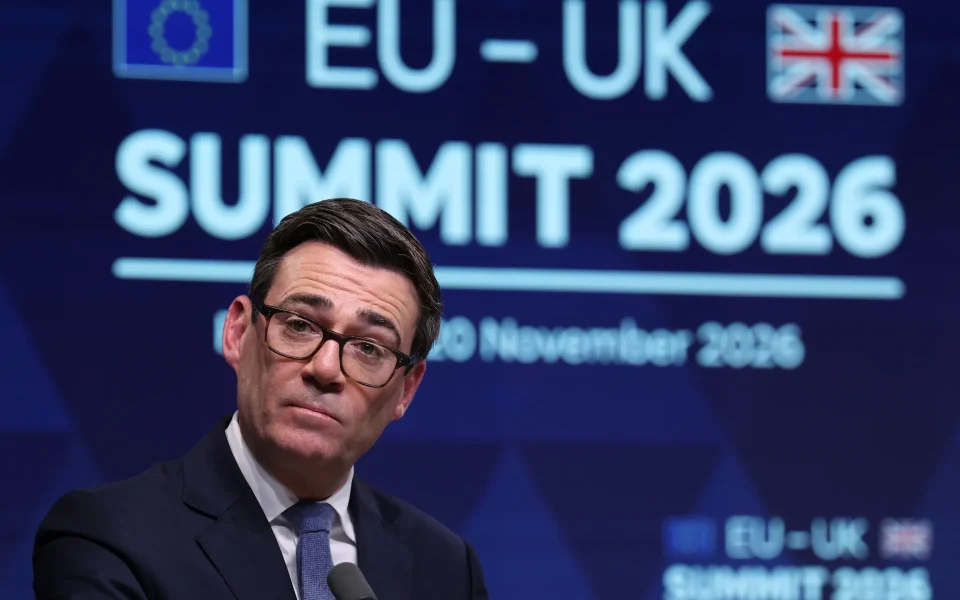
Andy Burnham, the leader of the Labour Party, has reignited the conversation about Britain rejoin eu, stating that the Brexit experiment “has not worked” and that he would like to see the United Kingdom return to the European Union before he leaves the political stage. Speaking at a press conference in Manchester on 25 November 2026, Burnham emphasized that any such move would not happen under the current parliament and that the Labour Party would stick to its established positions on the single market, the customs union and the principle of free movement. His remarks have drawn sharp criticism from opponents who argue that he lacks a democratic mandate to reopen a debate that many voters consider settled.
Burnham’s declaration came at a time when the UK government is grappling with ongoing trade frictions and supply chain disruptions that have persisted since the 2020 departure from the EU. By positioning the issue as a matter for future voters, the Labour leader sidestepped immediate parliamentary battles and placed the onus on the electorate to decide whether a reversal of Brexit is desirable. He reiterated that Labour’s “red lines” on core EU arrangements would remain non‑negotiable, meaning any future accession would have to respect the party’s stance on a deeper integration with the single market and an open borders policy for workers.

Critics quickly responded, suggesting that Burnham is overstepping his authority. Opposition figures noted that the 2016 referendum result, which saw a narrow majority vote to leave, still stands as the country’s guiding decision, and that only a new national vote could legitimize a reversal. Political analysts pointed out that the Labour Party’s internal rules require a clear mandate before embarking on such a constitutional shift, a condition Burnham has not met according to their assessments. Some commentators warned that the proposal could further polarise an electorate already divided over the economic consequences of Brexit.
The reaction from European partners has been cautiously optimistic. Officials in Brussels noted that recent developments, including the imposition of tariffs by the United States under President Donald Trump, have highlighted the benefits of closer UK‑EU cooperation. They argued that both sides stand to gain from reduced trade barriers and coordinated policy approaches, especially as trans‑Atlantic tensions rise. While the EU has not formally responded to Burnham’s comments, diplomats indicated that a UK return to the bloc would ease many of the friction points that have emerged in the post‑Brexit trade landscape.
President Trump’s role in the debate adds another layer of complexity. In 2016, Trump publicly welcomed the Brexit vote, seeing it as a blow to the EU’s cohesion. However, his administration’s later decision to impose tariffs on certain British goods has inadvertently pushed the UK and the EU closer together, as both seek to mitigate the impact of American trade measures. Observers note that the shifting U.S. stance show how external pressures can reshape domestic political calculations, making a reconsideration of the UK’s EU relationship more plausible than before.
Within the Labour Party, there is a mixture of support and caution. Some senior members have praised Burnham for confronting what they describe as a “failed experiment,” arguing that the country’s long‑term prosperity depends on re‑engaging with European markets. Others, however, worry that pushing for re‑entry could alienate voters in constituencies that strongly backed the original leave vote, potentially jeopardising Labour’s electoral prospects in the next general election. The internal debate reflects a broader national conversation about identity, sovereignty and economic pragmatism that has been ongoing since the referendum.
The public’s response appears divided. Recent opinion polls, cited by various news outlets, show that while a majority of respondents still favor staying out of the EU, a growing minority, particularly among younger voters and business owners, express openness to the idea of rejoining. Trade unions, which traditionally support Labour, have called for a thorough examination of the costs and benefits, urging the party to develop a clear policy framework before making any commitments.
As the political season progresses, the next steps will likely involve formal party consultations and possibly a referendum on the issue, should Burnham’s call gain traction. The Labour leadership is expected to convene a special conference to debate the merits of a potential UK‑EU re‑alignment, with the outcome influencing the party’s platform for the upcoming general election. Meanwhile, the government continues to negotiate trade terms with both the EU and the United States, navigating a complex web of tariffs, regulatory standards and supply chain challenges.
In the coming weeks, observers will watch for any official statement from the EU regarding Burnham’s remarks, as well as the Labour Party’s internal deliberations. Whether Britain rejoin eu will depend on a combination of political will, voter sentiment and the evolving international trade environment that has been reshaped by recent U.S. tariff policies. The debate, already heated, is set to remain a focal point of British politics for the foreseeable future.














Join the conversation