
Quadruplet mother shares journey of loss and hope after multiple miscarriages
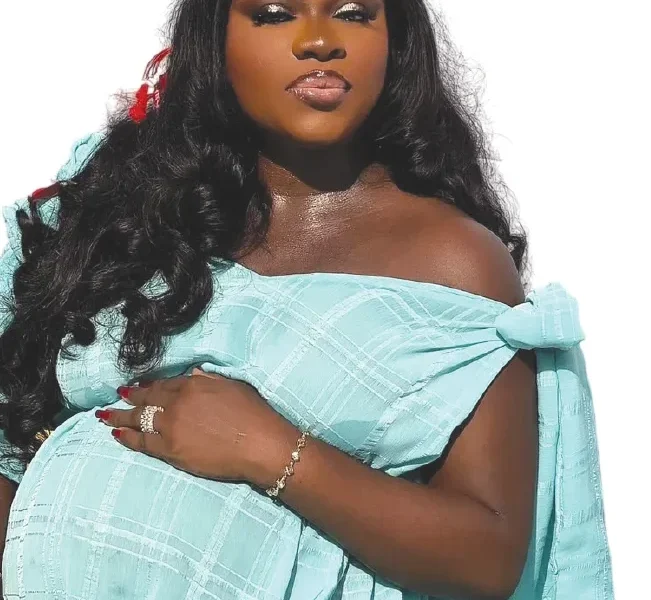
Racheal Obinna, a realtor and content creator from Asaba, spoke to Temitope Adetunji about the hardships that led her to become a quadruplet mother. Her story spans more than a decade of trying to expand her family, a series of miscarriages, the tragic loss of twins in 2024 and a final, joyous delivery of four babies in July 2025. The narrative offers a vivid picture of the emotional and financial toll of repeated pregnancy loss, as well as the role of faith, marriage and social media in sustaining her hope.
Obinna’s first child is now 11 years old. After that birth she spent several years chasing another pregnancy, only to endure a cascade of miscarriages that seemed to follow a monthly rhythm. “Getting a positive pregnancy test no longer excited me because I had become accustomed to losing pregnancies,” she recalled, adding that she often hesitated to tell her husband about a new positive result for fear of raising hopes that would soon be shattered. By 2023 the couple decided to try in‑vitro fertilisation (IVF) despite the husband’s initial belief that IVF was reserved for women who could not conceive naturally. The first IVF cycle produced a positive test, but the pregnancy ended a week later, leaving the couple to grapple with the physical, emotional and financial strain of another loss.

In 2024 the pair achieved a natural pregnancy that resulted in twins. The early months progressed without incident, but complications arose on the day of delivery. The baby boy’s feet turned blue and he failed to breathe properly despite oxygen support, and he died on the delivery day. The baby girl appeared healthy, and doctors discharged her with her mother’s permission. However, within five days the infant began to cry incessantly, and by the sixth day she was rushed back to the hospital where she also passed away. The double tragedy left Obinna devastated, and she reported that neighbours and acquaintances who once offered consolation later made unpleasant remarks, adding a layer of social pain to her grief.
Undeterred, Obinna resolved to try again in March 2025. After two failed intra‑uterine insemination attempts, she returned to IVF in November. Her embryo transfer on 28 November yielded a positive test on 1 December, only three days after the procedure, despite medical advice to wait 14 days. The early scan revealed a rare quadruplet pregnancy. “I continued praying and handed everything over to God, telling Him the pregnancy was in His hands,” she said, emphasizing the central place of faith in her resilience. The pregnancy advanced smoothly, without high blood pressure or major complications, and she delivered the four babies at 35 weeks and one day, on 4 July 2025, the same day as her husband’s birthday.
Obinna attributes her emotional endurance to three pillars: God, her husband and her daughter. Her daughter, who had previously suffered emotional hurt when a friend’s twin sister dismissed her, was deeply affected by the loss of the twins. The girl’s grief over the vanished siblings fortified Obinna’s determination to become a mother again. “My faith in God sustained me,” Obinna affirmed, noting that some people likened her ordeal to the biblical story of Job. She also highlighted the importance of a supportive partnership, describing her husband as a friend, brother, father and spiritual anchor who communicates constantly, even during long workdays.
Beyond the personal realm, Obinna leveraged her TikTok platform to document her fertility journey, hoping to inspire other women facing similar challenges. She recounted being mocked in church, accused of witchcraft, and subjected to curses and unsolicited prophecies. In her former neighbourhood, a pregnant neighbour would deliberately flaunt her own pregnancy to provoke Obinna. Despite these slights, Obinna chose to respond with a smile, insisting that the mockery was “not mocking me but God.”
Financial pressures remain a reality for the new family of six. The private hospital bill alone topped N5.6 million, and the ongoing costs of diapers, formula and medical supplies for four infants are considerable. While some have asked why she has not sought government assistance, Obinna says she prefers to rely on divine provision, adding, “If God wants the government to notice these children and support them, He will make it happen.” She has reached out to individuals and organisations for help but remains cautious about becoming a burden.
The moment that captured nationwide attention came when her elder daughter finally met her newborn siblings. The emotional reunion, recorded on TikTok, amassed over 33 million views, making it the most‑watched video on Obinna’s page. The surprise was carefully staged: Obinna told her daughter she would attend a friend’s party, then arranged for her husband to bring the child home after the delivery. When the daughter saw the quadruplets, she burst into tears, a reaction that resonated with viewers across the country.
Looking ahead, Obinna encourages women confronting infertility or recurrent pregnancy loss not to give up. She urges them to stay “steadfast, keep trying and refuse to become discouraged,” and to view themselves as mothers already, trusting that God is preparing something for them. Her testimony, she hopes, will remind other hopeful parents that even after a series of painful setbacks, a new beginning can arrive, sometimes in the form of four tiny lives.
As the family settles into life with the quadruplets, Obinna plans to continue sharing updates on social media, offering both a realistic glimpse of the challenges and a message of enduring hope for those on similar paths.












Join the conversation