
Australia captain Pat Cummins denies involvement in ‘Sandpapergate’ scandal
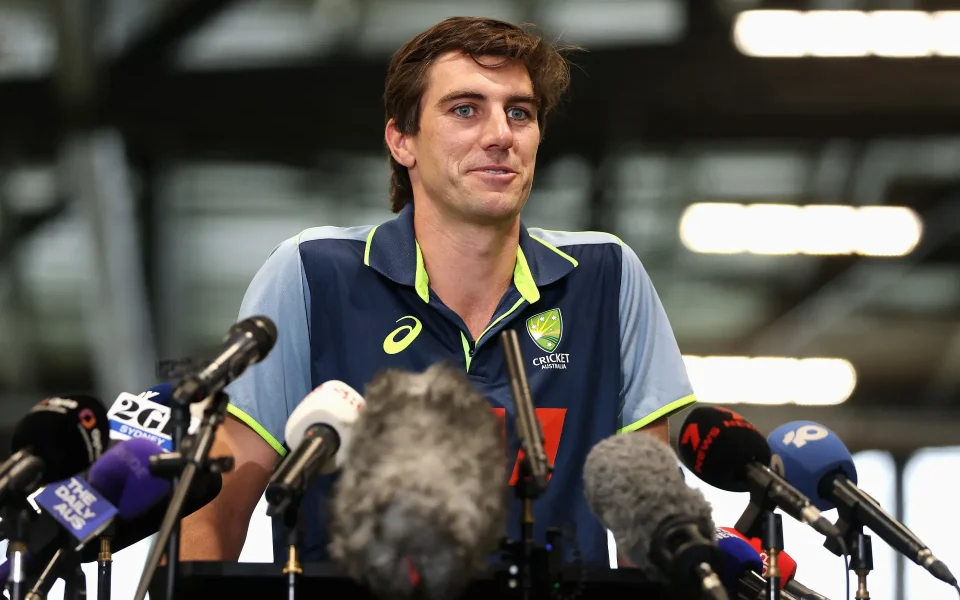
Sydney, The captain of the Australian Test side, Pat Cummins, used a news conference on Friday to again reject any knowledge of the plan to use sandpaper on the ball during the 2018 series against South Africa. Cummins described the allegations made in former teammate Usman Khawaja’s freshly published autobiography as “utter nonsense” and insisted that the claim the whole squad was aware of the ball‑tampering scheme is “100 percent wrong”.
When asked whether he had ever known that sandpaper was being taken onto the field, Cummins replied that the suggestion was completely inaccurate. “When he says we all knew, if by that he means that we knew sandpaper was going out in the field, he’s 100 percent wrong,” the 31‑year‑old said, adding that he has maintained the same position for eight years. He told reporters he had no recollection of any “master plan”, no team meeting, and no directive from any bowler to use illegal methods. The skipper said he would not discuss the incident again, after speaking for more than an hour to the media.

Khawaja’s book, released on Tuesday, claims that every player in the squad was aware of the plot to rough up the ball with sandpaper, a tactic intended to increase swing. The autobiography alleges that the sandpaper was used not only in the third Test at Cape Town, which was the focus of the original investigation, but also in the second Test at Port Elizabeth. Khawaja further suggested that the colour of his skin and his background had prevented him from being considered for the captaincy, a point Cummins called “the most serious” of the book’s content and bluntly denied.
The 2018 episode, colloquially known as “Sandpapergate”, sent shockwaves through Australian cricket. At the time, then‑captain Steve Smith and vice‑captain David Warner were handed one‑year bans from elite cricket, and opening batsman Cameron Bancroft received a nine‑month suspension after he was caught carrying a piece of sandpaper onto the field. The fallout extended beyond the sport; Warner later disclosed that his wife, Candice, suffered a miscarriage in the aftermath, highlighting the personal toll the scandal took on those involved.
Cummins, who took over the captaincy in 2022, has been a vocal part of the rebuilding process that followed the scandal. He noted that former bowlers Mitchell Starc, Josh Hazlewood and Nathan Lyon, all of whom signed a collective statement in 2021 denying any knowledge of the plan, were consistent in their denial, and he cited their past comments as proof of a continued narrative of innocence. The former head coach, Darren Lehmann, who was in charge of the side during the 2018 series, also said he had no knowledge of any sandpaper scheme. Former batting coach Graeme Hick described Khawaja’s allegations as “absolutely false”.
During the press conference, Cummins was also pressed about Khawaja’s recollection that two players had refused the batsman’s call for the team to take collective responsibility for the ball‑tampering. Cummins said he could not remember any such conversation and had no idea who the two players might have been. “I don’t remember any conversation around collective responsibility,” he said. “I’ve got no idea who those two people would be because I never had that discussion.”
The former opening batsman, Usman Khawaja, is a Pakistan‑born player who has been a regular member of the side since his debut in 2011. His book, which details his cricketing journey and personal experiences, has reignited calls for a fresh inquiry into the 2018 incident. Cricket Australia’s chief executive, however, has already ruled out opening another investigation, stating that the matter was fully examined at the time and the sanctions imposed were final.
Warner, who was the vice‑captain during the scandal, responded to the book’s release on television ahead of a one‑day international between Australia and England. He said the trio, Smith, Warner and Bancroft, “paid a heavy price for the incident” and reiterated that his wife’s miscarriage was a direct consequence of the fallout. Warner also expressed sympathy for Khawaja, suggesting that the current captain had “thrown Uzzie under the bus” and saying he was “disappointed by that”.
Cummins, while respecting Khawaja’s right to tell his story, warned that some of the statements in the autobiography could be defamatory. He said he had received legal advice indicating that certain claims might cross that line, but he declined to pursue any legal action. “Friends aren’t casual with each other’s lives and reputations,” Cummins said. “In his book, Uzzie has been casual with my life and the lives of many others, and I think Australian cricket.” He added that he remains committed to from here, noting that eight years have passed since the scandal broke. “You’ve got to move on. It’s been eight years. We’re moving on. So you got to draw a line at some point,” he concluded.
The episode show how the 2018 ball‑tampering controversy continues to cast a long shadow over Australian cricket. While the sport has made strides in rebuilding its image, the resurfacing of old accusations reminds players and administrators alike that the past remains a point of reference for many. As the Australian team prepares for upcoming series, the focus appears to be on leaving the controversy behind and concentrating on performance on the field. The next steps will likely involve monitoring any further statements from Khawaja and watching whether Cricket Australia maintains its stance against reopening the investigation.










Join the conversation