
Trump, Xi and Putin meet at historic trilateral summit in Shenzhen
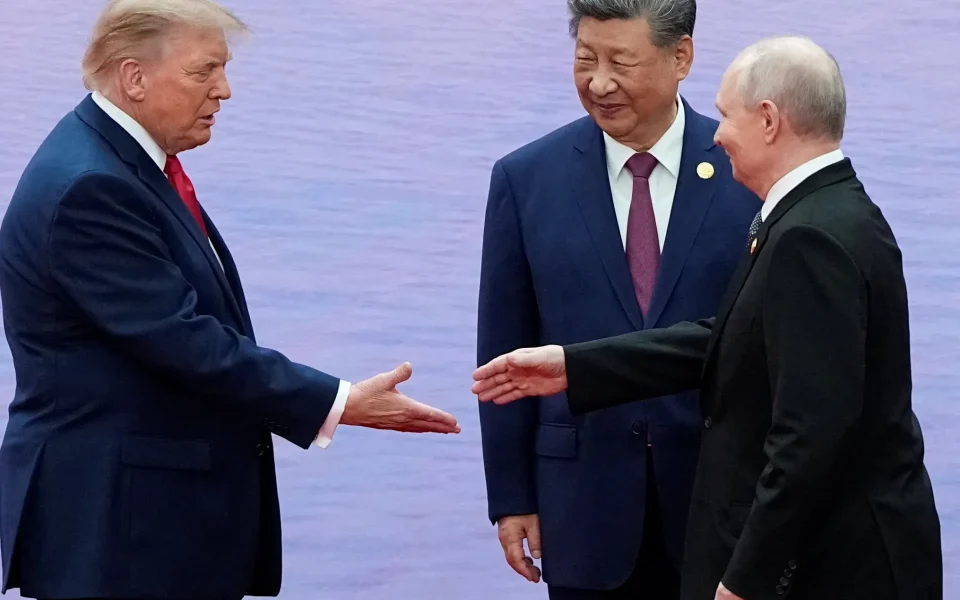
The presidents of the United States, China and Russia converged on Shenzhen on 19 November 2026 for a trilateral summit that many analysts had been waiting for. Donald Trump arrived in the southern Chinese metropolis alongside his Russian and Chinese counterparts, Vladimir Putin and Xi Jinping, marking the first time the three leaders have sat together for a formal meeting. The gathering, hosted by China, is set to address a range of pressing topics, from the ongoing war in Ukraine and the conflict involving Iran to broader concerns such as nuclear proliferation, trade imbalances and the fast‑evolving field of artificial intelligence.
Organisers said the agenda will be packed, with officials from each capital preparing briefs on the most contentious issues. In particular, the United States is expected to push for a resolution to the war in Ukraine, while also seeking to influence the situation in Iran where a US‑Israeli coalition is engaged in combat operations. Russian representatives will likely defend Moscow’s actions in Ukraine and argue for a new security framework that reflects Russia’s interests. Meanwhile, Chinese officials are poised to promote their own vision of global trade rules and to highlight Beijing’s advances in AI, a sector where competition among the three powers is intensifying.

Observers note that the summit comes at a moment when diplomatic channels between the three nations have been strained for years. Since the start of the Ukraine conflict in 2022, the United States and Russia have exchanged sanctions and accusations, while US‑China relations have been marked by tariffs, technology bans and disputes over Taiwan. The decision to host a three‑way dialogue in Shenzhen, a city known for its economic dynamism and openness to foreign investment, signals a willingness, at least on paper, to explore cooperation despite deep disagreements.
The choice of Shenzhen also carries symbolic weight. The city, once a modest fishing village, was transformed into a flagship of China’s reform era, embodying the country’s shift toward market‑oriented policies and global integration. By staging the summit there, Chinese leaders hope to showcase the benefits of dialogue and to position China as a neutral ground where the world’s biggest economies can discuss security and economic matters without the baggage of capital politics.
While the leaders have not released detailed statements, preliminary remarks from the Chinese foreign ministry emphasized the “importance of maintaining strategic stability” and called for “mutual respect and constructive engagement” among the three powers. The United States delegation, according to sources close to the White House, is prepared to raise concerns about human rights and cyber‑security, issues that have repeatedly surfaced in bilateral talks with both China and Russia. Russian officials, meanwhile, are expected to stress the need for “balanced global governance” and to argue that any resolution to the Ukraine war must take into account the security concerns of all major powers.
Economic topics are also high on the list. Trade imbalances, technology transfer restrictions and the looming spectre of a new generation of AI regulations will likely dominate portions of the discussions. Analysts point out that the United States has imposed export controls on advanced semiconductors to curb China’s military capabilities, while Russia faces sanctions that limit its access to global financial systems. A trilateral summit offers a rare chance to negotiate de‑escalation measures that could ease market volatility and reduce the risk of a broader economic fallout.
The AI component of the talks reflects growing awareness that artificial intelligence is no longer a niche field but a strategic asset. Both the United States and China have invested heavily in AI research, while Russia seeks to catch up by developing home‑grown technologies. The three presidents are expected to explore frameworks for responsible AI development, data sharing protocols and safeguards against the weaponisation of AI systems. Such dialogue could set precedents for future international agreements on emerging technologies, an area where no comprehensive global treaty currently exists.
Security concerns extend beyond the immediate war zones. The summit will also address the proliferation of nuclear weapons, a topic that has resurfaced after recent tests by both the United States and Russia. China, which has maintained a relatively modest nuclear arsenal, is likely to advocate for a multilateral approach that balances deterrence with disarmament. The United States, meanwhile, may use the platform to press for renewed arms control talks, hoping to revive mechanisms that have lapsed in recent years.
Critics in all three countries warn that the summit could become a photo‑op without substantive outcomes. In Washington, some lawmakers have expressed scepticism about the benefits of sitting down with leaders they accuse of undermining democratic values. In Moscow, opposition voices question whether any concessions on Ukraine are possible without significant geopolitical shifts. In Beijing, activists caution that the event could be used to legitimise policies that restrict civil liberties. Despite these concerns, the diplomatic corps remains focused on the practicalities of ensuring the talks proceed smoothly and produce at least a framework for follow‑up meetings.
The summit is scheduled to run for two days, after which a joint communiqué is expected to be released. The document will likely outline agreed‑upon principles and indicate any immediate steps the three nations will take. Whether those steps translate into concrete policy changes remains to be seen, but the very act of bringing together the leaders of the United States, China and Russia marks a notable moment in contemporary geopolitics.
As the trilateral summit draws to a close, all eyes will be on the final statements and any commitments made on the battlefield, the trading floor and the digital frontier. The world will be watching to see if the talks in Shenzhen can bridge the gaps that have defined international relations for the past decade, or if they will simply reaffirm the status quo while leaving core disputes unresolved.









Join the conversation