
India Beats Pakistan to Clinch SAFF Championship in Dhaka
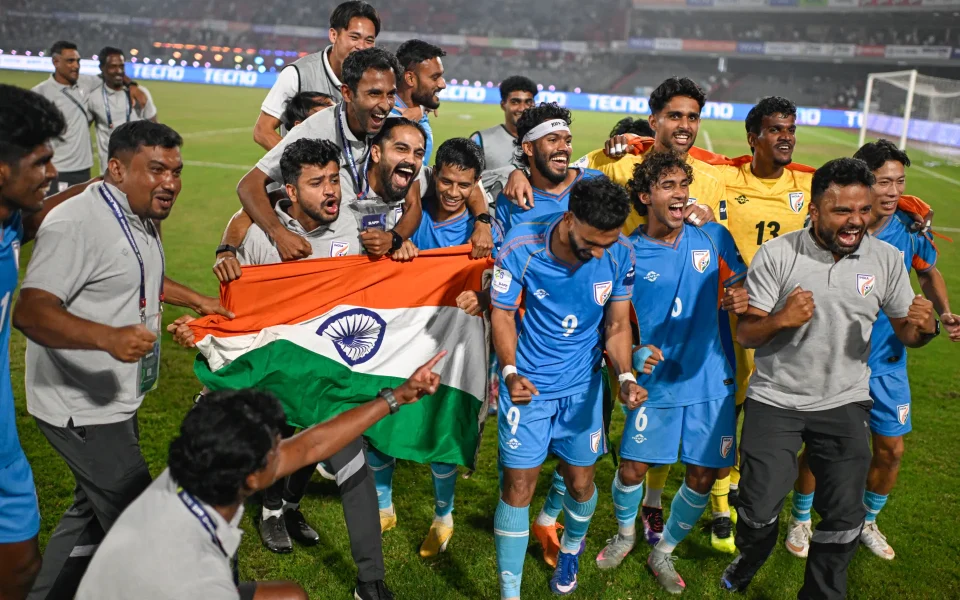
The South Asian Football Federation (SAFF) Championship finale in Dhaka turned into a night of high drama as India edged past Pakistan 2‑1, sealing a third consecutive title and their tenth overall triumph in the competition. More than 10,000 spectators filled the National Stadium, the majority of them Bangladeshi fans who had travelled to support the host side in the semi‑final and then stayed to watch the two traditional rivals battle for regional supremacy. The match, played under bright floodlights, kept the crowd on edge until the final minute when Sandip Mandi’s header proved decisive.
Bangladesh’s crowd was a patchwork of loyalties. A sizable portion of the supporters chanted for Pakistan, describing the team as their second‑favorite after the home nation. Their chants echoed through the stands, especially after Pakistan eliminated Bangladesh in the semi‑final, a result that left many locals disappointed but still eager to see the final. A smaller yet vocal group turned their cheers toward India once the Indian side appeared to gain the upper hand. The mixed atmosphere reflected the deep-rooted rivalries that exist among the three footballing nations in the sub‑region.

Adding a political note to the sporting spectacle, a lone Palestinian flag was waved by fan Anwar Hossain. Hossain told Al Jazeera that his support for Pakistan stemmed from a broader stance against what he called “hegemony.” He argued that India’s regional influence made it a dominant power, and he wanted to back the side he saw as opposing that dominance. While his personal view did not dominate the stadium’s chatter, the presence of the flag show how football matches in South Asia can become venues for expressing wider geopolitical sentiments.
The game itself opened with both sides probing for openings. Pakistan’s forward Alamgir Ghazi broke the deadlock just before halftime, finding the net with a low drive that slipped past the Indian goalkeeper. The goal sparked jubilant celebrations among the Pakistani players, who lifted Ghazi’s arm in triumph, and among the fans who had been chanting for the visitors. The early lead gave Pakistan a psychological edge, but the balance shifted dramatically after the interval.
Soon after the second half began, Pakistani defender Junaid Shah was shown a straight red card for a high, studs‑up challenge on an Indian attacker. The dismissal reduced Pakistan to ten men and forced the team to reorganise its defensive shape. Playing a man down in a final is a severe handicap, and the loss of Shah’s experience in the back line was felt almost immediately.
India seized the opportunity. Midfielder Suhail Bhat, who had been pressing high throughout the first half, found space on the left flank and curled a shot into the far corner to level the score. Bhat’s equaliser reinvigorated the Indian bench, and the players celebrated the moment with animated gestures, aware that the match could now head into extra time. The crowd’s reaction was mixed; Pakistani supporters groaned, while many Bangladeshi fans who had shifted their support to India began chanting in hope of a new champion.
The tension persisted for the remaining minutes. Both teams created chances, but the decisive moment arrived in the 90th minute. A cross from the right wing found the head of Sandip Mandi, who rose above the crowded penalty area and met the ball with a firm strike. The header flew past the Pakistani goalkeeper and into the net, delivering the winning goal for India. The stadium erupted. Indian substitutes poured onto the sidelines, clapping and cheering, while Pakistani players fell to their knees in disbelief.
India’s victory cemented its position as the dominant force in South Asian men’s football. The trophy marked the nation’s tenth SAFF Championship win and the third in a row, a feat that reflects the depth of talent and organisational stability within the Indian football set‑up. While coach comments were not captured in the match report, the exuberant celebrations on the field and in the stands spoke volumes about the significance of achieving a three‑peat.
For Pakistan, the defeat was a bittersweet conclusion to a campaign that had already delivered a major upset, the elimination of the host nation in the semi‑final. The Pakistani side demonstrated resilience by taking the lead and fighting back after being reduced to ten men, but the late goal show how thin the margins are in a final of this calibre. Players were seen consoling each other after the final whistle, hinting at a resolve to build on the experience for future editions.
Local organisers faced criticism from sections of the crowd who felt the tournament suffered from inadequate promotion. Several attendees noted that advertising for the event was sparse, despite the strong turnout at the stadium. The lack of visible marketing raised questions about the capacity of the host federation to generate broader public awareness for regional football events. Nonetheless, the impressive attendance highlighted the genuine enthusiasm for the sport across South Asia and demonstrated the National Stadium’s ability to accommodate large, passionate crowds.
The SAFF Federation is now looking ahead to the next edition of the tournament. Both India and Pakistan are expected to return with renewed ambition, aiming to either maintain dominance or reclaim the title. The tournament’s organizers are likely to take the feedback about promotion into account, seeking to improve outreach and ensure that future editions attract even larger audiences.
Beyond the pitch, the solitary Palestinian flag in the stands served as a reminder that football matches can double as platforms for broader political expression. In a region where sport often intertwines with national identity and geopolitical narratives, such gestures add layers of meaning to the already fervent fan culture. As the SAFF Championship concludes, the legacy of this final will be remembered not only for the dramatic goal that decided the trophy but also for the way it reflected the complex tapestry of sport, politics, and regional pride in South Asia.









Join the conversation