
EU‑Rwanda asylum plan sparks rights outcry
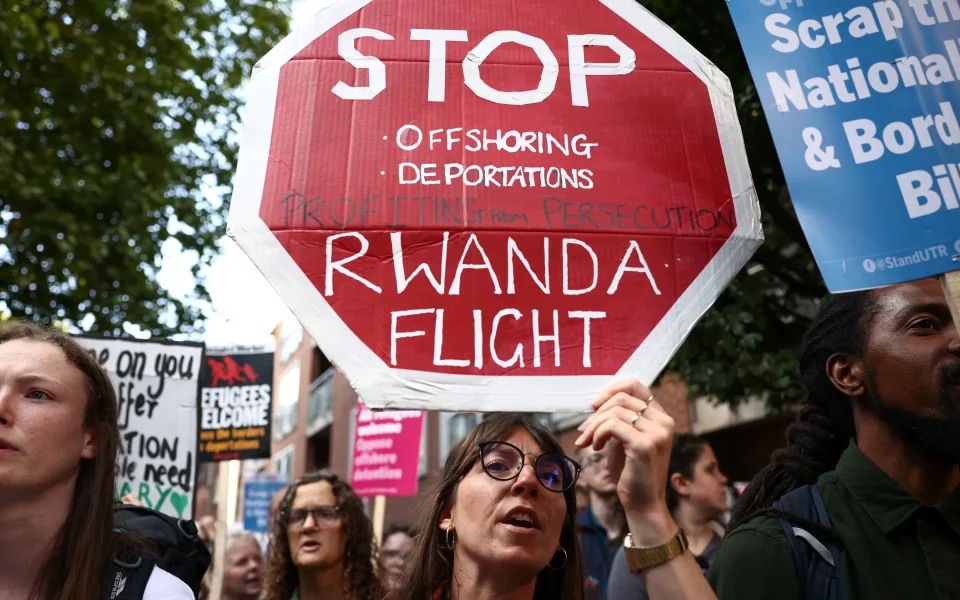
The European Union’s latest proposal to send rejected asylum seekers to Rwanda has ignited a wave of condemnation from legal experts, journalists and human‑rights organisations. Germany, Denmark, Greece, Austria and the Netherlands announced on Monday that they intend to set up a “return hub” in Kigali for people whose claims have been refused, reviving a scheme first floated in 2022. The move follows a decade of contentious deportations to the East African nation and comes as the EU grapples with a 17 percent drop in asylum applications during the first half of 2026, the lowest level since 2021.
British immigration lawyer Alasdair Mackenzie, who helped block an earlier British‑Rwanda flight in mid‑June 2022, warned that the new plan repeats the same mistakes. He told Al Jazeera that the asylum seekers, including Iranians, Iraqis, an Albanian and a Vietnamese national, were “in an absolutely desperate state” and terrified of being shipped to a country they had never visited. “They felt terrified as they were going to a place they didn’t know, being shunted around like packages,” he said, recalling the moment the European Court of Human Rights halted the 2022 departure minutes before take‑off.

Rwanda’s interior minister, Vincent Biruta, dismissed the concerns raised by 47 organisations that condemned the proposal on Tuesday. He asserted that “human rights in Rwanda are respected and granted to everyone and specifically to refugees who choose to come to our country.” The government also promised independent monitoring by the United Nations High Commissioner for Human Rights, a pledge that critics say lacks credibility.
Samuel Baker Byansi, an investigative journalist now living in an undisclosed European location, described the partnership as a way for Kigali to buy silence. Byansi, who survived threats after probing Rwanda’s alleged military involvement in the Democratic Republic of the Congo, recalled how a tip about possible arrest or elimination forced him to flee the country. His colleague John Williams Ntwali later died in what officials called a road accident, a circumstance that remains disputed by human‑rights monitors. Byansi fears the new migration deal will provide the Rwandan government with another shield against international scrutiny.
The scheme also revives a controversial history of Rwanda being used as a destination for deported migrants. From 2013 to 2018, Israel transferred thousands of Eritrean and Sudanese asylum seekers to Kigali, many of whom later left Rwanda or were sent onward. The United Kingdom’s 2022 arrangement, costing an estimated $940 million, resulted in only four voluntary transfers before the Supreme Court declared it unlawful, leading the Labour government to abandon the plan in 2024.
Human‑rights groups argue that sending people to a nation with a record of repression poses a “real danger” of creating a “cruel black hole” where scrutiny is limited. Amnesty International warned that refugees could face little protection or ability to challenge mistreatment. The concern is not abstract; in 2018 Rwandan police opened fire on Congolese refugees protesting food cuts, killing twelve. More recently, the United States imposed sanctions on Rwanda’s defence ministry for destabilising actions in the eastern DRC, and a prominent critic of the Rwandan government was found decapitated outside Kampala in October.
European politicians are split over the deal. Austrian interior minister Gerhard Karner defended it as “an important contribution to further curbing illegal migration, dismantling the business model of smugglers and relieving the burden on our population.” In contrast, Spanish prime minister Pedro Sanchez dismissed the scheme as lacking “future or humanity,” while French president Emmanuel Macron questioned whether it aligns with Europe’s founding principles. Dutch MEP Tineke Strik, who visited Kigali in September, said she could not verify the government’s claim that deported people might eventually gain residency or citizenship because no domestic NGOs are allowed to criticise the programme. She added that the inability to track the whereabouts of those already sent to Rwanda under the Trump administration made her “convinced how impossible it will be for European governments to check on what is happening over there.”
Rwanda hosts large refugee populations, mainly from the DRC and Burundi, and interior minister Biruta described the country’s policies as “progressive” for allowing newcomers to work and start businesses. Nonetheless, the lack of independent civil‑society oversight raises doubts about the safety of vulnerable migrants. Mackenzie, reflecting on the deterrence logic behind “return hubs,” argued that people fleeing dire economic or political conditions are unlikely to be swayed by the prospect of being sent back. “People don’t set off and cover thousands of miles across land and sea with the expectation that they are going to be sent back,” he said, questioning the effectiveness of the policy as a deterrent.
The EU’s plan envisions a pilot project involving about 100 individuals, with further details expected in early 2027. If implemented, the scheme would apply only to those whose asylum claims have been rejected, not to all unauthorized arrivals. As the debate continues, the EU must balance its desire to curb irregular migration with mounting legal and ethical challenges, while Rwanda defends its role as a potential partner despite persistent international criticism. The next step will be a formal rollout of the pilot, pending approval from EU member states and further scrutiny by human‑rights bodies.















Join the conversation