
Mosque fire in Israel sparks accusations of incitement against Netanyahu
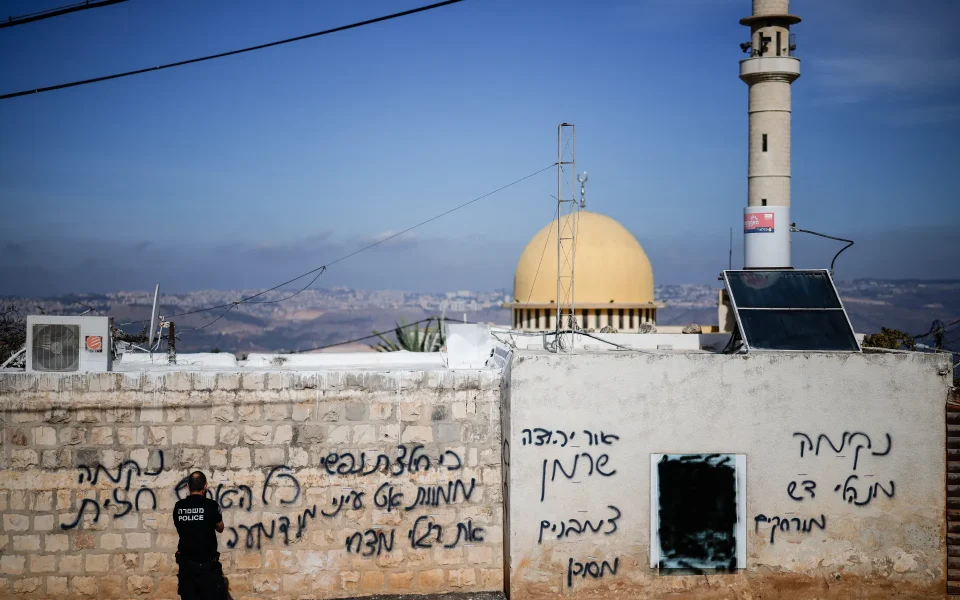
The blaze that engulfed a mosque in al‑Dahi, a northern Israeli village populated largely by Palestinian citizens, has set off a wave of condemnation and political finger‑pointing. Police confirmed on Thursday that they opened an investigation into the suspected arson of a room on the lower floor of the mosque, as well as the spray‑painting of graffiti on a nearby street. The incident follows a car‑ramming attack late Wednesday in Kaf Qasim, another city with a significant Arab‑Israeli community, where eight people were injured and a suspect believed to be an Israeli settler was taken into custody.
According to a police statement, the Israel Police treats any assault on religious symbols with the utmost seriousness and pledged to act “decisively and without compromise” to bring those responsible to justice. The statement did not name any suspects, but it show the urgency of the inquiry. The mosque, which has two stories, suffered damage after three masked individuals entered from a wooded hillside, broke a ground‑floor window and threw an incendiary bottle, the imam Khaled al‑Zoubi recounted. “We came to the mosque, and there was smoke and fire burning from the bottom part of the mosque,” he told reporters, describing the scene he found upon arriving for dawn prayers.

The attack quickly became a flashpoint in Israel’s fraught domestic politics. Yair Lapid, a leading figure in the anti‑Netanyahu bloc, denounced the act as “a heinous hate crime” and asserted that it was “not Jewish and it is not Israeli.” He used his X account to call for an end to “the rampant incitement against Arab Israelis,” directly linking the incident to the rhetoric of Prime Minister Benjamin Netanyahu’s right‑wing camp. Yair Golan, head of the left‑leaning Democrats party, went further, labeling the episode “Jewish terrorism” and attributing it to “the campaign of incitement Netanyahu and his government are waging against Arab citizens of Israel.”
Representatives of Israel’s Arab parties also weighed in. Youssef Jabareen, leader of the Arab‑majority Joint List, visited al‑Dahi and placed full responsibility on Netanyahu, his cabinet and “all the extremists with him,” accusing them of turning “dangerous incitement into reality.” Similarly, Mansour Abbas, a Knesset member and chairman of the Ra’am party, called the arson “a hate crime, an act of terror, and the desecration of a holy place,” urging the prime minister to halt the incitement he said endangers human life.
Hamas, which controls the Gaza Strip and maintains a political presence among Palestinian citizens of Israel, also condemned the fire, blaming “settler gangs” for the attack. Senior Hamas official Abdul Rahman Shadid described the incident as part of “the scale of organised terrorism carried out by extremist settler militias under the protection of the right‑wing occupation government.” He warned that such acts aim to “displace our people and empty the land of its inhabitants” through violence, intimidation and arson.
The graffiti found near the mosque, captured by AFP photographers, bore the word “revenge” alongside other racist slogans, reinforcing the perception of a hate‑motivated assault. While the police have not yet identified the perpetrators, the description of three masked men emerging from the nearby woods suggests a coordinated effort rather than a lone act. The incident follows a pattern of heightened tensions in mixed Arab‑Jewish localities, where recent months have seen a rise in both verbal and physical attacks targeting community leaders and places of worship.
Israel’s political stalemate, marked by coalition wrangling and the prospect of a second election, provides a backdrop for these confrontations. Critics argue that Netanyahu’s hard‑line stance and his coalition’s emphasis on nationalist rhetoric create an environment that normalises hostility toward Arab Israelis. Supporters of the prime minister contend that the attacks are the work of fringe elements and that blaming the government distracts from the need to protect all citizens.
As the investigation proceeds, police have pledged to pursue the case without compromise. Authorities have yet to disclose whether any arrests have been made in connection with the mosque fire, but the broader security apparatus remains on alert after the recent car‑ramming incident. Community leaders in al‑Dahi and surrounding towns have called for calm and for the protection of religious sites, urging residents to resist provocations that could further inflame already strained relations.
The next steps will likely involve forensic analysis of the incendiary device, identification of the masked individuals through surveillance footage, and a continued public debate over the role of political rhetoric in inciting violence. Observers note that the outcome of the police probe may set a precedent for how similar hate‑crime allegations are handled in Israel’s divided society.












Join the conversation