
Trump says US may have to destroy Iran amid Iran nuclear proposal
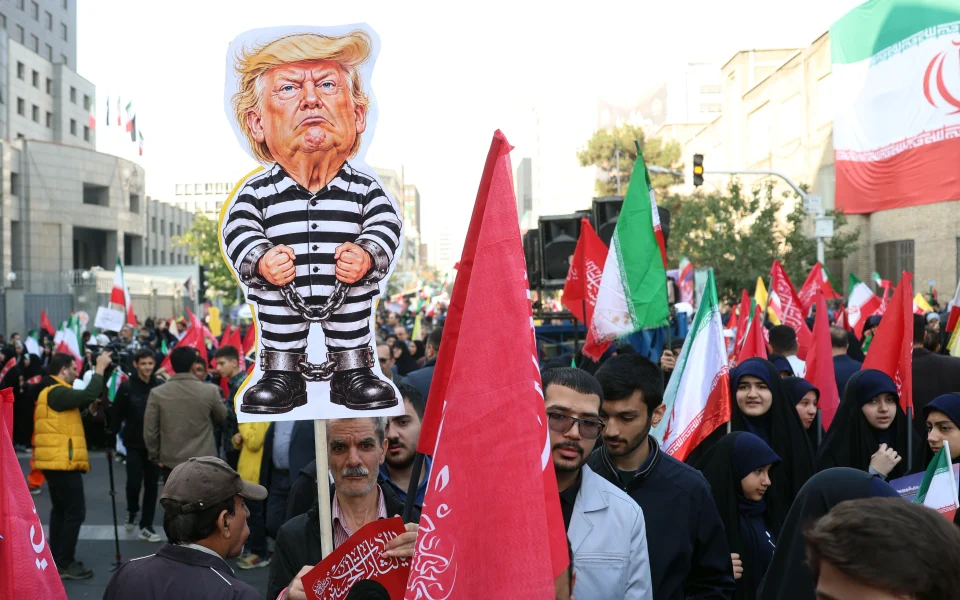
Donald Trump told reporters on Sunday that the United States might eventually have to “destroy” the rest of Iran, a stark statement that followed news of an Iran nuclear proposal being shuttled to Washington through Qatari mediators. The former president added that rebuilding a devastated Iran would take about 25 years and that the public would “know soon enough” if such a course were taken.
The comments came as officials confirmed that Tehran has formally submitted a nuclear proposal to the United States, using Qatar as an intermediary. The proposal, which includes a set of seven demands from the Iranian side, is currently under review by the U.S. administration, while Iranian officials await a response.

In a brief press interaction, Trump emphasized the gravity of the situation, saying, “If we have to, we will have to destroy the rest of Iran,” and warned that the consequences of any action would be long‑lasting. He did not elaborate on the specific conditions that would trigger such a move, nor did he detail the content of the Iranian proposal beyond its existence and the seven demands attached to it.
U.S. officials, speaking on condition of anonymity, indicated that the proposal is being examined in the context of broader regional security concerns. They noted that the United States continues to monitor Iran’s nuclear activities closely and that any decision will consider both diplomatic and security dimensions.
The Iranian government, through its foreign ministry, has reiterated that the proposal is intended to open a constructive dialogue aimed at easing sanctions and addressing Tehran’s nuclear aspirations. Tehran has repeatedly called for the United States to meet its seven demands, which it says are essential for any meaningful progress, though the exact nature of those demands has not been disclosed publicly.
Analysts familiar with the negotiations say that the use of Qatar as a go‑between reflects a long‑standing pattern of third‑party mediation in Tehran‑Washington talks. Qatar has previously hosted back‑channel discussions on regional issues, and its involvement here suggests both sides are seeking a controlled environment to exchange sensitive proposals.
The backdrop to Trump’s remarks includes a series of recent tensions between the two nations, ranging from sanctions over Iran’s nuclear program to confrontations in the Persian Gulf. While the United States has maintained a policy of maximum pressure, diplomatic overtures have periodically resurfaced, especially when regional stability appears at risk.
Trump’s assertion that rebuilding a destroyed Iran would take 25 years adds a stark timeline to a scenario that many experts deem unlikely. Rebuilding after a large‑scale conflict would indeed involve extensive humanitarian, economic, and infrastructural efforts, according to scholars of post‑conflict recovery. The former president’s comment show the seriousness with which he views the potential fallout of any escalation.
Observers note that the phrase “you’ll know soon enough” signals an intention to keep the public informed about any decisive moves. However, the exact mechanisms for such communication remain unclear, and no official timeline has been set for a response to the Iranian proposal.
In the United Nations, member states have urged restraint and emphasized the importance of diplomatic channels. The Security Council has previously called for a peaceful resolution to Iran’s nuclear ambitions, highlighting the need for compliance with the Joint Comprehensive Plan of Action and its successor frameworks.
The Iranian side has expressed patience, indicating that it will continue to wait for the United States to address its seven demands before proceeding further. Tehran’s diplomatic corps has also indicated readiness to engage in further talks, provided the United States reciprocates with concrete steps.
As the proposal undergoes review, the international community watches closely, aware that any shift in U.S. policy could have ripple effects across the Middle East. Regional allies, including Saudi Arabia and Israel, have historically voiced concerns about Iran’s nuclear capabilities, and a change in the U.S. stance could alter existing security calculations.
The next phase will likely involve a series of diplomatic exchanges, possibly mediated again by Qatar or another neutral party. Washington has not set a public deadline for its decision, leaving the timeline for any potential agreement or escalation open-ended. Until then, both governments appear poised to continue their respective negotiations behind the scenes.













Join the conversation