
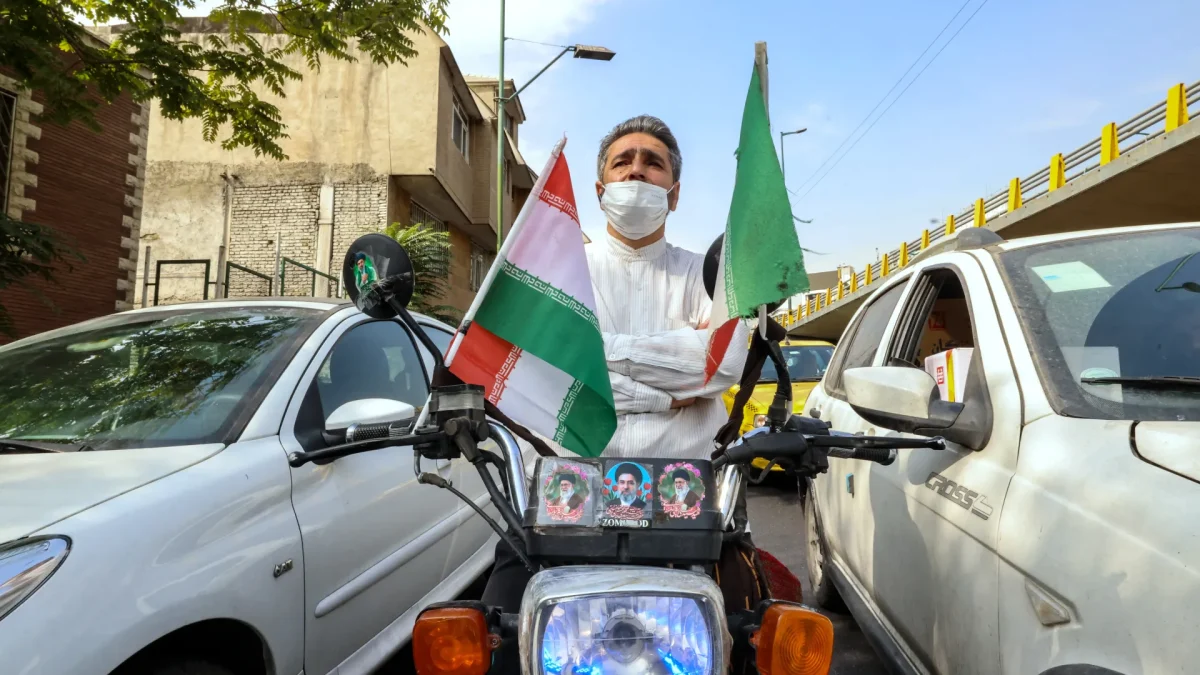
Donald Trump told reporters on Sunday that there will not be an Iran strike today, a statement that came moments after the Saudi‑led coalition reported intercepting a ballistic missile launched by Yemen’s Houthi rebels toward Riyadh. The president’s reassurance was made in New York, where he was holding a press briefing, and was immediately juxtaposed with the coalition’s claim of shooting down the projectile as the Houthis continued their siege of the Yemeni city of Taiz. The dual developments highlighted the volatile security environment across the Middle East, with the United States, Israel and Saudi Arabia each navigating separate but interlinked threats.
Trump’s denial of an imminent strike was brief but clear: “There will not be a strike today,” he said, adding that the United States was monitoring the situation closely. His remarks arrived as the Saudi-led coalition, which has been fighting the Houthi insurgency in Yemen for years, announced that its air defence systems had successfully intercepted the missile aimed at the capital. According to coalition officials, the missile was launched from Houthi‑controlled territory and was heading for Riyadh, prompting rapid response from Saudi forces that neutralised the threat before it could reach populated areas. No casualties were reported, and the coalition praised its defensive capabilities.
The president’s comments were made against a backdrop of heightened tensions between Tehran and Washington, as well as ongoing Israeli operations in the occupied West Bank. Iran has repeatedly warned that any renewed US‑Israeli attacks would “achieve no different outcome from those of the past,” a phrase that show Tehran’s resolve to resist what it perceives as aggression. While Trump ruled out a direct strike, the broader regional dynamics remain fraught, with Israel continuing its assault on Hebron, which has displaced thousands of Palestinians and tightened movement restrictions across the West Bank. The situation in Hebron adds another layer to the already complex security calculus that Washington must consider.
Analysts note that the Saudi coalition’s interception of the Houthi missile demonstrates the group’s growing reliance on ballistic weapons, a shift from the more common rocket and drone attacks that have characterised the Yemen conflict for years. The Houthis have claimed responsibility for numerous missile launches aimed at Saudi Arabia, seeking to pressure Riyadh over its military involvement in Yemen. By downing the missile, Saudi forces not only protected their capital but also sent a message of deterrence to the insurgents. Military officials, however, cautioned that the threat remains persistent, and that the coalition will continue to monitor Houthi activities closely.
The United States’ stance, as articulated by Trump, reflects a careful balancing act. While the administration has not ruled out future action against Iran, it appears to be weighing the potential repercussions of direct involvement in a new front. The president’s remarks came after senior officials briefed the press on the latest intelligence assessments, which indicated that Iran was not currently preparing for an immediate attack on US interests. Nonetheless, the administration maintains a posture of readiness, with the Pentagon keeping relevant assets on standby in the region.
In the broader geopolitical picture, the confluence of these events show the interconnectedness of the Middle East’s security challenges. The Houthi missile launch, the Israeli operations in the West Bank, and the United States’ public statements on Iran all occur within a tightly woven tapestry of alliances and rivalries. Saudi Arabia, a key US ally, continues to shoulder the bulk of the fight against the Houthis, while also grappling with internal security concerns. Meanwhile, Israel’s campaign in Hebron has drawn international criticism, with humanitarian groups warning of escalating civilian hardship.
Local reactions in Saudi Arabia were muted in the immediate aftermath of the missile interception, as the government’s swift communication emphasized the effectiveness of its air defence network. State media highlighted the successful neutralisation of the threat and urged citizens to remain calm. In contrast, Palestinian communities in Hebron reported increased anxiety following the Israeli assault, with many families forced to flee their homes and seek shelter elsewhere. Humanitarian organizations have called for unhindered access to the affected areas, stressing that displacement compounds the already dire living conditions under occupation.
The United Nations has expressed concern over the cumulative impact of these overlapping crises. In a recent briefing, a UN spokesperson noted that the combination of military actions and displacement threatens regional stability and could exacerbate humanitarian needs. While the UN has not directly intervened in the Houthi‑Saudi confrontation, it continues to monitor the situation and urges all parties to adhere to international law, particularly regarding the protection of civilians.
Looking ahead, the White House has signalled that it will keep a close watch on Iran’s movements and will respond to any escalation with “appropriate measures,” according to a senior administration official. The president’s refusal to confirm a strike today does not preclude future action, and officials indicated that diplomatic channels remain open to de‑escalate tensions. In Saudi Arabia, the coalition vowed to maintain vigilance against further missile attempts and to bolster its defensive infrastructure around major cities.
The next steps appear to involve a series of diplomatic engagements. Washington is expected to hold further talks with regional allies, including Saudi Arabia and Israel, to coordinate responses to any potential threats. Meanwhile, the United Nations is likely to convene a session to address the humanitarian fallout in Hebron and the broader implications of the Yemen conflict. Observers anticipate that the coming weeks will test the resilience of the regional security architecture, especially if either side decides to alter its strategic posture.
In sum, while Trump ruled out an Iran strike today, the simultaneous interception of a Houthi missile by Saudi forces illustrates that the Middle East remains a theater of multiple, overlapping confrontations. The situation will continue to evolve, with US policymakers, regional governments and international bodies all poised to respond to any new developments that may arise.

Comments