
Israel Vows Gaza Offensive Policy Despite Caretaker Government
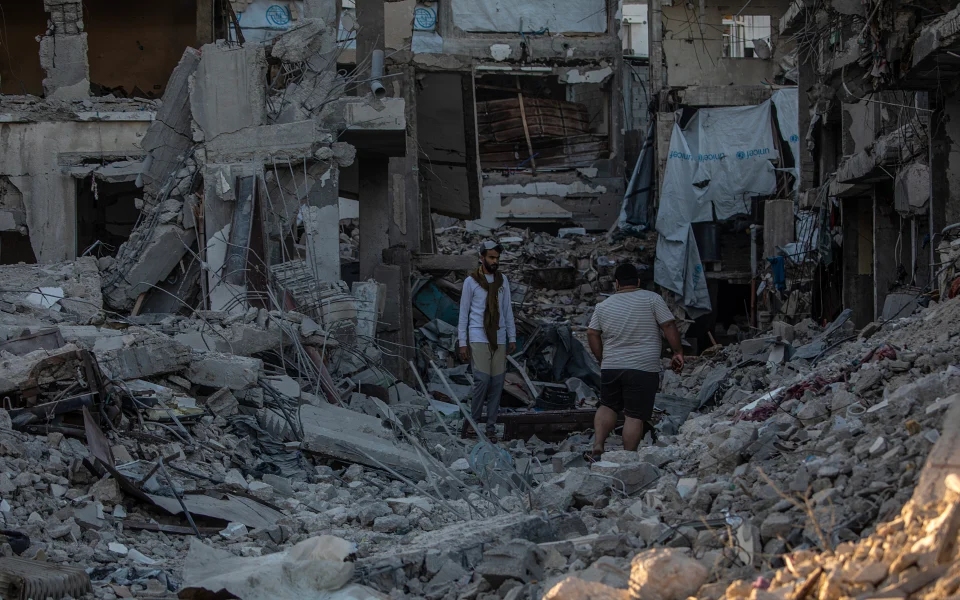
The Israeli Defence Ministry reiterated its commitment to a “gaza offensive policy” on Thursday, insisting the military will press on in the besieged enclave until Hamas is no longer a threat. Defence Minister Israel Katz made the statement in Jerusalem, emphasizing that the goal is a demilitarised Gaza with no Hamas presence, despite the recent election that saw the Netanyahu coalition lose its parliamentary majority.
Katz’s remarks came shortly after an Israeli drone strike in the al‑Mawasi neighbourhood of Khan Younis, which the military confirmed killed at least one Palestinian civilian and wounded two others. The incident, occurring in the southern part of Gaza, adds to a series of escalations that have already seen a hospital strike cause widespread condemnation. Israeli officials said the operation targeted militants, but families on the ground reported civilian casualties, highlighting the grim reality of urban warfare in the densely populated strip.

The timing of the declaration is notable because Israel is now operating under a caretaker administration. The coalition that had backed Prime Minister Benjamin Netanyahu was voted out in the recent parliamentary elections, yet the defence establishment has chosen to maintain its existing strategy. Katz stressed that the change in political leadership does not alter the security calculus. “We will continue our offensive policy until Gaza is demilitarised and there is no Hamas,” he told reporters, underscoring a resolve that transcends the interim status of the government.
Israel’s defence structure is designed to function independently of day‑to‑day political shifts. The chief of staff and senior field commanders retain operational authority, and the ministry’s strategic documents are not automatically rewritten when a new cabinet takes office. This institutional continuity explains why the “gaza offensive policy” can persist even as the political landscape rearranges itself.
Observers note that Israel’s decision to press on under a caretaker cabinet reflects a broader regional context, where conflicts in neighbouring Yemen and ongoing tensions with Iran keep security considerations at the forefront. The Ministry of Defence has not indicated any shift in rules of engagement, and the military’s operational tempo appears unchanged. Analysts suggest that the continuation of the offensive may also be intended to send a signal to regional adversaries that Israel will not pause its campaigns despite domestic political transitions.
Humanitarian groups have warned that the sustained offensive could exacerbate the already dire conditions in Gaza, where more than two million people face shortages of food, water and medical supplies. The United Nations has repeatedly called for an immediate ceasefire and the opening of humanitarian corridors, but Israeli officials maintain that any pause must be tied to security guarantees. The latest drone strike, which resulted in civilian casualties, fuels concerns that the conflict’s intensity may rise further as both sides brace for a protracted engagement.
Within Israel, public opinion appears divided. Some citizens support the hard‑line approach, seeing it as necessary to eradicate Hamas’s military capabilities. Others express fatigue over the ongoing conflict and call for a diplomatic resolution. The political vacuum created by the election outcome has not yet produced a clear consensus, and the Defence Minister’s statements may be an effort to reassure the electorate that security remains a top priority regardless of the political shuffle.
The caretaker government’s limited mandate restricts its ability to enact major policy shifts, but it can still influence the tone of public debate. Parliament members from opposition parties have begun questioning the cost of the campaign, while senior officials in the defence establishment have reiterated that the operational plan remains anchored to the objective of a demilitarised Gaza.
International reactions have been mixed. While several Western allies reaffirm their support for Israel’s right to self‑defence, they also urge restraint to minimise civilian harm. The European Union has called for an independent investigation into the recent hospital strike and emphasized the need for proportionality in any further operations. Iran, a long‑time opponent of Israel, has condemned the “aggression” and warned of broader regional repercussions, a rhetoric that adds another layer of complexity to an already volatile environment.
Regional actors are watching closely. Countries bordering Gaza, such as Egypt, have repeatedly mediated humanitarian access and warned of spill‑over effects if the fighting intensifies. The Yemeni conflict, which is raging on the same day, consumes much of Israel’s strategic attention, illustrating how multiple fronts can shape a nation’s security calculations.
Looking ahead, the Israeli Defence Ministry has not disclosed any immediate changes to its operational plans in Gaza. Katz indicated that the military will continue its current trajectory until the stated objectives are achieved, but he did not specify a timeline. As the caretaker government navigates its limited mandate, the next steps will likely hinge on both battlefield developments and diplomatic pressures from the international community.
The situation remains fluid, with the possibility of further strikes, negotiations or a shift in strategy depending on how events unfold on the ground. The defence ministry’s firm stance on the “gaza offensive policy” signals that, for now, the campaign will proceed irrespective of the political transition, while humanitarian concerns and regional dynamics continue to shape the discourse.












Join the conversation