
Fire safety reforms aim to decentralise Nigeria’s emergency response
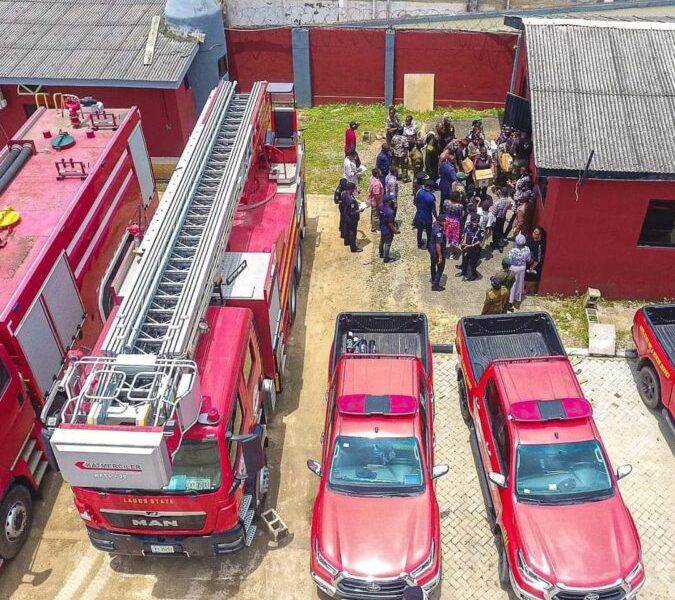
The Federal Government announced a sweeping set of fire safety reforms on Monday in Abuja, unveiling plans to broaden the Federal Fire Service’s mandate, establish community‑level fire outposts and overhaul professional training. Minister of Interior Olubunmi Tunji‑Ojo made the declarations during the opening of the 2026 National Fire Safety Week and Stakeholders’ Conference, stating the administration wants to shift the agency from a narrow firefighting role to a comprehensive emergency rescue institution. The reforms are anchored in a draft law intended to replace the over‑sixty‑year‑old Fire Service Act, which officials say no longer supports the service’s expanding duties.
Tunji‑Ojo warned that the existing legislation has become a barrier to effective response, noting that “no matter how good an action is, if the law does not empower you to do it, it becomes illegal.” He explained that the new law would give legal backing for rescue operations, public education and community preparedness, while also strengthening institutional capacity. The minister highlighted prevention, rigorous fire safety inspections and enforcement of building codes as essential components of the fire safety reforms, urging authorities to treat fire prevention with the same urgency as post‑incident response.
In addition to legal changes, the minister detailed a series of operational upgrades. The number of Federal Fire Service commands has risen from six to 18, a move meant to improve administrative coverage and create more advancement opportunities for personnel. Over the past decade, nearly 100,000 promotions have been processed across the ministry’s paramilitary agencies, and the 2026 promotion exercise has already cleared more than 50,000 outstanding cases. About 5,000 candidates are now in the final stages of the latest recruitment drive, having passed drug tests, documentation checks and deployment requirements.
The reforms also call for the deployment of trained fire marshals to districts and communities, and for basic rescue techniques and life‑saving skills to be incorporated into school curricula at all levels. Tunji‑Ojo argued that equipping citizens with elementary emergency response knowledge, such as resuscitation, would lower casualties by enabling immediate assistance before professional responders arrive. He urged the Federal Fire Service to partner with educational institutions to embed these skills in formal learning, emphasizing that emergency preparedness should not rest solely on government agencies.
Comptroller‑General Olumode Adeyemi echoed the minister’s vision, revealing that the agency is rolling out “mini fire outposts” to bring emergency services closer to Nigerians and cut response distances. He said the initiative is part of a broader decentralisation effort that will spread fire protection beyond major urban centres. Partnerships with the Association of Local Governments of Nigeria (ALGON), the Tertiary Education Trust Fund (TETFund) and the Tony Elumelu Foundation are already under way to boost fire safety infrastructure in public tertiary institutions and among ordinary citizens.
Adeyemi cited several community donors, including the Offa Descendant Association, Alhaji Daud Tijani Igi‑Ogun of Bonny Island Local Government, and Hon. Festus Akingbaso of Idanre, Ondo State, who have provided land, financed designs and constructed fire stations that were later handed over to the Federal Fire Service. He called on corporate organisations, property developers, philanthropists and community groups to replicate such investments, describing fire safety infrastructure as vital for protecting lives, property and economic activity.
Training capacity is also set to expand dramatically. The National Fire Academy in Sheda, Kwali Area Council of the Federal Capital Territory, is now 85 percent complete and slated for commissioning before year‑end. Spread over roughly 23 hectares, the academy will accommodate more than 3,000 trainees simultaneously and feature drill towers, classrooms, a library, a health centre and hostel facilities, all powered by solar energy. A fire hydrant facility attached to the academy is expected to be finished by December, further enhancing practical training resources.
Adeyemi added that the academy’s reconstruction will provide structured courses for fire marshals, fire wardens and volunteer firefighters, aiming to grow a community‑based volunteer workforce without imposing extra fiscal strain on the government. The training hub is intended to serve as a dedicated centre for professional development within the service, supporting the broader fire safety reforms agenda.
The 2026 National Fire Safety Week, themed “Building a Fire‑Resilient Nigeria: One Community at a Time,” will run concurrently with the reforms rollout. The week‑long programme will feature simultaneous fire safety awareness campaigns across all 36 states and the Federal Capital Territory, with activities at motor parks, schools, markets, roadshows and the distribution of fire safety materials. New logos, fire‑safety booklets translated into indigenous languages and the second edition of the Controller‑General of Fire Cup will also be unveiled, aiming to boost public engagement and inter‑agency camaraderie.
Adeyemi urged Nigerians to adopt simple preventive measures such as safe handling of electrical appliances, proper cooking practices, responsible storage of flammable materials and prompt reporting of hazards. He stressed that lasting fire resilience will depend on sustained public education, continued investment in emergency infrastructure and deeper community participation beyond the annual campaign.
The reforms are set to move forward as the draft legislation is tabled for parliamentary consideration in the coming months, while the National Fire Academy prepares for its inaugural intake later this year. Both officials indicated that successful implementation will hinge on coordinated effort between government bodies, educational institutions and civil society, signalling a concerted push toward a more responsive and community‑focused emergency service across Nigeria.















Join the conversation