
Metal detectorists Morocco: hobbyists scour Agadir beaches for hidden relics
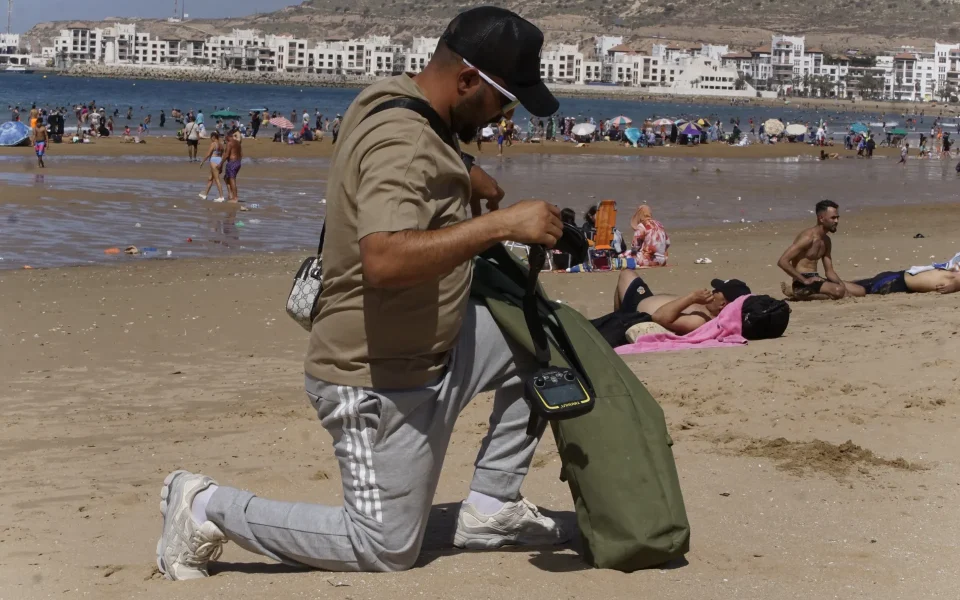
Mustapha Harmouch, a 33‑year‑old content creator, is among a growing community of metal detectorists Morocco who spend weekends strolling the sand‑lined Corniche of Agadir with handheld devices humming for any buried object. On a typical Saturday, Harmouch moves the detector in slow, even arcs, listening for the faint beep that signals a hidden piece of metal. The hobby, which he documents on his YouTube channel Stofishing, offers him a blend of adventure and education rather than a clear profit motive. “The excitement comes partly from not knowing what lies beneath the sand,” he told Al Jazeera English, underscoring the thrill of uncertainty that drives many in the hobby.
Harmouch purchased his Tianxun TX 850 detector online about four years ago, and his occasional outings have turned into content that now reaches roughly 123,000 subscribers. Each video showcases a new find, ranging from ordinary fishing gear to historic artifacts. In the coastal town of Sidi Ouassay, roughly 65 kilometres south of Agadir, he uncovered a rare haul of 14 Moroccan falus, bronze or copper coins dating back to the late 13th century on the Hijri calendar. While some of the coins were eroded by salt, the oldest bears the date 1289 Hijri, offering a tangible link to the region’s past. For Harmouch, the monetary value matters less than the story each coin tells; “I just collect them as a memory,” he said, eyes shining.

Beyond coins, the detector’s indiscriminate beeping has led to curious misidentifications. Harmouch recalled a moment when he believed he had struck a meteorite, only to discover the object was a common, inexpensive mineral. Such episodes reinforce the hobby’s blend of surprise and learning. The appeal extends to other members of the Moroccan Association for Research and Exploration Enthusiasts, a loosely organized group that meets several times a month to share tips and ensure respectful practice. The association’s members favour spots like Taghazout and the less littered stretches of the Corniche, where metal detectors encounter fewer modern refuse items that can clutter the signal.
Finds on these beaches have included jewellery, foreign currency such as a French 20‑franc silver coin, and even a small gold ring discovered in Taghazout. Harmouch emphasizes that when an item appears valuable, he attempts to locate its owner and return it. “I always try to identify and return valuable lost items to their rightful owners,” he said, reflecting the community’s sense of responsibility.
Morocco’s legal framework, however, draws a firm line between casual hobby and unauthorized archaeological excavation. Law 22‑80, the principal statute protecting monuments, archaeological sites, works of art and antiquities, mandates that any intentional search for historic objects must be authorized. Accidental discoveries are still required to be reported, and objects should not be moved unless necessary for preservation. The government repeatedly warns that unlicensed prospecting on land or at sea is prohibited. In practice, this means a metal detectorist who stumbles upon a centuries‑old coin must notify authorities rather than keep the find for personal gain.
Underwater archaeologist Basma Oumaima stresses that context matters as much as the artifact itself. “Sometimes something as simple as a fragment of metal, a coin, or a small tool can become important because of where it was found and what was found around it,” she explained. Oumaima adds that detectors can aid professional surveys when used systematically, recording each find’s precise location and surroundings. This perspective aligns with the association’s guidelines: members carry identification, avoid private property and known heritage sites, and treat detecting as a pastime rather than a commercial venture. Their primary income derives from unrelated activities such as content creation or, in Harmouch’s case, a fishing equipment shop.
Other hobbyists echo similar motivations. Mohamed Botaib, a former sports coach now seeking employment, spends his free hours scanning beaches, forests and mountains. His haul consists mainly of ordinary coins, Moroccan dirhams and simple rings. “Every person has their luck,” he observes, acknowledging that chance, rather than skill alone, determines each outing’s reward. Jalal Zegnoune, a maintenance technician based in Casablanca, highlights the practical side of the hobby. His detector has recovered not only coins and jewellery but also hazardous debris like rusted sardine‑can fragments, nails and lost fishing gear. “I remove such objects from the beaches because some can be dangerous to beachgoers,” he said, framing detection as a modest form of beach clean‑up.
Collectively, these enthusiasts view their activity as a contribution to both cultural heritage and environmental stewardship. Botaib sums it up: “When we look at the beach, it’s not to find treasure. It’s also our way of contributing to keeping our beaches clean. We collect pieces of metal and aluminium that we find and throw them away.” This sentiment resonates with broader efforts to maintain Morocco’s popular coastal resorts, which attract both locals and tourists. By extracting stray metal, detectorists help reduce hazards and improve the aesthetic quality of the shoreline, a benefit that local municipalities quietly welcome.
As the hobby gains visibility through social media, authorities continue to monitor its growth. The Ministry of Culture has indicated that it will work with the Association for Research and Exploration Enthusiasts to ensure that hobbyists are informed about reporting obligations and the importance of preserving archaeological context. Meanwhile, detectorists like Harmouch plan to keep exploring, balancing curiosity with compliance. “It’s a nice hobby because it’s the kind of exploration where I find something and learn something new,” he said, hinting that future outings may yet uncover more pieces of Morocco’s layered past.














Join the conversation