
Iran warning to US and Israel over new attacks
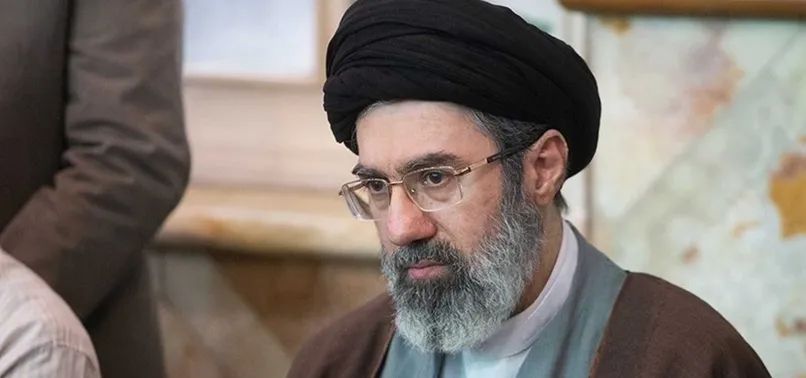
Iran’s supreme leader, Ayatollah Mojtaba Khamenei, issued a stark Iran warning on Saturday, telling the United States and Israel that any renewed military or terrorist strike would be met with a decisive Iranian response. The written statement, posted on the leader’s official website, came after recent threats of further strikes against Tehran. In the document, Khamenei warned that “the armed forces of the Islamic Republic and the Iranian nation will determine the time and conditions for ending them” if the enemies launch new attacks. The warning was delivered during a meeting with senior military commanders.
The gathering included the chief of staff of the armed forces, Ali Abdollahi, army chief Amir Hatami and Revolutionary Guards commander Ahmad Vahidi. It marked the first reported encounter between Khamenei and the top brass since he succeeded his father, Ayatollah Ali Khamenei, after the latter’s death in the early February US‑Israeli strikes that ignited the regional war. According to the statement, the supreme leader instructed the commanders to prepare for an immediate response to any fresh threat, emphasizing that “any level or type of threat must be met with an immediate, impactful and geographically unrestricted response.”
Khamenei’s directive also called for an expansion of Iran’s target list, ordering that it now include “all types of tangible and intangible assets belonging to the American‑Zionist enemy.” This language suggests a broadened scope for retaliation, potentially reaching beyond conventional military sites to economic, diplomatic or cyber assets. The conflict, which began on February 28 with coordinated US‑Israeli strikes, has already seen Tehran launch attacks on multiple countries across the Middle East. By widening the list of permissible targets, the supreme leader is signalling a willingness to extend the war’s reach if the warning is ignored.
The timing of the Iran warning coincides with renewed diplomatic activity aimed at averting a further escalation. A Qatari delegation arrived in Tehran on Friday, October 30, to discuss the situation with Iranian officials. Reports indicated that Iran had also received a letter from US Vice President JD Vance, though Iranian media noted that Tehran had not yet responded. The presence of the Qatari team shows the regional effort to keep channels of communication open, even as both sides exchange hard‑line statements. Qatar has often acted as an intermediary in Tehran‑Washington dialogues, and its involvement this week reflects a broader attempt by Gulf states to contain the spill‑over of hostilities.
Analysts note that Khamenei’s public warning, though issued in a written format rather than a televised address, carries weight because it comes directly from the highest authority in Iran’s political and religious hierarchy. The supreme leader’s statements often set the tone for Iran’s foreign and defense policies, and his call for an “immediate, impactful and geographically unrestricted response” may influence the operational planning of the Islamic Revolutionary Guard Corps and regular army units. Military commanders are now tasked with updating targeting databases and ensuring readiness, which could translate into heightened alert levels across Iran’s armed forces. In Iran’s system, the supreme leader controls both the armed forces and the judiciary, meaning that any decision on retaliation would be coordinated across multiple state organs.
International observers are watching for any concrete steps that might follow the Iran warning. While diplomatic overtures, such as the Qatari visit and the US vice‑presidential letter, suggest a desire to de‑escalate, the language used by Khamenei leaves little room for ambiguity about Tehran’s red lines. Should the United States or Israel decide to resume offensive operations, the Iranian response could be swift and far‑reaching, potentially affecting assets and interests beyond the immediate battlefield. This dynamic adds pressure on diplomatic channels to produce a tangible de‑confliction framework.
The next phase of the crisis will likely hinge on how both sides interpret the warning and whether further diplomatic messages can bridge the gap. Iranian officials have yet to comment on the content of the US vice‑presidential letter, and the Qatari delegation’s discussions are expected to continue in the coming days. As the situation develops, the international community remains alert to any signs of movement, with the hope that the Iran warning will serve as a deterrent rather than a prelude to renewed hostilities.
The latest development is that Iranian officials are reportedly reviewing the Qatari delegation’s proposals, while senior military staff are finalising revisions to the expanded target list. Both moves suggest that Tehran is preparing for a range of possible scenarios, from diplomatic resolution to a calibrated military response, depending on how the United States and Israel act in the coming weeks.

Reporter at 03naija.com.







Join the conversation