
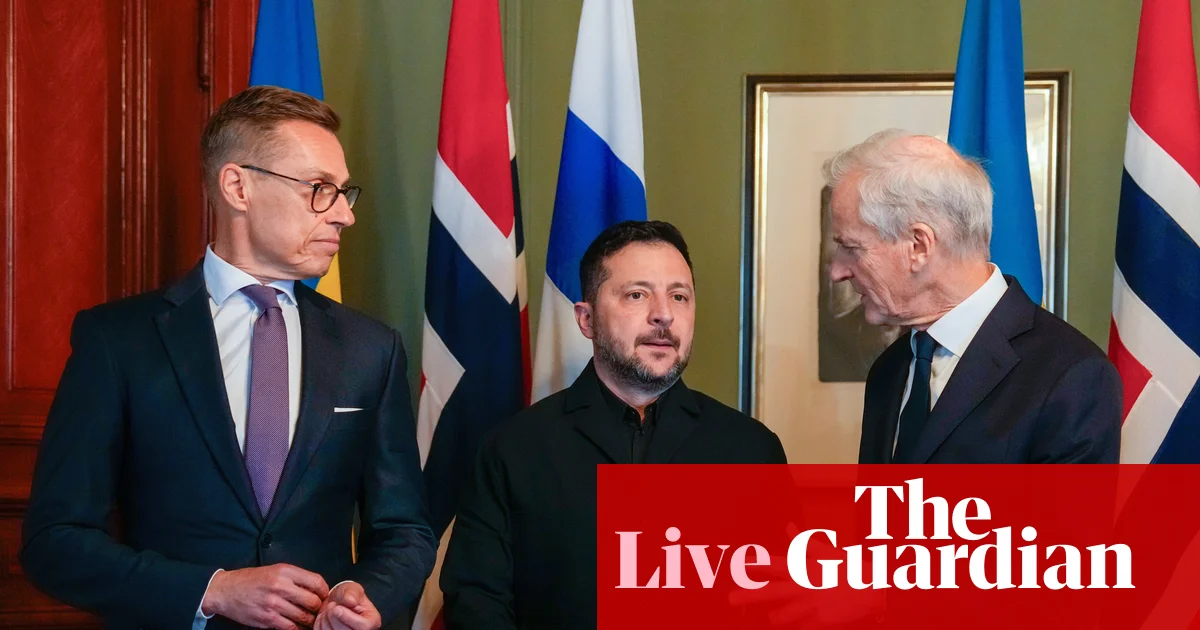
Finland norway call
Finland and Norway leaders held a frank call with President Vladimir Putin to discuss Ukraine, a move described as a “follow‑up” to last week’s Oslo meeting and aimed at shaping upcoming talks in Abu Dhabi.
The conversation took place on Wednesday, when Finnish President Alexander Stubb and Norwegian Prime Minister Jonas Gahr Støre spoke directly with the Russian leader. Both officials said the call was intended to convey their countries’ positions on future negotiations that could help end the war that began with Russia’s invasion of Ukraine in February 2022. Stubb’s office released a statement confirming the discussion, noting that the leaders acted in their national capacities rather than as representatives of the European Union.
In the statement, the Finnish president’s office emphasized that Finland and Norway share borders with Russia and have been steadfast supporters of Kyiv. “The aim of the call was to convey messages directly regarding future negotiations to help to end the war to President Putin,” the release read. It added that the dialogue was linked to the trilateral talks among Russia, Ukraine and the United States scheduled for early November in Abu Dhabi, a summit that many see as a key moment for diplomatic efforts. By reaching out ahead of that meeting, the Nordic leaders hope to shape the agenda and possibly lower the level of tension in the region.
Both leaders highlighted the broader strategic importance of stability in the Baltic Sea and the High North. The statement underlined that “Norway and Finland have always promoted peace and security in our region. The two countries have a shared interest in stability and predictability in the Baltic Sea region and the High North.” This focus reflects long‑standing concerns about Russian military activity close to their coastlines, which has prompted increased NATO presence and defence spending in the Nordic area over the past few years.
Stubb described the discussion as “frank and substantive,” stressing that direct engagement with Moscow is essential if the conflict is to be resolved. He told reporters that “ending the war requires direct discussions” with Russia, pointing to the need for open channels even when diplomatic relations are strained. Støre echoed this sentiment, noting the human and material toll of the war. “The war comes with enormous human and material costs. The suffering and destruction will impact generations. In the call we stressed the importance of de‑escalation,” he said.
While the leaders made clear that they were not speaking on behalf of Europe as a whole, their joint approach signals a coordinated Nordic stance. Both Finland and Norway have been vocal in NATO forums about the necessity of a united front against aggression, yet they also recognize the value of bilateral talks that can complement broader multilateral efforts. Their outreach to Putin aligns with a pattern of back‑channel diplomacy that has been used intermittently throughout the conflict, including earlier attempts by Turkey and the United Nations to open lines of communication with Moscow.
Analysts note that the upcoming Abu Dhabi summit will bring together President Putin, Ukrainian President Volodymyr Zelenskyy and U.S. President Joe Biden, among other leaders. The outcome of that meeting could set the tone for future ceasefire talks, prisoner exchanges and reconstruction plans. By positioning themselves as interlocutors ahead of the summit, Stubb and Støre may hope to influence the agenda and ensure that Nordic security concerns are addressed. Their call also serves as a reminder to Moscow that neighboring states remain engaged and are prepared to use diplomatic avenues to seek peace.
The reaction in Oslo and Helsinki has been cautiously optimistic. Foreign ministries in both capitals have praised the leaders for taking a proactive step, while opposition parties have urged transparency about the specifics of the conversation. International observers are waiting for any concrete proposals that might emerge from the Abu Dhabi talks, aware that any movement toward de‑escalation could have immediate effects on energy markets, refugee flows and regional security calculations.
As the diplomatic calendar moves forward, the next step will be the trilateral meeting in Abu Dhabi, where the three major powers are expected to discuss a roadmap for ending hostilities. Both Finland and Norway have signalled they will continue to support Ukraine while also seeking avenues for dialogue with Russia. Their recent call with President Putin represents a tangible effort to keep diplomatic channels open, a strategy that may prove decisive as the world watches for any sign of progress toward ending the conflict.

Comments