
Ahmed Tijjani Suleiman: A lifetime of education and solar advocacy
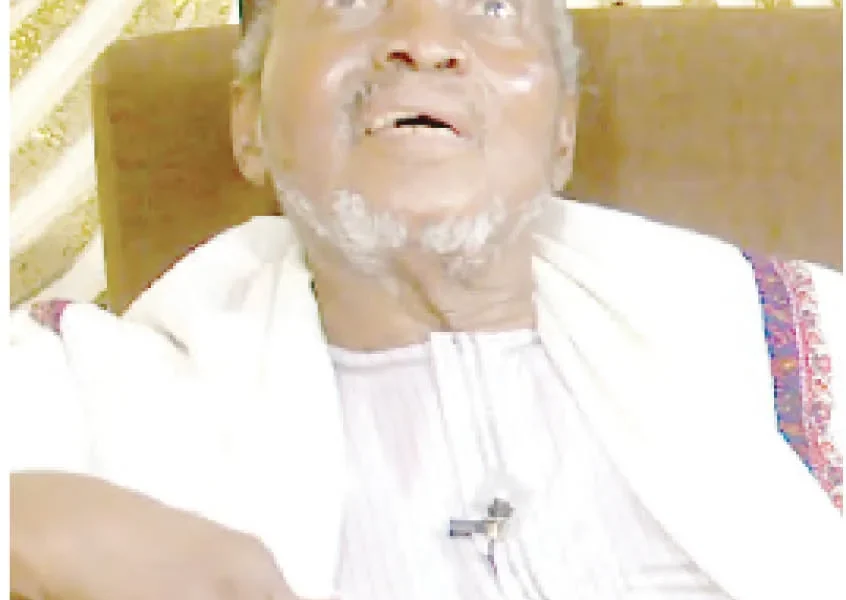
Ahmed Tijjani Suleiman, the eminent emeritus professor of energy engineering who recently passed away, shared a vivid recollection of his early years and professional ascent in an interview granted on 28 January 2024. The conversation, reproduced by Weekend Trust in his memory, tracks his path from a modest upbringing in Ringim, Jigawa State, through elite schools, to senior roles at several Nigerian universities and his influential work in solar energy.
Born on 28 September 1945, Suleiman spent his first five years in Ringim before traditional expectations steered him toward Quranic schooling. His family, like many in the region, resisted modern education, fearing it conflicted with Islamic values. When authorities threatened to present defiant parents before the Emir of Kano, his mother persuaded his father to enroll the boy in junior primary school, allowing the young Ahmed to begin formal schooling in January 1953.
After completing four years of junior primary education, he advanced to senior primary school in Gwarzo, on the western side of Kano. Though reluctant to travel far, he was later selected for Government College Zaria in 1958, becoming the sole student from his school to receive the invitation. The family’s support, aided by a senior cousin residing in Zaria, eased the transition, and reliable railway services facilitated his journey northward.
At Government College Zaria, Suleiman joined a small cohort of six students from the entire northern province, a notable achievement given the limited representation from that region. He recalls the camaraderie with classmates who later became prominent figures, such as Dr Maitama Bichi, a permanent secretary in Kano State. While his early education blended Quranic studies with modern curricula, he excelled in the West African School Certificate (WASC) examinations, earning top marks that opened doors to further study.
In 1964, his academic record earned him a place at King’s College Lagos for the higher school certificate (HSC). The move was daunting; Lagos was a distant coastal city, and as a “gambari” from the north, he faced cultural prejudice from local students who viewed provincial entrants as outsiders. Despite teasing and a rigid English‑run administration, Suleiman and his fellow northern peers performed strongly, achieving Division One results that show their academic capability.
Choosing a university was not straightforward. Suleiman applied to three institutions, University of Ibadan for mathematics, University of Nigeria, Nsukka for civil engineering, and Ahmadu Bello University (ABU) for mechanical engineering. Political upheaval following the January 1966 coup disrupted his plans, closing the Ibadan and Nsukka options. A posting to Bauchi Teachers College as a temporary teacher followed, where he witnessed the burial of former Prime Minister Abubakar Tafawa Balewa, an event that left a deep impression. Ultimately, ABU became his sole viable choice, and he enrolled in mechanical engineering, a discipline he initially knew little about.
During his studies, Suleiman discovered that mechanical engineering formed the core of all engineering disciplines, with specializations emerging only in the final year. He embraced the field, seeing its potential to enhance agricultural practices, a nod to his farming roots. Upon graduation, he noted the emergence of an agricultural engineering program, signalling the university’s commitment to linking engineering expertise with Nigeria’s agrarian economy.
Suleiman’s professional trajectory spanned several academic institutions. After a brief teaching stint, he joined Ahmadu Bello University, Zaria, where he later taught. He then moved to the University of Sokoto, rising to Deputy Vice‑Chancellor, before becoming Vice‑Chancellor of the Federal University of Technology, Yola. A short tenure as Acting Vice‑Chancellor of the University of Abuja further highlighted his administrative acumen. Throughout his career, he also served as commissioner in his home state of Jigawa, contributing to public policy beyond the university arena.
Beyond academia, Suleiman’s impact resonated in the renewable energy sector. A two‑time president of the Solar Energy Society of Nigeria, he championed solar power as a viable solution for the country’s energy challenges. Colleagues recall his advocacy for integrating solar technologies into rural electrification projects, emphasizing the need for government commitment to scale up installations. His leadership helped shape national discourse on clean energy, though he lamented that “our governments are not serious about solar power,” reflecting persistent policy gaps.
Family members and former students described him as a disciplined scholar who combined rigorous scientific inquiry with a deep respect for traditional values. His early exposure to both Quranic learning and modern education equipped him with a unique perspective that he applied to teaching, research, and public service. Former pupil Dr Maitama Bichi noted that Suleiman’s mentorship inspired many to pursue engineering careers, contributing to Nigeria’s growing pool of technical talent.
The interview concludes with reflections on his legacy. Suleiman’s life story illustrates the transformative power of education, especially when supported by family resolve and institutional opportunity. His journey from a remote village to the helm of major universities show the importance of accessible schooling in Nigeria’s diverse regions. Moreover, his dedication to solar energy advocacy remains a call to action for policymakers to prioritize sustainable power solutions.
Weekend Trust plans to archive the full transcript of the interview, ensuring that Ahmed Tijjani Suleiman’s experiences and insights continue to inform future generations. The publication hopes that his story will motivate young Nigerians, particularly those from underserved areas, to pursue education and contribute to national development.
The next step involves the Solar Energy Society of Nigeria organizing a commemorative symposium later this year, where former colleagues will discuss ongoing projects inspired by Suleiman’s vision for a solar‑powered future.

Reporter at 03naija.com.










Join the conversation