

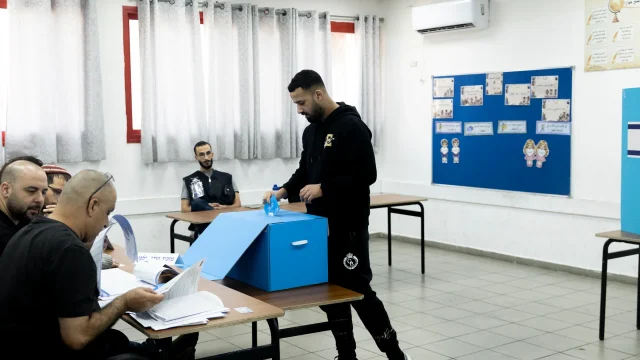
The Israel election on 27 October 2026 ended without a decisive victor, exit polls released after polls closed showing the anti‑Netanyahu opposition alliance ahead of the Prime Minister’s camp. The preliminary count gives the opposition bloc 52 to 53 seats in the 120‑member Knesset, while the Netanyahu coalition is projected to hold 50 seats, and Arab parties together are expected to secure 17 to 18 seats. Voters turned out in large numbers, a turnout described by analysts as the most consequential in the country’s modern political history. With no party or alliance reaching the 61‑seat threshold needed to form a government, Israel faces a period of intense negotiations in the days ahead.
The figures come from televised exit polls compiled by several Israeli broadcasters, which aggregated responses from thousands of voters across the nation. Although exit polls are not final, they have historically proved accurate in Israel’s tightly contested elections. The opposition alliance, a coalition of several Jewish‑led parties united by a common goal of unseating Benjamin Netanyahu, appears to have edged ahead by a narrow margin. Netanyahu’s own bloc, which includes right‑wing and religious parties that have traditionally supported his leadership, fell short of the majority by roughly ten seats. Arab parties, running on a separate list, are expected to hold a balance of power that could prove decisive in coalition talks.
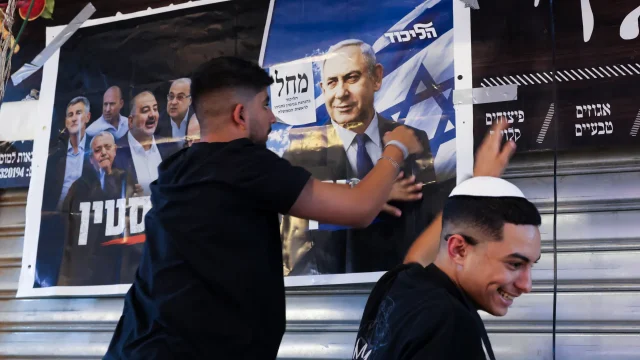
Benjamin Netanyahu, Israel’s longest‑serving prime minister, has repeatedly warned that a new government could destabilise the nation’s security apparatus. In statements made during the campaign, he emphasized the need for continuity in foreign policy and defence, especially given the volatile regional environment. His supporters argue that his experience is essential for navigating threats from Iran and Hamas, while critics contend that his tenure has been marked by corruption scandals and a growing political rift. The opposition, led by figures such as former defence minister Yoav Gallant, has promised a shift towards a more centrist agenda, though the exact composition of the new alliance remains unclear.
Political analysts note that the projected 52‑53 seats for the opposition still fall short of an outright majority, meaning they will need to court additional partners to reach the 61‑seat mark. The Arab parties, which have historically been excluded from coalition governments, may become kingmakers if the opposition chooses to engage them. However, many Israeli parties have publicly ruled out formal alliances with Arab factions, citing ideological differences and security concerns. This stalemate could push negotiations into a protracted period, potentially prompting the president to task a senior Knesset member with forming a government.
The high voter turnout, reported as the highest in recent decades, reflects a public appetite for change after years of political turbulence. Citizens cited issues such as the cost of living, the ongoing conflict in Gaza, and concerns over judicial reforms as motivations for casting their ballots. The election was also the first to feature extensive use of electronic voting machines in several precincts, a move aimed at speeding up the counting process and reducing human error. Despite these technological upgrades, the final tally will still rely on paper ballot verification, a safeguard that could delay the official results for several days.
International observers have been closely watching the Israel election, given the country’s strategic importance in the Middle East. The United States, the European Union and neighbouring Arab states have all issued statements urging a peaceful transition of power and respect for democratic norms. In a recent press briefing, a spokesperson for the U.S. State Department said that Washington “remains committed to a stable and secure Israel and looks forward to constructive dialogue with any elected government.” Meanwhile, regional powers such as Saudi Arabia and Egypt have expressed hope that the new leadership will revive stalled peace initiatives.
The election outcome also carries implications for Israel’s domestic policy agenda. If the opposition secures a governing coalition, it may reverse or moderate some of the judicial reforms pushed by Netanyahu’s government, which sparked nationwide protests last year. Economic reforms, particularly those targeting housing affordability and wage growth, are also likely to feature prominently in coalition negotiations. Conversely, should Netanyahu manage to assemble a coalition with right‑wing partners and perhaps a few centrist independents, his policy direction could remain largely unchanged, preserving the current trajectory on security and settlement expansion.
As the night progressed, party leaders gathered in Jerusalem’s Knesset building, preparing for the intense bargaining that lies ahead. The president, Isaac Herzog, is expected to meet with the heads of both blocs later this week to determine who will be given the first attempt at forming a government. Political insiders warn that if a coalition cannot be agreed upon within the constitutionally mandated 28 days, Israel could be forced into another election cycle, further exhausting public resources and voter patience. For now, the nation watches as the numbers settle and the next steps in the Israel election unfold.

Comments