
France protests see 70,000 police deployed for third weekend of demonstrations
The interior ministry announced on Saturday that France is preparing for a third weekend of protests, deploying roughly 70,000 police officers to curb the risk of unrest. The move comes after nationwide demonstrations over the rising cost of living and a faltering education system have drawn hundreds of thousands onto the streets. Authorities have warned that while protests will be permitted, they will not be allowed in city centres where the potential for violence and property damage is highest.
Laurent Nuñez, France’s interior minister, described the situation as a “very high risk of public disorder” earlier in the week. He said the government had identified social‑media posts urging Halloween gatherings to spark a “revolution” and stressed that “everyone is on deck to ensure an extremely firm response to any trouble.” The interior ministry confirmed that about 150 demonstrations are slated for the weekend, ranging from small rallies to larger gatherings in major towns.
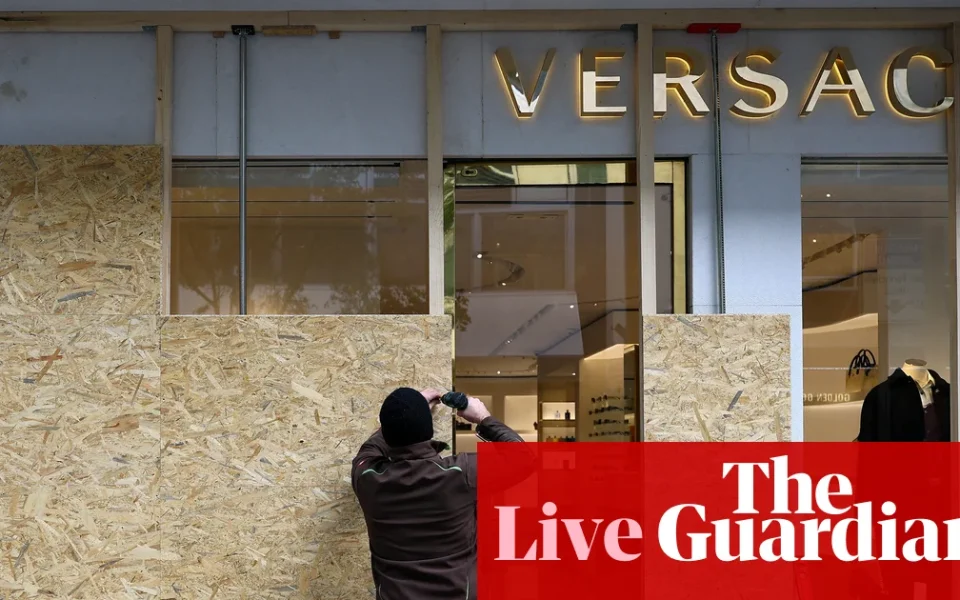
Across the country, shop owners have boarded up storefronts in anticipation of possible looting and vandalism. Police have placed restrictions on access to Place de la République and Les Halles between 11 p.m. and 6 a.m. on Saturday and Sunday. In addition, unaccompanied minors face a separate 9 p.m. curfew around the Champs‑Élysées, a measure aimed at preventing youthful participants from being caught up in any flare‑ups.
The protests, which began in late September, were initially driven by students upset with overcrowded classrooms, dilapidated school facilities and what they see as an unfair university admissions process. Their grievances quickly found resonance with the broader gilets jaunes (yellow‑vest) movement and trade unionists, who added demands for lower fuel prices and broader social reforms. Government pledges to overhaul the education system and reduce fuel costs have done little to calm the anger, according to observers on the ground.
In parallel, a wave of youth‑led demonstrations is spreading across Europe. More than 30 German cities are set to host protests organized by an alliance called Gen Z regelt, which translates to “Gen Z is sorting it.” Organisers in Berlin, Frankfurt, Munich and Cologne are urging participants to demand greater investment in education, stronger climate action, affordable housing and opposition to proposals that would reinstate compulsory military service. They anticipate that over 160,000 people will take to the streets in Germany on the same weekend.
The coordinated timing of the French and German rallies reflects a growing sense of solidarity among young activists. While France’s authorities focus on preventing riots, German police have adopted a largely permissive stance, allowing demonstrations to proceed provided they remain peaceful. Analysts note that the shared focus on education and climate issues points to a generational shift in protest priorities, moving beyond the traditional economic grievances that have defined earlier gilets jaunes actions.
Local business owners in Paris expressed concern about the economic toll of repeated disruptions. A shopkeeper near Les Halles told reporters that the cost of boarding up windows and hiring extra security staff could run into thousands of euros, a burden many small enterprises can hardly absorb. Meanwhile, some residents near the Champs‑Élysées welcomed the curfew, saying it offers a measure of safety for families who fear stray projectiles or clashes between protesters and police.
Human‑rights groups have called for proportional use of force, urging French authorities to respect the right to peaceful assembly while maintaining public order. They pointed to incidents on 17 October, when looting and vandalism were reported in several cities, as evidence that a firm response may be necessary but must be balanced with respect for civil liberties. The interior ministry has not detailed the specific tactics police will employ, only emphasizing that the response will be “extremely firm.”
As the weekend unfolds, the police presence will be most visible in central Paris, where the authorities hope to prevent the kind of large‑scale disturbances seen in earlier protests. Demonstrators are expected to gather at pre‑designated sites outside city centres, where they can voice their demands without breaching the curfew. Organisers have urged participants to remain peaceful and to use the platform to push for concrete policy changes rather than resorting to property damage.
The next steps hinge on how both sides manage the delicate balance between expression and order. If the weekend passes with limited incidents, officials may view the strategy of heavy police deployment and targeted curfews as effective, potentially shaping how future demonstrations are handled. Conversely, any escalation could prompt renewed calls for dialogue between the government and protest groups, especially on the education reforms that continue to fuel the unrest.

Reporter at 03naija.com.











Join the conversation