
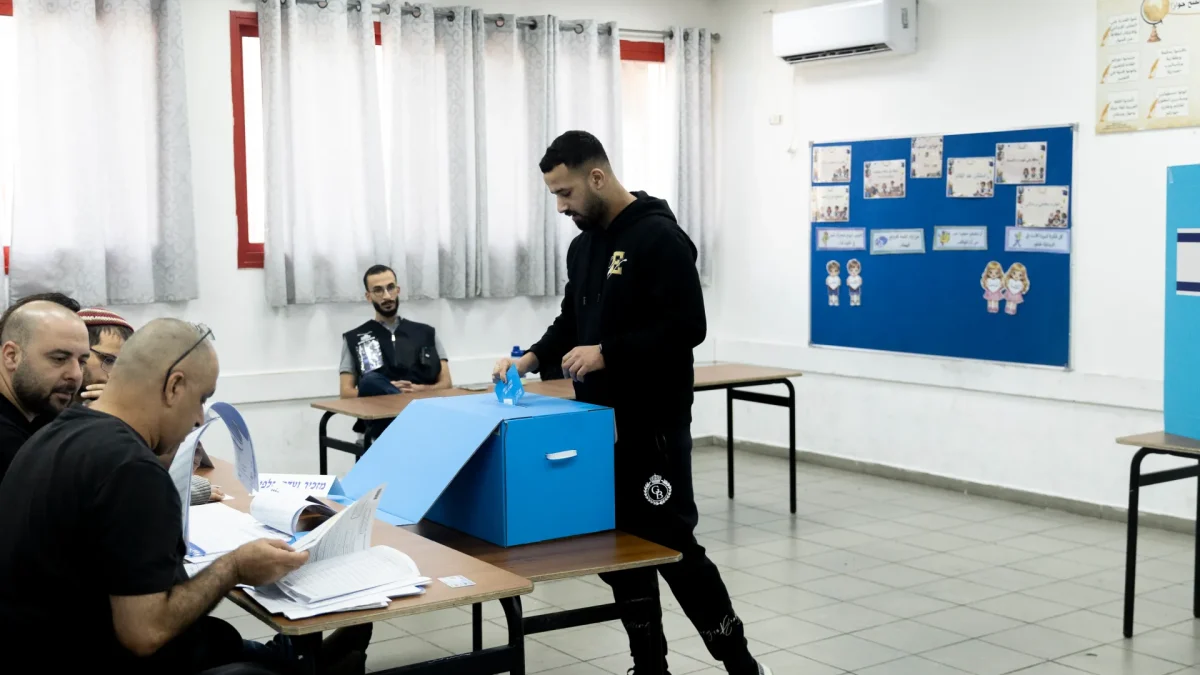
The exit polls released after Tuesday’s vote suggest that arab parties are on track to win a record 18 seats in the 120‑member Israeli parliament, a surge driven by an unprecedented turnout of roughly 80 percent among Palestinian citizens of Israel. The Joint List and Ra’am, the two main arab‑led alliances, appear to have translated their high participation into a historic parliamentary presence, according to data reported by Channel 12 and corroborated by Reuters.
The broader election picture shows a tight contest between the opposition bloc led by former chief of staff Gadi Eisenkot’s Yashar party and Prime Minister Benjamin Netanyahu’s Likud, each projected to secure about 51 seats. Overall voter participation reached 77.7 percent, the highest level since 1999, reflecting a keen public interest in a vote that many see as decisive for the country’s political direction.
Mansour Abbas, leader of Ra’am (the United Arab List), told Channel 12 that the current numbers do not yet produce a clear majority for any bloc. “With the numbers we have now, there is no government,” he said, adding that his party hopes to be part of an anti‑Netanyahu coalition that could reach the 61 seats needed to form a governing majority. Abbas, whose party currently holds five seats, noted that both the Yashar and Likud blocs had reached out to his group before and after the election, underscoring the strategic importance of arab parties in the final tally.
Former Israeli ambassador Alon Pinkas, speaking to Al Jazeera, warned that forming a stable government could prove difficult for parties like Eisenkot’s, which campaigned on a pledge not to join coalitions with arab parties. “There’s a price to pay,” Pinkas said, explaining that “Arabs can’t be kept outside and only being considered and co‑opted when you need their votes.” He cautioned that the arab‑led lists are likely to press for policy demands that a purely Jewish‑led coalition may find hard to accommodate.
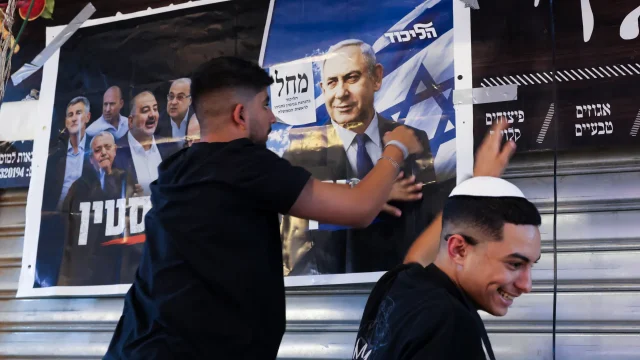
Netanyahu’s campaign intensified its appeals to voters on Tuesday, warning that a surge in arab turnout could alter the balance of power. Vehicles bearing Likud flags roamed Jerusalem’s streets while the Islamic call to prayer sounded from loudspeakers, a tactic the prime minister’s team described as a reminder that “Arabs are voting.” Social‑media posts from Netanyahu highlighted long queues in arab neighborhoods and featured images of women in niqabs awaiting their turn at the ballot box. “If we don’t wake up now, we’ll find ourselves with a government of Mansour Abbas and Ahmad Tibi,” he warned, naming two prominent arab Knesset members.
The reaction from arab politicians has been one of condemnation, labeling the prime minister’s messaging as racist and inflammatory. They argue that such tactics seek to intimidate rather than engage a community that has historically faced systemic marginalisation. Palestinian citizens of Israel, who constitute about 21 percent of the nation’s ten‑million population, have traditionally voted at lower rates than Jewish Israelis, making the current turnout a notable shift.
Al Jazeera’s correspondent Nour Odeh, reporting from Ramallah, described the election as “an existential moment for Palestinian‑Israelis.” She highlighted that the record turnout included voters who usually boycott elections, driven by a belief that their participation could finally affect the entrenched discrimination they experience. Odeh reminded readers that the Knesset has passed more than 100 laws perceived as discriminatory toward Palestinian citizens, and that these communities also encounter inequities in the allocation of state funds.
The high arab turnout and the projected 18 seats raise questions about the next steps in coalition negotiations. If neither the Yashar bloc nor the Likud bloc can secure a clear majority, they may be forced to engage with arab parties to reach the 61‑seat threshold. Such a scenario could compel the far‑right coalition to reconsider its earlier refusal to cooperate with arab groups, potentially reshaping policy priorities and budget allocations.
Political analysts note that the election’s outcome could influence Israel’s domestic agenda on issues ranging from national security to social welfare, as well as its foreign policy posture in the volatile regional environment. The presence of a stronger arab bloc may amplify calls for reforms aimed at reducing inequality, while also testing the resilience of coalition dynamics that have historically excluded arab voices from decisive power.
As the final count is compiled, the Central Elections Committee will certify the results in the coming days. Observers anticipate that the official numbers will confirm whether arab parties have indeed broken past records and will clarify the composition of the next government. The nation now watches how party leaders will deal with the delicate balance between political pragmatism and ideological commitments in the aftermath of an election marked by historic participation and heightened tensions.


Comments