
Buhari promise cited by Amaechi as cause of his 2022 APC primary loss
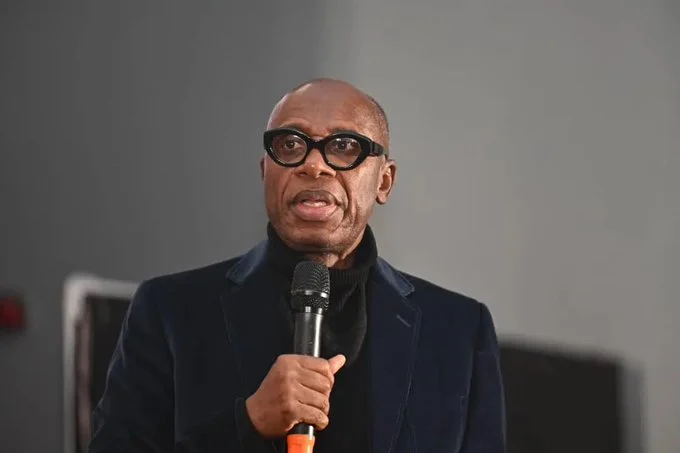
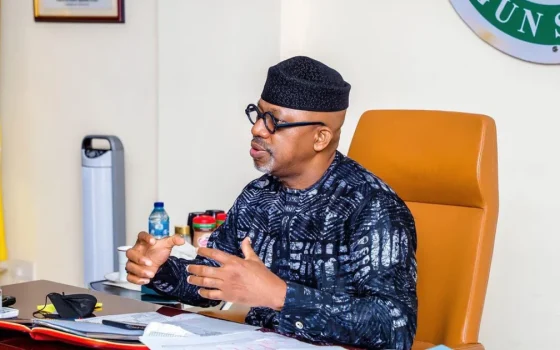
Rotimi Amaechi, the African Democratic Congress (ADC) vice‑presidential candidate, told listeners of Mainland 98.3FM’s The Situation Room that a written buhari promise not to campaign played a key role in his loss at the 2022 All Progressives Congress (APC) presidential primary. Speaking from Lagos on Friday, the former Minister of Transportation recounted how the late President Muhammadu Buhari had assured him, in a letter, that he would be announced as the party’s preferred candidate. Relying on that assurance, Amaechi refrained from the usual pre‑primary lobbying, a decision he now believes cost him the nomination.
Amaechi explained that the promise came directly from Buhari, whom he described as his former boss and a figure whose endorsement he trusted would give him an edge over rival aspirants. “The first mistake that I made at that primary was that I listened to President Buhari. He said to me, ‘Don’t campaign. Don’t do anything. I will announce you as my candidate,’” Amaechi said, recalling the exact words. He added that the instruction was not merely verbal but was “put in writing,” and that he intended to document the episode in his forthcoming memoir.

The former minister argued that his decision to abstain from campaigning left him without the political alliances that Bola Tinubu, the eventual winner, was busy forging. Tinubu, who secured the APC ticket by polling 1,271 votes to Amaechi’s 316 at the Eagle Square primary in June 2022, reportedly capitalised on deals with governors and other party power brokers. Amaechi admitted that he had been prepared to offer the offices of vice‑president and Secretary to the Government of the Federation to secure the backing of influential state leaders. “Now, I didn’t do deals. So I would have promised you vice‑president, promised you SGF, and then would have gone for this primary, I would have possibly won. I would have had governors on my side,” he said.
He also accused Tinubu of exploiting religious sentiment to win over delegates, particularly in the north‑west. According to Amaechi, a delegation of Southern Yoruba Muslims approached northern governors and appealed to them on the basis of faith to support Tinubu’s bid. He contrasted this approach with his own nationalist stance, saying he would never use religion as a political lever. “I wouldn’t want to run that kind of federation. Catholics are 35 million in Nigeria. I wouldn’t want to go to the Catholic Church and say, please announce me. Tell them that all Catholics must go out and vote Amaechi. It will cause confusion. It will cause problems in the country. That makes me a nationalist,” he asserted.
Amaechi also referenced former Kaduna State Governor Nasir El‑Rufai, who he claimed initially backed his presidential ambition before later switching support to Tinubu. Citing a viral video of El‑Rufai, Amaechi said the former governor framed his backing of Tinubu as a matter of faith, further underscoring the alleged religious undertones of the campaign.
The ADC chieftain’s comments come as he prepares to contest the 2027 presidential election as the running mate of former Vice‑President Atiku Abubakar. Having served as Buhari’s transportation minister and as a key strategist for the 2015 Buhari victory, Amaechi’s relationship with the former president has long been viewed as a cornerstone of his political career. His claim that Buhari’s written promise influenced his strategic choices adds a new layer to the narrative of the 2022 primary, a contest that ultimately open the door to Tinubu to become the APC candidate for the 2023 election, a race he subsequently won.
While Amaechi’s recounting of the buhari promise has sparked debate among political observers, it also raises broader questions about the role of internal party agreements and the extent to which personal loyalties shape electoral outcomes. Critics of the APC’s primary process have long argued that back‑room deals and patronage networks dominate the selection of candidates, often sidelining grassroots campaigning. Amaechi’s admission that he could have pursued similar arrangements, but chose not to, show the strategic calculations that candidates must weigh.
The former minister’s reflections on the use of religious identity in politics also touch on a sensitive fault line in Nigeria’s diverse society. By highlighting the alleged deployment of faith by Tinubu’s camp, Amaechi warns of the potential for heightened sectarian tension. His statement that exploiting religious affiliations could “deepen divisions in the country” resonates with ongoing concerns about national cohesion, especially as the nation prepares for another election cycle.
In response to Amaechi’s allegations, representatives of the APC have not issued an official comment, and no direct rebuttal from Tinubu or his campaign team has been recorded. The APC’s internal mechanisms for handling primary disputes remain opaque, leaving many of the claims unverified. Nonetheless, the narrative presented by Amaechi adds a personal dimension to the often‑secretive dynamics that shape party nominations.
As the 2027 election approaches, Amaechi’s experience in the 2022 primary may influence his campaign strategy alongside Atiku Abubakar. Whether the ADC ticket will adopt a more aggressive outreach to governors, or whether it will continue to eschew overt religious appeals, remains to be seen. Observers will be watching how the duo navigates the delicate balance between national unity and the political realities of coalition‑building.
The next steps for the ADC involve consolidating support across the country’s regions and articulating a clear policy platform that distinguishes it from the ruling party. Amaechi’s willingness to publicise his past missteps suggests a strategy of transparency that could resonate with voters fatigued by behind‑the‑scenes bargaining. As the political calendar moves forward, the impact of the buhari promise on Amaechi’s future ambitions will likely be measured against the electorate’s appetite for change and the effectiveness of the ADC’s outreach in the months ahead.









Join the conversation