
Students killed blast beside Kunar school
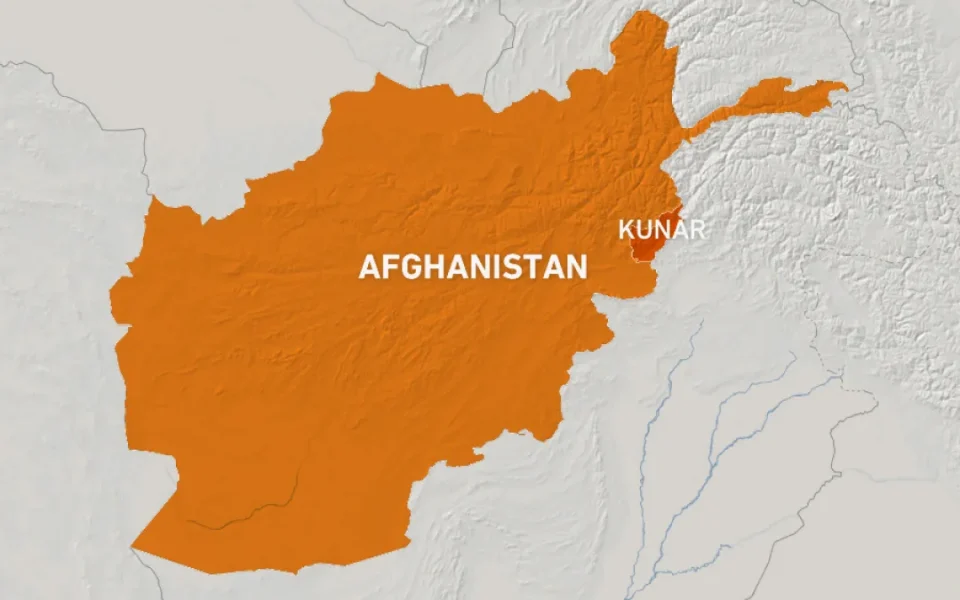
A medical official confirmed that at least six students were killed and 97 others injured in a blast beside a middle school in the Andar Ser area of Kunar province on Saturday morning. Mawla Dad, head of Kunar Provincial Hospital, told reporters the figures were preliminary and could be revised as more information becomes available. The explosion struck a house adjacent to the school at about 10 a.m. local time (05:30 GMT), shaking the community and prompting an immediate response from provincial authorities.
According to Mawlawi Sami‑ul‑Haq, director of Information and Culture in Kunar, the house that exploded belonged to a family involved in mining activities and stored dynamite on the premises. He did not give further details about the cause of the blast, nor did he specify the extent of damage to the surrounding structures. The lack of additional information at the time left many questions unanswered, but the presence of explosives in a residential building near a school show the risks that unregulated mining practices pose to civilian populations in the region.

Investigative teams from Kunar province arrived at the scene shortly after the blast. The province, which shares a porous border with Pakistan, has long been a corridor for both legal and illicit cross‑border trade, including the movement of raw materials and contraband. Local officials said that the teams are working to ascertain whether the explosion resulted from an accidental detonation of stored dynamite or a deliberate act. While no group has claimed responsibility, the proximity of the blast to a school has heightened concerns among parents and educators about safety protocols in areas where mining and education coexist.
The injured were rushed to Kunar Provincial Hospital, where medical staff began triaging the victims. Mawla Dad explained that the hospital was quickly overwhelmed by the number of casualties, especially the children who suffered shrapnel wounds and burns. Emergency responders set up temporary treatment areas in the hospital courtyard to accommodate the influx. Among the 97 injured, many are reported to be students ranging from early adolescence to their late teens, reflecting the school's catch‑all enrollment for the local community. The hospital’s capacity to handle such a surge is limited, and officials are seeking additional medical supplies and support from the Ministry of Public Health.
Community reactions have been swift and emotional. Residents gathered outside the school, holding candles and chanting prayers for the dead and the wounded. Local elders voiced frustration over the recurring pattern of violence near educational institutions. In August, a hand grenade attack at a school complex in Kabul wounded more than 40 children aged between nine and fourteen, a stark reminder that schools in Afghanistan are increasingly vulnerable to both insurgent attacks and accidental explosions. Parents of the victims have called for stricter enforcement of safety regulations surrounding the storage of explosives, urging the provincial government to conduct thorough inspections of homes used for mining operations.
The provincial authorities have pledged to investigate the incident thoroughly. Sami‑ul‑Haq said that the investigative teams are examining the storage practices of the mining family and reviewing any possible negligence that may have contributed to the tragedy. He also indicated that the findings will be communicated to national officials, who may consider revising existing guidelines on the handling of dynamite and other high‑explosive materials. In the meantime, the Ministry of Education has been asked to assess the security measures at schools across Kunar and neighboring provinces, aiming to prevent similar incidents in the future.
Nationally, the incident adds to a growing list of security challenges that the Afghan government faces as it attempts to stabilize the country. The presence of unregulated mining operations, especially in remote border areas, has been linked to funding for armed groups and to illegal trade networks that exploit weak governance structures. Experts note that the combination of limited state oversight and the economic reliance of local families on mining creates a precarious environment where accidents can quickly turn catastrophic, as seen in this latest blast.
Humanitarian agencies operating in the region have expressed readiness to provide assistance. The United Nations Office for the Coordination of Humanitarian Affairs (OCHA) has signaled that it will dispatch medical supplies and psychosocial support teams to help the affected families cope with trauma. Local NGOs have also mobilized volunteers to distribute food and basic necessities to those displaced by the explosion. While the immediate focus remains on treating the injured, longer‑term recovery will depend on coordinated efforts among government bodies, aid organizations, and community leaders.
As the investigation proceeds, officials warned that casualty numbers could rise if some of the injured succumb to their injuries. Mawla Dad reiterated that the current figure of six dead and 97 injured is based on early reports and may be updated as more patients are evaluated. The provincial health director urged the public to remain calm and to cooperate with authorities, emphasizing that accurate information is essential for effective response. He also appealed for patience as the forensic teams work to piece together the sequence of events that led to the explosion.
The tragedy has reignited calls for stricter regulation of explosive materials in Afghanistan, a country where decades of conflict have left a legacy of hidden stockpiles and informal storage practices. Legislators in Kabul have previously debated bills aimed at tightening control over dynamite and other explosives, but implementation has been uneven, particularly in provinces like Kunar where remote terrain hampers enforcement. Observers hope that the recent incident will accelerate policy reforms and galvanize a more robust security framework to protect schools and other civilian sites from the dangers of unsecured explosives.
In the coming days, families of the victims are expected to receive official notifications regarding compensation and support measures. The provincial administration has said it will work with the Ministry of Social Affairs to provide financial assistance to bereaved families and to cover medical expenses for the injured. Meanwhile, the school itself remains closed pending a safety assessment, leaving children without access to regular education and forcing parents to seek alternative arrangements. Authorities have promised to expedite the reopening of the school once it is deemed safe, though the timeline remains uncertain. The next steps involve completing the forensic investigation, reviewing mining regulations, and coordinating humanitarian aid, all aimed at preventing a repeat of such a devastating event.













Join the conversation