
Social media critics attacking President Tinubu are paid hirelings, Akpabio says
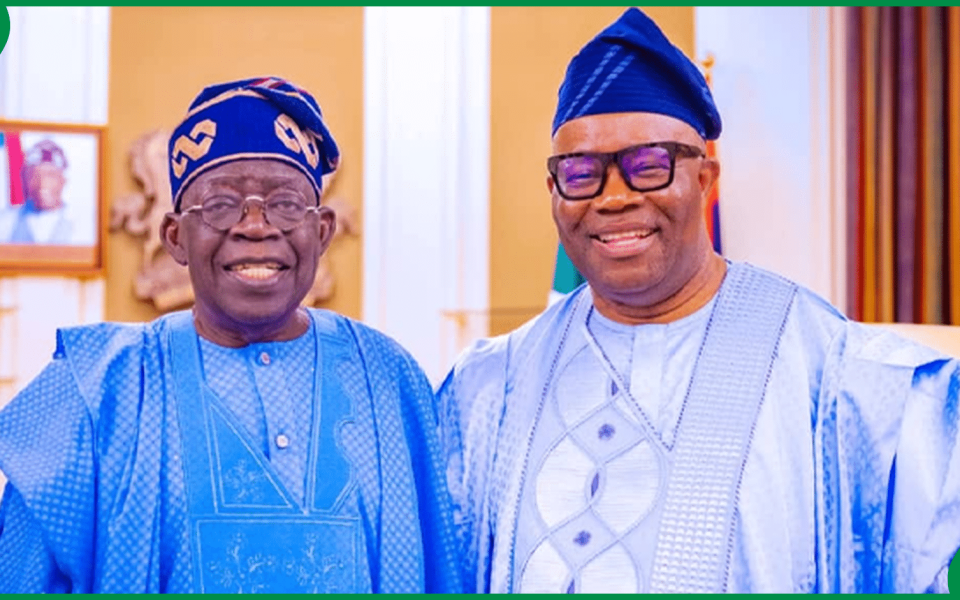
Senate President Godswill Akpabio told a gathering of northern youth leaders in Abuja on Wednesday that online commentators challenging the present administration do not act on genuine convictions, insisting that social media critics are paid agents sponsored to undermine the government. Akpabio made the assertion while hosting representatives of the Arewa Revival Project, a socio-political youth coalition representing the 19 northern states, who paid him a courtesy visit at his National Assembly office. He argued that the hostile commentary frequently directed at the head of state and his supporters is funded by political adversaries seeking to distort public perception ahead of the next general election.
The visit featured an award presentation to the Senate President by the group, led by its coordinator, Mustafa Ibrahim, who cited Akpabio’s role in governance and nation-building. Welcoming the recognition, Akpabio used the occasion to call for massive grassroots engagement in northern Nigeria to drum up political backing for the president’s anticipated re-election campaign in 2027. He pointed out that while digital public forums often present a narrative of anger and discontent, grassroots mobilisers must stay focused on explaining the long-term impact of ongoing national reforms directly to citizens in everyday communities.
Akpabio urged the youth leaders to resist intimidation from online opponents who routinely launch attacks against the administration. He warned the visiting group that their civic mission would encounter steep resistance because their online detractors operate with financial motivation. Whatever we are doing today, we are doing it to stabilise your future and ensure the survival of Nigeria, Akpabio told the delegation. He added that the task ahead would not be simple, telling the youth that most of those who are attacking the president and attacking young government supporters on internet platforms are being paid, whereas voluntary grassroots advocates work without compensation.
To overcome this digital hostility, the former governor of Akwa Ibom State advised the northern youth leaders to regularly convene local town halls and community sessions to dispel false narratives. He acknowledged that young volunteer campaigners might lack the resources or stamina to constantly trade words with paid online voices on every platform. Even so, he insisted that gathering ordinary people periodically remains an effective antidote to digital hostility. Gathering young citizens together to expose them to facts would show them that opposing a working government only creates unnecessary uncertainty for the country.
Defending the economic record of the administration, Akpabio stated that the federal government was making tough choices to shift Nigeria away from its historical reliance on crude petroleum revenues. He praised the executive branch for introducing broad tax reforms and adjusting obsolete laws that previously constrained national productivity. The Senate President asserted that young Nigerians must learn to look past digital propaganda and recognise economic diversification efforts. He claimed that the current leadership has accomplished more fundamental shifts in governance than any previous federal administration since the country gained independence in 1960.
Akpabio explained that members of the National Assembly were fully aligned with the president’s direction and had already given their approval for a second term. While critics and naysayers might refuse to acknowledge any positive developments, lawmakers held their heads high in offering their full backing to the executive, he said. In parliamentary practice, the endorsement of the presiding officer often signals broader alignment between the legislative leadership and the executive agenda, reflecting party harmony within the ruling coalition as both chambers manage major bills sponsored by the presidency.
Turning to national security, the Senate President reported that the legal framework required to establish state police is moving swiftly through the legislative and constitutional review pipeline. Akpabio revealed that roughly 30 states have already formally endorsed the constitutional amendment allowing subnational governments to set up their own local policing structures. He predicted that this long-debated shift away from centralised law enforcement could be concluded within a month. Decentralising security operations, according to him, remains an essential reform designed to provide prompt protection for communities plagued by violent crimes and banditry.
Akpabio concluded by telling the youth delegation that the security crises facing various parts of the country would soon become history. Quoting biblical phraseology, he told the campaigners that the troubles seen today would soon disappear completely, giving citizens across northern Nigeria the safety needed to live and work peacefully. He encouraged the group to take that sense of confidence with them as they head back to their respective states to campaign across local councils and voting wards for the president.

Reporter at 03naija.com.







Join the conversation