
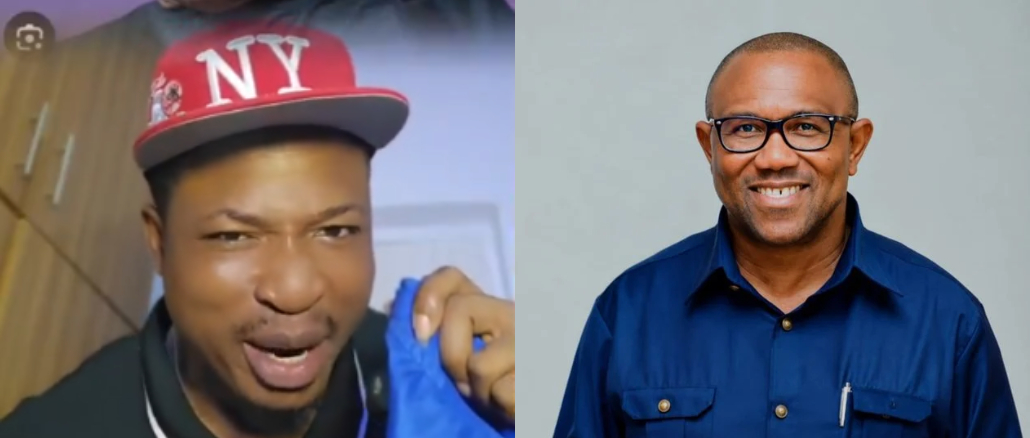
A man took to social media this week to push back against the label of “Peter Obi weakness” that circulates among some Nigerians. He argued that anyone who has worked closely with the former Labour Party presidential candidate knows the opposite, that Obi is anything but weak. The comment, posted on a popular micro‑blogging platform, was accompanied by a repeat of his own words: “Sometimes, I laugh at Nigerians who see Mr Peter Obi as a weak man. Politicians who have known him for a long time know that he is not weak. They know what he is capable of, and that is why they are doing all these.” The post quickly generated a flurry of replies, turning the brief remark into a broader conversation about the former governor’s political stature.
The unnamed Nigerian stressed that the perception of Obi as a feeble figure does not match the reality observed by seasoned politicians. He suggested that those who have interacted with Obi over the years recognize a resilience and strategic acumen that contradicts the “weak” label. The comment resonated with several users who offered their own takes, recalling Obi’s tenure as governor of Anambra State and his subsequent national prominence. One respondent, identified as Obinna Kennedy Harmony, wrote that “Peter Obi is never a weak man starting from the days when he was the governor of Anambra state. Even the judiciary couldn’t stop him.” Such remarks underline a pattern of defence that frames Obi’s career as a series of successes despite legal and political challenges.
Obi’s time as governor, from 2006 to 2014, is often cited by supporters as evidence of his administrative competence. During that period he initiated reforms in education, health and infrastructure that earned him commendations from both local and international observers. Although the original post does not detail those achievements, the reference to his governorship signals to readers why long‑time acquaintances might view him as anything but weak. After leaving office, Obi entered the national arena, first as a vice‑presidential candidate in 2019 and then as the Labour Party’s presidential flag‑bearer in 2023. His campaign, built on messages of fiscal prudence and youth empowerment, attracted a sizable following, especially among urban voters. The intensity of that following explains why the “weakness” tag feels inaccurate to many insiders.
Other commenters added personal observations about Obi’s character. A user known as Saint Vincent described the former governor as “emotionally intelligent,” noting that it takes “a lot of tolerance & endurance to mind your business, despite being attacked/insulted from all angles.” The same user highlighted Obi’s habit of remaining focused on his mission rather than retaliating against critics. This portrayal aligns with the broader narrative that Obi’s leadership style is measured and patient, qualities that may be misread as passivity by those unfamiliar with his long‑term strategies. In a political climate where rapid soundbites dominate news cycles, a calm demeanor can be mistaken for indecision, fueling the “weak” narrative the original poster disputes.
The exchange also drew curiosity about the phrase “they know what he is capable of.” One participant, FlashyVibes, asked directly what the original poster meant. While no further clarification was offered in the original post, the question reflects lingering intrigue about the specific abilities or plans that insiders might attribute to Obi. Some observers speculated that the comment hints at behind‑the‑scenes political maneuvering, coalition building, or policy expertise that remains under the public radar. In Nigeria’s fluid party system, alliances shift quickly, and a politician’s influence often hinges on relationships built over decades. If veteran politicians indeed see Obi as a power broker, that perception could affect future negotiations over party tickets, legislative support, or joint campaigns.
A final comment in the thread, from a user identified as Big Vicky, playfully questioned whether “the name Okwute is for fancy?” The remark, though light‑hearted, shows how nicknames and informal labels often accompany political discourse in Nigeria. Such colloquialisms can both humanise and simplify public figures, sometimes reducing nuanced careers to single‑word tags. In Obi’s case, the recurring label of weakness appears to be one such reduction that his supporters are eager to dismantle. The conversation, while informal, illustrates the broader challenge faced by politicians in managing public perception in an era dominated by rapid online commentary.
Beyond the tweet, the debate mirrors a longer‑standing tension in Nigerian politics between elite assessments and popular opinion. Politicians who have spent years navigating the corridors of power often develop a different vocabulary for strength, focusing on behind‑the‑scenes leverage rather than headline‑grabbing moments. Ordinary voters, meanwhile, tend to judge leaders by visible actions, media coverage and the tone of campaign messaging. The clash between these perspectives can shape how a candidate’s viability is judged in upcoming electoral cycles.
The discussion sparked by the man’s defence of Peter Obi continues to unfold across social media, with users weighing in on his past achievements and current political relevance. As the conversation evolves, it may influence how ordinary Nigerians and political insiders alike assess Obi’s role in upcoming electoral cycles. Observers note that while the debate is largely anecdotal, it reflects a deeper undercurrent of loyalty among certain political circles that could translate into future support or strategic collaboration. No formal response from Obi’s camp has been recorded yet, but the dialogue suggests that perceptions of his strength remain a contested terrain in the nation’s political narrative.


Comments