
Police inspector and 11 civilians killed as Lakurawa‑Mamudawa militants strike Kebbi riverine towns
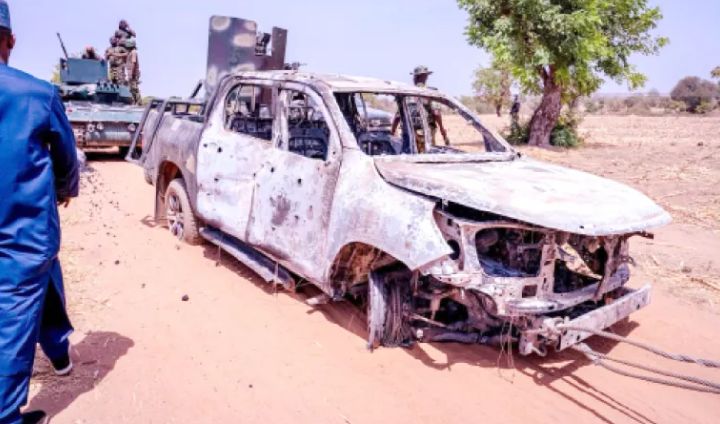
The latest wave of kebbi terror attacks saw a police inspector and eleven civilians lose their lives after suspected Lakurawa and Mamudawa militants launched coordinated assaults on the riverine communities of Karwa, Kestu and Waiwayi between 22 and 28 October. Residents of the Besse and Shanga areas fled as gunmen set fire to homes, looted property and burned motorcycles along the Niger River banks from Kaoje to Besse, prompting a rapid security response and leaving dozens of families homeless.
According to a spokesperson for the Kebbi State Police Command, SP Bashir Usman, the assaults unfolded over several days rather than a single incident. “It’s true that the attack happened but it did not happen in one day and not in one community. It started from the 22nd of this month,” he told reporters. Usman confirmed that the death toll rose to twelve after a police inspector and eleven other victims were killed in separate raids on 26 and 28 October. He added that joint security teams had initially repelled the militants on the 22nd, but the attackers returned later in the week, overwhelming local defenses.
Local eyewitnesses described the devastation in vivid terms. Aminu Usman, a resident who spoke to Daily Trust, said the gunmen moved in a coordinated manner, burning houses and looting belongings before retreating to hidden hideouts. “The attack took many of the villagers unawares. No one expected that the Lakurawa terrorists would attack us,” he said. Another villager, speaking under condition of anonymity, claimed that more than 23 people may have died in the Lakurawa‑Mamudawa raids on Koko Besse and Shanga, a figure that exceeds the official count. “They murdered people and took their valuables. They burnt motorcycles and broke into shops and took whatever they wanted,” the source added.
The violence appears to be part of a broader pattern of insecurity along the Niger River corridor. Days before the Karwa, Kestu and Waiwayi attacks, suspected Lakurawa militants reportedly struck Lafagu and other villages in the Boya area of Kaoje, killing the village head Alhaji Saidu Mujeli and six others before moving downstream to continue their onslaught. Despite the establishment of an army battalion in Kaoje aimed at curbing militant activity, the attacks persisted, suggesting that security measures remain insufficient to deter the groups.
The fallout has forced many residents to abandon their homes. “I know a man who lost four of his family members in the attack. As I speak, only a few people are left in the affected communities,” one resident told the newspaper. Those who fled are only now beginning to return, encouraged by assurances from security agents and the state government that protective measures are being put in place. Aliyu Tailor Besse, another local, traced the militants’ route from Kaoje along the Niger River to Koko Besse, noting that some villagers heeded early warnings and evacuated while others stayed and were caught in the crossfire. “Many people were killed in the attacks,” he said.
The unrest also triggered a retaliatory episode involving local vigilantes known as Yan Sakai. Rumours of the Lakurawa assaults spurred the group to attack Fulani traders at Samanaji Market on 22 October, resulting in three deaths and injuries to a police inspector. SP Usman confirmed that Yan Sakai members had indeed invaded the market, killing three Fulani people while a police inspector sustained injuries. He emphasized that police tactical teams deployed by the Divisional Police Officer in Besse responded swiftly to restore order and prevent further carnage.
In the wake of the attacks, the Police Public Relations Officer (PPRO) announced that a tactical team has been stationed in the troubled riverine zones and that normalcy is gradually returning. Ongoing investigations aim to identify and apprehend the perpetrators, with the police saying they are actively following up on leads. The state government has yet to outline a comprehensive resettlement plan for the displaced families, many of whom have no shelter and are relying on community support.
The series of attacks show the challenges facing security agencies in Nigeria’s north‑west, where porous riverine borders provide militants with mobility and concealment. The Lakurawa and Mamudawa groups have been linked to previous raids across Kebbi and neighboring states, often targeting villages along the Niger River to harvest resources and spread terror. Their ability to strike repeatedly over a short span suggests a level of coordination that outpaces current security responses.
As the police continue their probe, residents hope for a decisive intervention that will prevent further loss of life. The immediate priority remains the safe return of displaced villagers and the restoration of essential services in Karwa, Kestu and Waiwayi. Authorities have pledged to bolster patrols along the riverbanks and to work with local vigilante groups, though the effectiveness of such collaborations remains to be seen.
The next steps will likely involve a detailed debrief by state security officials, possible deployment of additional army units, and engagement with community leaders to address the humanitarian fallout. Until then, the riverine towns of Besse and Shanga remain on high alert, awaiting concrete actions that could halt the cycle of violence that has plagued the region this month.

Reporter at 03naija.com.










Join the conversation