
Alhaja Kaola accuses ex‑husband of demanding money for intimacy and leaking private video

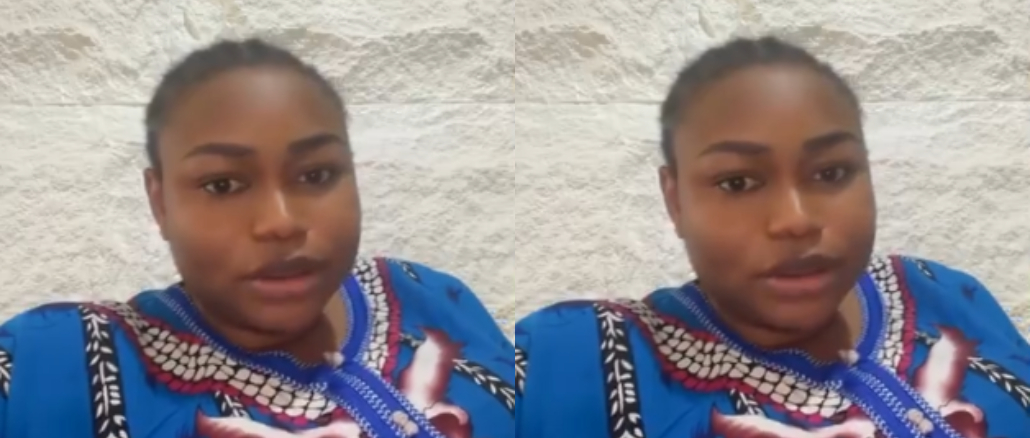
Alhaja Kaola, a well‑known Nigerian broadcaster, has spoken publicly about an intimate video leak that she says was orchestrated by her former husband after a domestic dispute. In a candid interview, Kaola detailed how the man she once married allegedly required regular monetary payments before agreeing to be intimate with her, a practice she described as both humiliating and coercive. She also recounted that the payments were transferred weekly via bank accounts and cheques rather than handed over in cash, underscoring a calculated approach to the arrangement.
According to Kaola’s account, the demand for money preceded any consensual intimacy. “Before my husband agrees to sleep with me, I must pay him money,” she said, repeating the phrase that has become central to her allegations. The broadcaster explained that these payments were not occasional but occurred on a weekly basis, suggesting a pattern that extended over a significant period of their marriage. She did not disclose the exact amounts involved, but the regularity of the transfers implies a systematic exploitation of her financial resources.
The situation, Kaola claimed, escalated when the couple experienced a disagreement. In the aftermath, the ex‑husband allegedly recorded one of their intimate encounters without her consent. She asserts that he later released the video to the public, turning a private moment into a sensational scandal. The broadcaster emphasized that the circumstances surrounding the leak remain partially obscure, noting that the full details have not been made available to the public or law enforcement.
Kaola’s narrative also touches on another painful episode: the denial of paternity for one of their children. She recalled the emotional turmoil of having the man who fathered her children refuse to acknowledge one child as his own, adding another layer of distress to an already fraught relationship. The combination of financial coercion, public humiliation, and paternal denial, she said, marked “the most painful period of my life.”
While detailing these hardships, Kaola affirmed her personal faith, stating that despite the trials she has faced, she continues to trust that her life is guided by God’s will. This declaration of spiritual resilience serves as a counterpoint to the harrowing experiences she described, offering a glimpse into how she copes with the trauma.
The broadcaster’s revelations have sparked discussions across social media platforms and among advocacy groups focusing on domestic abuse and digital privacy. Observers note that the alleged demand for payment in exchange for intimacy resembles a form of financial abuse, a recognized component of intimate partner violence. Experts in family law point out that such conduct can be prosecuted under existing statutes that address coercion and exploitation within marriage, though proving the allegations may require substantial evidence, such as bank statements or the alleged video itself.
Legal commentators also highlight the complexities surrounding the intimate video leak. Nigerian law criminalizes the non‑consensual distribution of explicit material, categorizing it as a violation of privacy and a form of sexual harassment. However, enforcement often hinges on the victim’s ability to identify the perpetrator and provide corroborating proof. In Kaola’s case, the public nature of the allegations may prompt law enforcement agencies to open an investigation, particularly given her high profile and the potential for broader societal impact.
Public reaction to Kaola’s statements has been mixed. Supporters commend her bravery for speaking out against a powerful individual and for explain a practice that many victims may endure in silence. Critics, on the other hand, caution against drawing premature conclusions without a thorough forensic examination of the alleged video and financial records. Some commentators stress the importance of due process, urging authorities to balance the need for swift action with the rights of all parties involved.
The broadcaster’s claim that the payments were made through bank transfers and cheques could aid investigators, as financial institutions retain transaction histories that can be subpoenaed. If such records confirm a pattern of weekly payments linked to the ex‑husband’s account, they would strengthen the case for financial exploitation. Moreover, digital forensics could potentially trace the origin of the leaked video, identifying the device used for recording and the channels through which it was disseminated.
In the broader context, Kaola’s experience reflects ongoing challenges in Nigeria concerning the intersection of domestic abuse, digital privacy, and gender-based violence. While recent legislative reforms have introduced harsher penalties for non‑consensual pornography, implementation remains uneven across regions. Advocacy groups continue to call for stronger protective mechanisms, public awareness campaigns, and more resources for victims to deal with the legal system.
As the story develops, Kaola indicated that she is prepared to cooperate with any official inquiries and is hopeful that the truth will emerge. She did not specify whether she has filed a formal police report, but her public disclosure suggests a willingness to bring the matter into the open. The broadcaster’s statement that she “believes her life remains guided by God’s will” show a personal resolve that may sustain her through forthcoming legal and social proceedings.
The next steps appear to involve law enforcement reviewing the allegations, potentially requesting banking records and conducting a forensic analysis of the alleged video. Should sufficient evidence be gathered, the ex‑husband could face charges related to financial abuse, illegal recording, and the unlawful distribution of intimate material. Until such actions are confirmed, the case remains under scrutiny, with many awaiting clarification on how the intimate video leak will be addressed by the justice system.

Reporter at 03naija.com.










Join the conversation