
India Pakistan cricket fans call for politics to stay out of sport
India pakistan cricket
Fans of the India‑Pakistan cricket rivalry voiced their frustration that “dirty politics” is contaminating a game they cherish, after the two nations faced off in the Asia Cup Rising Stars 2026 in Doha. The match, held on Sunday at the West End International Cricket Stadium, drew a packed crowd of nearly 10,000 spectators who watched both the on‑field tension and the off‑field calls for peace. Players exchanged verbal blows and hostile gestures, while fans in the stands pressed for a separation of sport and statecraft.

The clash began with Pakistan electing to bat first, a decision that set a charged tone for the encounter. India’s fast‑bowler Harshit Rana and Pakistan’s top‑order batters became embroiled in a heated exchange that went beyond a typical competitive spat, with verbal insults and angry send‑offs reported by observers. India’s innings fell short of the target by 48 runs, handing Pakistan a rare victory over its neighbour at this level of competition. The on‑field drama mirrored a pattern of heightened aggression that has followed recent India‑Pakistan meetings.
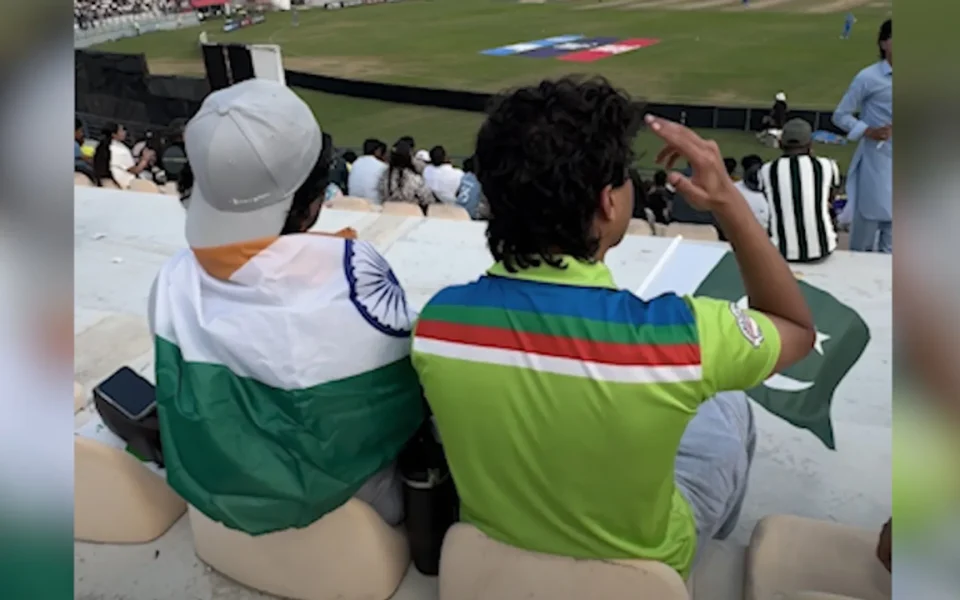
Spectators, however, presented a different narrative. The stadium, which opened its doors later than usual on the first working day of the week in Qatar, gradually filled to capacity as the afternoon progressed. Fans of both nations, alongside neutral cricket enthusiasts, shared the same stands, wearing their respective team shirts, waving flags and chanting player names. The mingling of supporters highlighted a grassroots desire for unity, a sentiment echoed by several attendees who stressed that the rivalry need not be a battlefield.
Among those voices were Abrar Hussain, a Karachi native, and Mohammed Saeed Khan, who hails from Mumbai’s bustling port. The two friends, both members of a weekend cricket league in Doha, sat side by side in a replica Indian jersey and a Pakistani shirt respectively. “We have been friends for over six years,” Khan told Al Jazeera, noting that their camaraderie extended to sharing accommodation and meals. Hussain added, “Politics should stay out of the game. The game of cricket is very close to our heart. We don’t want anything spoiling our game.”
The pair’s disappointment reflects a broader sentiment that recent India‑Pakistan cricket encounters have become overly politicised. Since the four‑day armed conflict that erupted last May, matches at every level, from senior men’s squads to women’s and age‑group teams, have been shadowed by diplomatic tensions. In the Men’s Asia Cup 2025, for example, Indian players refused to shake hands with their Pakistani counterparts, and the Indian side declined to accept the trophy from the Pakistani head of the Asian Cricket Council. Similar friction was evident in the Under‑19 Asia Cup, where Indian players’ post‑victory conduct drew criticism for its aggression.
Khan believes many cricketers are coerced into displaying hostility, a pressure he attributes to political agendas rather than genuine sport rivalry. “Cricket boards should take disciplinary action against such players and ensure that this behaviour is not passed on to the next generation,” he said, urging authorities to curb the trend. Hussain echoed the concern, describing the on‑field antics as “a worrying sign for the sport” and warning that “politics has poisoned cricket.” Both men stressed that the younger generation of players should be shielded from being forced into confrontations that serve political narratives rather than the spirit of the game.
The venue itself sits in Asian Town, a Doha suburb populated by South Asian migrants who work in the city’s industrial zones. For thousands of these workers, the tournament offered a rare chance to watch their home nations compete just a short walk from their residences. The proximity added a layer of personal significance to the matches, turning the stadium into a communal space where expatriates could momentarily escape the rigours of daily labour and celebrate shared cultural ties.
The appeal of an India‑Pakistan showdown also attracted fans from across the Gulf, including Doha resident Avinash Daniel, a railway engineer originally from New Delhi. Daniel attended the match with his young family and two friends, describing it as his first experience watching the rivalry live in a stadium. “There are no different sides in the stands,” he observed, noting the seamless mixing of Indian and Pakistani supporters. “It’s a wonderful cultural experience,” he added, underscoring the potential of sport to bridge communal divides even in a foreign setting.
Daniel’s perspective reinforced the notion that politicisation of cricket primarily benefits politicians, not players or spectators who simply seek enjoyment. He pointed out that after the match, fans from both sides would likely share a meal of mandi, a traditional Arab rice and meat dish, prepared by community members of either nationality. This shared culinary moment, he suggested, symbolizes the everyday connections that persist despite the flashpoints on the pitch.
As the tournament proceeds, cricket administrators in both countries face pressure to separate sport from statecraft and to address the conduct that has marred recent matches. The calls from fans like Khan, Hussain and Daniel for disciplinary measures and a return to sportsmanship suggest that the cricketing community is listening. Organisers of the Asia Cup Rising Stars 2026 have yet to announce any specific steps, but the growing chorus of voices demanding that “politics stay out of cricket” signals a potential shift in how future India‑Pakistan encounters may be managed.










Join the conversation