
Tinubu electricity pledge still unfinished, APC council says
Tinubu electricity
The APC Presidential Campaign Council says President Bola Tinubu has yet to fully resolve the country’s electricity challenges, but his administration remains committed to delivering the stable power supply promised in the 2023 campaign.
Dele Alake, spokesperson for the council, told reporters on Sunday that fixing Nigeria’s power sector remains “unfinished work” three years into Tinubu’s tenure. In a statement titled “Tinubu’s Electricity Pledge Must Be Considered in Full Context,” Alake argued that the president’s record should be judged against both the original promise and the steps taken since it was made. He noted that the pledge was given at a meeting with the Organised Private Sector in Lagos, where Tinubu vowed to end estimated billing and guarantee reliable electricity for all Nigerians.
Alake said the president’s original promise was accompanied by a qualification that Nigerians should not re‑elect him if he failed to deliver without offering “adequate reasons” for any shortfall. The spokesperson warned that some recent commentaries have quoted the pledge without the concluding clause, thereby giving a skewed impression of the administration’s performance. “Fixing the electricity market and power sector is ongoing work,” Alake added, emphasizing that the government has not abandoned its commitment.
One concrete step highlighted by Alake was the signing of the Electricity Act, 2023, on June 9, less than two weeks after Tinubu assumed office. The legislation opened the door for state governments to take part in generation, transmission and distribution. According to Alake, states such as Lagos, Enugu, Abia, Ekiti, Oyo, Kaduna and Niger have already set up regulatory agencies and are attracting private investors to revamp their power infrastructure.
The council also pointed to the legacy debt inherited by the Tinubu administration. Between 2015 and 2025, the sector accumulated more than N6 trillion in obligations, a burden the government has begun to address through a N4 trillion bond programme. The first two tranches of this programme have raised over N1.2 trillion, which is being used to settle verified debts owed to 21 generation and gas companies. Alake said the bond initiative demonstrates the administration’s resolve to clear the financial backlog that has long hampered the industry.
Metering, a chronic weakness in the Nigerian grid, has also seen progress. The Presidential Metering Initiative, launched under Tinubu, has supplied meters to more than 1.5 million customers in the past three years. By reducing the reliance on estimated billing, the programme aims to improve revenue collection and build consumer confidence. Alake noted that the government has also adjusted tariffs toward cost‑reflective levels, a move intended to enhance market liquidity while protecting low‑income households through targeted service bands.
Infrastructure upgrades form another pillar of the administration’s strategy. Alake said the government is investing in new substations, expanding the transmission grid and modernising the Osogbo Grid Control Centre, a facility that is over six decades old. Plans are also underway to construct an East‑West super grid that would link power‑rich regions with high‑demand areas, a project that could reshape the national supply landscape. The Rural Electrification Agency, meanwhile, is extending solar power to universities, hospitals and remote communities, broadening access beyond urban centres.
The Presidential Power Initiative, launched by the late President Muhammadu Buhari, was reviewed and accelerated by Tinubu. In December 2023, the president signed an agreement with German partners to speed up transmission network projects. The Federal Executive Council approved contracts in December 2024 for the first batch of five Transmission Company of Nigeria substations in key load centres, with commissioning expected before the end of Tinubu’s first term. A further batch approved in June 2026 includes eight new substations and upgrades to four existing facilities, underscoring the long‑lead nature of such infrastructure work.
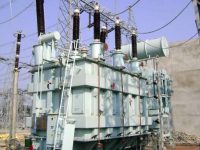
Private sector response appears increasingly positive. Alake cited Geregu Power Plc’s announcement of new transformer investments at its Geregu 1 plant as evidence that confidence in the electricity market is growing. Other generation companies are reportedly making similar capital commitments, suggesting that the administration’s reforms are beginning to attract capital.
Balancing cost‑reflective tariffs with affordability remains a central challenge, Alake said. While higher tariffs can improve the financial viability of power operators, the government must also shield vulnerable households from excessive bills. Ongoing exploration of measures to boost commercial sustainability while protecting low‑income consumers is part of the council’s roadmap.
Looking ahead, Alake said President Tinubu will present a “scorecard” to Nigerians, detailing achievements and outlining outstanding issues as he seeks a second term. The spokesperson reaffirmed that the administration will continue to work on the electricity market, emphasizing that the sector’s transformation cannot be achieved “overnight.”
The APC council’s statement comes as the country prepares for upcoming electoral cycles, and the administration’s ability to meet its electricity promises will likely influence voter sentiment. With infrastructure projects slated for completion before the end of the current term and a bond programme already mobilising billions of naira, the next months will test whether the pledged improvements translate into reliable power for everyday Nigerians.









Join the conversation