
Dakar Youth Olympics close with vibrant break‑dance showdown
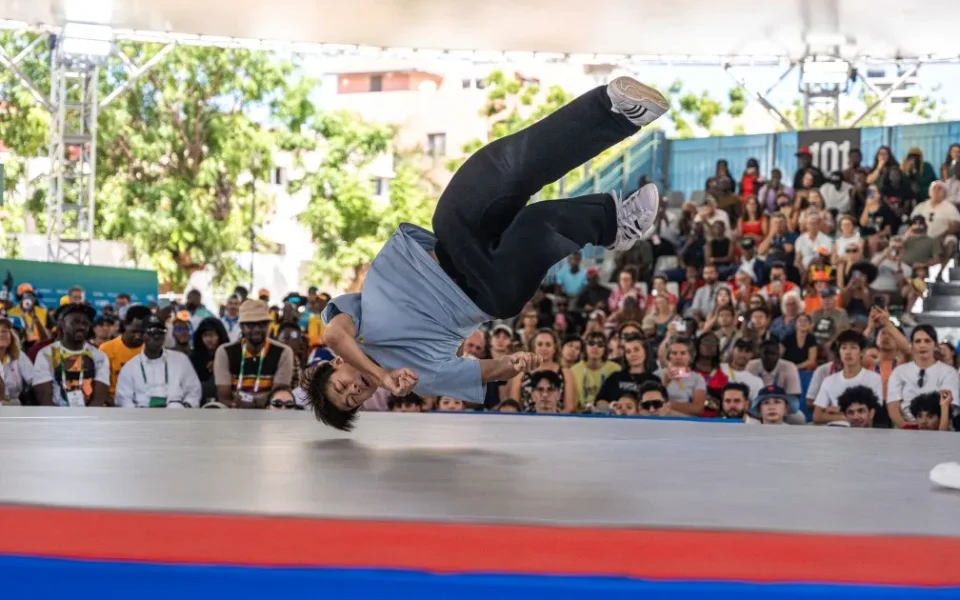
The Dakar Youth Olympics wrapped up on Friday with a colorful break‑dance final that captured the spirit of the dakar youth olympics. Teen breakers from China, Chinese Taipei and other nations took to the floor in a contest that emphasized invention, balance and nerve rather than sheer strength. The event, the last of the two‑week program, drew cheers as sneakers squeaked and athletes turned gymnastics moves into hip‑hop art, marking a lively close to the first Olympic‑type games hosted on Africa’s youngest continent.
The break‑dance battle was more than a display of skill; it was a vivid illustration of how the new discipline, officially added to the Youth Olympic programme, blends street culture with traditional athleticism. B‑boys and B‑girls executed six‑step footwork, windmills and sudden freezes that seemed to defy gravity. Each move was a dialogue with the next competitor, a challenge answered with a daring twist. For many of the teenagers, the floor was a stage where identity, music and sport merged, offering a fresh narrative for the games’ finale.

The competition unfolded against a backdrop of lingering political shadows. France’s development agency had earlier loaned Senegal 80 million euros for sporting facilities, a gesture that sparked debate over the former colonial power’s influence. At Dakar’s railway station French police helped secure the venue, standing beneath a bronze statue of an African soldier, Demba, and his French counterpart, Dupont, symbols that some view as paternalistic. The presence of these monuments highlighted how history and current geopolitics continue to hover over the games.
Beyond the statues, the financing agreement reminded observers that Senegal, despite its youthful optimism, still navigates complex debt relationships. Critics argue that the loan, while enabling the construction of venues, also raises questions about sovereignty and the lasting imprint of colonial ties. Supporters contend that the infrastructure will serve future generations and cement Dakar’s reputation as a hub for continental sport.
Athletes from nations under recent sanction or conflict also made their mark. Russian teenager Serafima Fokina stood on the swimming podium with a gold medal and sang the Russian anthem, the first appearance of the flag and anthem since Russia’s suspension after its 2022 invasion of Ukraine. Israeli participants competed despite the ongoing war in Gaza, and a Senegalese man was detained after posting a threatening video opposing Israel’s involvement. The International Olympic Committee reiterated its stance on political neutrality, stating that “youth athletes should not be held accountable for the actions of their governments.”
The IOC’s neutrality principle is a cornerstone of the Olympic charter, yet the realities of a world divided by war make the ideal difficult to uphold. For athletes, the flag they march under carries weight far beyond sport. The ceremony in the swimming pool, where Serafima’s anthem echoed through the arena, was a moment of symbolism that resonated with spectators on both sides of the geopolitical divide.
Palestinian swimmer Alma Shaat spoke of the personal weight she carried, urging girls in Gaza to keep pursuing their dreams. “Any little girl in Palestine right now, specifically Gaza, I would tell her … to continue following her dreams,” she said, emphasizing that her performance was for herself and for the people of Gaza and Palestine. Such statements show how flags and anthems at the dakar youth olympics could never be fully separated from the conflicts that surround them.
On the medal table, China led with 18 golds, followed by Japan with 11 and Russia with eight. Senegal, which sent eighty athletes to train in China as part of Beijing’s soft‑diplomacy, finished sixth with five gold medals, surpassing the host nation’s former colonizer, France. The strong showing reflected the country’s investment in sport and its desire to showcase African talent on a global stage.
Senegal’s rise in the rankings is tied to a strategic partnership with China that sent young athletes abroad for intensive preparation. The program, often described as soft‑diplomacy, aimed to boost performance while fostering bilateral goodwill. The payoff was evident in the pool and on the track, where Senegalese competitors secured podium finishes that delighted the home crowd and signaled a shift in African sporting power.
IOC President Kirsty Coventry, the first African woman to lead the organization, addressed the media in a tearful press conference, expressing pride and gratitude for bringing the games to Dakar. Her remarks highlighted the symbolic importance of the event for African representation in the Olympic movement. Yet logistical challenges persisted: athletes stayed in university dormitories without air‑conditioning, transport costs were high, and many events sold out, limiting public access. Local neighborhoods compensated by hosting informal games, where children played football in the streets and wrestlers trained on the beach.
The lack of air‑conditioning in the Olympic village show the broader issue of infrastructure readiness in many African host cities. While the venues met international standards, the temporary housing arrangements revealed gaps in comfort that athletes from wealthier nations are not accustomed to. Organisers acknowledged the shortfall and promised upgrades for future editions, but the experience left a lingering impression on participants accustomed to climate‑controlled environments.
Outside the arenas, athletes turned to social media to tell their own stories, bypassing traditional broadcasters. They posted videos on Instagram and TikTok, reaching audiences far beyond the televised coverage. In the break‑dance finals, China’s “Holy Rain” faced Taiwan’s “Saturn,” a rivalry that echoed broader political tensions. The crowd’s roar was punctuated by a spectator’s hopeful comment: “Imagine if their leaders could do the same.”
The digital narrative created by the young competitors added a new layer to the games’ legacy. By sharing practice clips, behind‑the‑scenes moments and post‑event reflections, they built a direct connection with fans worldwide, challenging the monopoly of state media and offering unfiltered perspectives on the competition.
Japan’s Hiyo claimed gold over Ukraine’s 14‑year‑old Nikastar, while Spain’s Mini Ali secured bronze ahead of Morocco’s Nawel. Though flags and national rivalries remained visible, the athletes embraced each other after their performances, demonstrating a fleeting unity that resonated through the beats of hip‑hop. As the dakar youth olympics draw to a close, organizers and officials are preparing for the handover ceremony, with the next Youth Olympic Games slated to be held in a yet‑to‑be‑named city, continuing the cycle of youthful sport and global dialogue.
The handover ceremony will feature a symbolic passing of the torch and an invitation to the next host to continue the mission of fostering youth sport across continents. Officials indicated that discussions are already underway to ensure the upcoming edition builds on Dakar’s lessons, particularly around political neutrality, athlete welfare and the integration of emerging disciplines like break‑dance into the Olympic family.








Join the conversation