
South Africa faces startup funding uncertainty as AGOA withdrawal looms
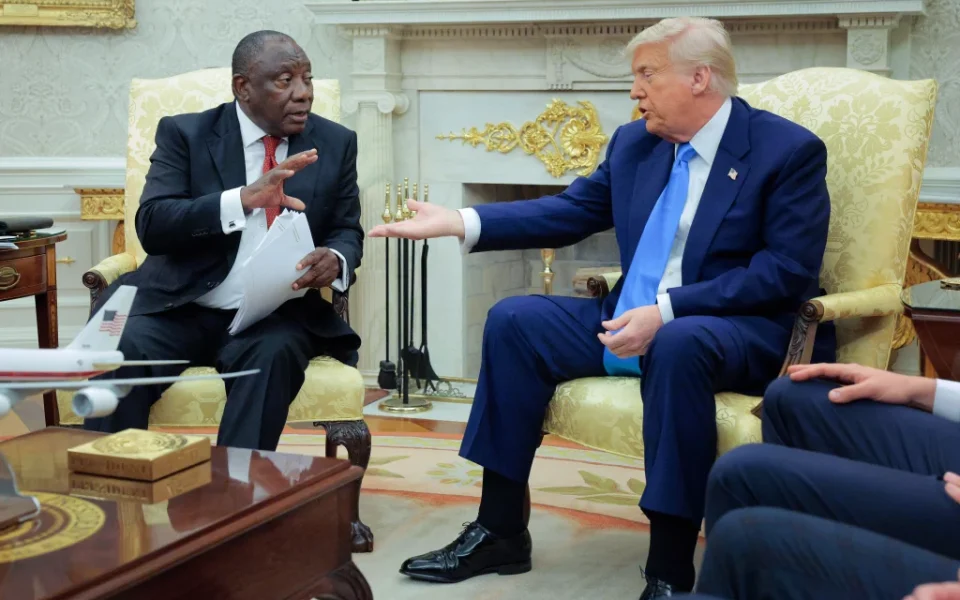
South Africa’s planned removal from the African Growth and Opportunity Act (AGOA) is set to create ripples beyond the export market, raising concerns that the country’s technology sector could feel the strain of a cooling diplomatic climate with the United States. The decision, announced by President Donald Trump on November 2, gave South Africa and Rwanda 60 days’ notice that their AGOA eligibility would end on January 1, 2027. While the trade preference programme primarily governs goods exports, analysts warn that the broader fallout may dampen the appetite of American venture capital firms that have been a key source of financing for African startups.
US investors have been among the most active foreign backers of African tech companies, with the United States remaining the continent’s largest source of venture capital in 2024, according to the African Private Capital Association. Notable deals include the 2022 $20 million Series A extension raised by South African gaming startup Carry1st, led by US venture firm Andreessen Horowitz. Jeff Miller, chief executive of Grovest Investment Holdings, cautioned that the diplomatic fallout could prompt US investors to become more selective and slower in decision‑making, even though AGOA does not directly restrict technology or venture‑capital flows. “My assessment is that the first effect would likely be greater selectivity and slower decisions, as a result of negative sentiment that the withdrawal of AGOA brings with it,” Miller told TechCabal.
Miller explained that foreign investors assess a country’s political landscape, rule of law, red tape, tax implications and, in South Africa’s case, Black Economic Empowerment (B‑B BEE) requirements. He noted that uncertainty about these pathways can make otherwise attractive investments harder to approve. The warning comes as US Trade Representative Jamieson Greer cited “barriers to U.S. trade and investment, corruption, and threats to US national security and foreign policy interests” as reasons for the withdrawal, after an inter‑agency review found South Africa’s practices inconsistent with AGOA criteria. The statement did not mention any restrictions on venture‑capital, technology partnerships or digital services.
The impact on South Africa’s broader economy is already visible. The automotive sector, which accounts for more than half of the country’s $4 billion in AGOA‑qualifying exports to the United States in 2024, faces a steep decline as the programme ends. In 2025, the value of AGOA‑eligible exports fell to $1.7 billion, representing about 1 percent of South Africa’s total global exports. Nevertheless, the Department of Trade, Industry and Competition reported that 89 percent of South African exports to the United States entered under ordinary World Trade Organization most‑favoured‑nation terms in 2025, while about 10 percent still benefitted from AGOA preferences. Bilateral trade reached $28.8 billion that year, and more than 600 American companies operate in South Africa, supporting roughly 134 600 jobs.
Trade and Industry Minister Parks Tau sought to separate the AGOA decision from the wider economic relationship with Washington, stating, “This decision does not define the broader relationship between South Africa and the United States, however a solution depends on the willingness of both Parties to find solutions.” The government affirmed its intention to continue pursuing US trade and investment while diversifying export markets through the African Continental Free Trade Area, the European Union, the United Kingdom and Asian partners.
For the nation’s burgeoning startup ecosystem, however, diversification may prove more challenging. Miller highlighted that the US venture‑capital market offers substantial capital and a higher risk appetite than other regions, making it a “low‑hanging fruit” for scaling companies. He warned that while a solid business can eventually secure funding, the loss of easy access to US investors could force founders to look to markets with less depth and slower capital cycles.
Industry observers note that the uncertainty may also affect investors from other regions, as negative sentiment in the United States could spill over into broader international confidence. If American capital becomes more cautious, venture firms in Europe or Asia may also tighten their criteria, further constraining the pool of available funds for South African innovators.
The upcoming months will test how quickly South African startups can adjust to a potentially tighter funding environment. Companies that have relied on US‑backed rounds may need to strengthen ties with local investors, explore alternative financing models such as debt‑based instruments, or accelerate partnerships that do not depend on foreign equity. Meanwhile, the government’s trade diversification strategy will likely play a role in shaping the overall investment climate, as exporters and tech firms alike seek new avenues to mitigate the impact of the AGOA withdrawal.
As the January 2027 deadline approaches, the dialogue between South African officials and US counterparts is expected to intensify. Both sides have expressed a willingness to find solutions, but concrete measures to ease investor concerns remain to be seen. The next steps will hinge on diplomatic negotiations, the implementation of alternative trade arrangements, and the ability of South African startups to secure capital from sources beyond the United States.











Join the conversation