
Governor Lawal launches empowerment assets distribution in Zamfara
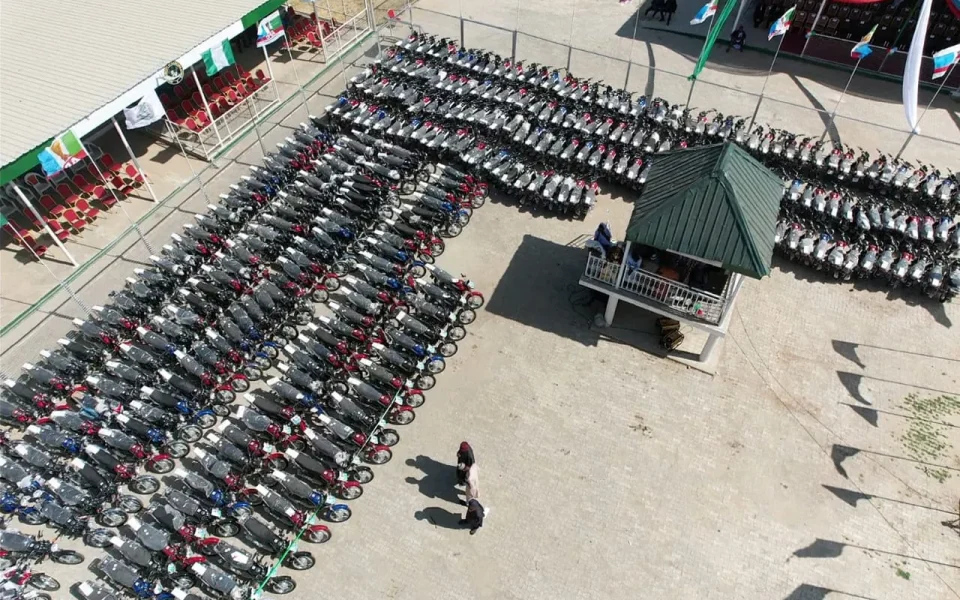
The governor’s empowerment assets distribution took place on Saturday at the Trade Fair Complex in Gusau, the capital of Zamfara State, where motorcycles, Keke NAPEP tricycles, Hijet pickups and three‑wheel barrow pickups were handed to selected residents and association members. Dauda Lawal said the hand‑over demonstrates his administration’s resolve to help individuals and groups grow businesses, create jobs and become self‑reliant.
The event marked the second phase of the state’s empowerment programme, which is coordinated through the Zamfara State Agency for Poverty Alleviation (ZAPA). The rollout includes a total of 1,000 motorcycles, 100 Keke NAPEP tricycles, 40 Hijet pickup trucks, and 80 three‑wheel pickup vehicles, bringing the overall count of assets to 1,220 for this stage. Beneficiaries were gathered in large numbers, with representatives of various professional and community associations present to receive the items that will serve as mobile enterprises for many.

Governor Lawal used the occasion to remind attendees that the assets are intended as economic investments rather than mere gifts. He urged beneficiary groups to employ the vehicles strictly for their designated commercial purposes and to honour the repayment schedules that were agreed upon as part of the loan arrangements. “Timely repayment will ensure the programme’s sustainability and enable other deserving citizens to benefit,” he said, underscoring the link between disciplined financing and the ability to extend the scheme to more people in the future.
In his remarks, the governor highlighted the broader role of humanitarian‑type services in conflict‑prone and disaster‑affected regions. He noted that such services “save lives, relieve suffering and protect human dignity during conflicts, natural disasters and health emergencies,” positioning the empowerment assets as tools that can bridge immediate survival needs with longer‑term community recovery. While Zamfara has faced periods of insecurity and economic strain, the distribution is framed as a concrete step toward stabilising livelihoods and reducing dependence on external aid.
ZAPA officials confirmed that the selection of beneficiaries followed a transparent vetting process that considered prior contributions to state development, entrepreneurial potential and the capacity to manage loan repayment. The agency’s director praised the governor’s commitment, stating that the current phase builds on the success of earlier distributions that saw small‑scale traders expand their reach using motorbikes and tricycles. According to ZAPA, many recipients of the first phase have reported increased income and the ability to employ additional staff, signalling a ripple effect that could boost local commerce across the state.
Local traders and transport operators expressed optimism about the new vehicles. One association leader, who asked to remain unnamed, said the additional motorcycles and tricycles would allow members to serve routes that were previously unprofitable, especially in rural outskirts where road conditions limit larger trucks. He added that the Hijet pickups, known for their durability, would be valuable for moving agricultural produce from farms to markets, a sector that forms a backbone of Zamfara’s economy.
The distribution also aligns with broader state policies aimed at diversifying income sources beyond oil and mining. By focusing on transport‑based enterprises, the government hopes to stimulate ancillary services such as vehicle maintenance, fuel supply and roadside commerce. Economists familiar with the region note that improving intra‑state mobility can lower transaction costs for farmers and small traders, potentially translating into higher household earnings and reduced poverty levels.
Critics, however, caution that the long‑term impact will depend on the ability of beneficiaries to maintain the vehicles and access affordable credit for repairs. They point to past challenges where loan defaults undermined similar schemes, emphasizing the need for robust monitoring and support mechanisms. In response, Governor Lawal reiterated that ZAPA will provide ongoing technical assistance and that the loan terms were structured to be manageable for most participants. He promised that the administration will continue to roll out empowerment opportunities and livelihood support to individuals, groups and communities, reinforcing the state’s commitment to inclusive growth.
As the ceremony concluded, officials indicated that the next phase of the programme will focus on expanding the asset base to include small‑scale manufacturing tools and digital equipment, aiming to broaden the range of income‑generating activities available to Zamfara’s populace. The governor’s office has not yet released a definitive timetable for the subsequent distribution, but insiders suggest that the rollout could begin as early as the first quarter of the next year, contingent on budget allocations and the successful repayment of the current batch of loans.
The empowerment assets distribution in Zamfara thus stands as a visible sign of the state government’s effort to translate policy into tangible support for ordinary citizens, with the hope that the newly acquired vehicles will spark entrepreneurial activity, generate employment and contribute to a more resilient local economy.















Join the conversation