
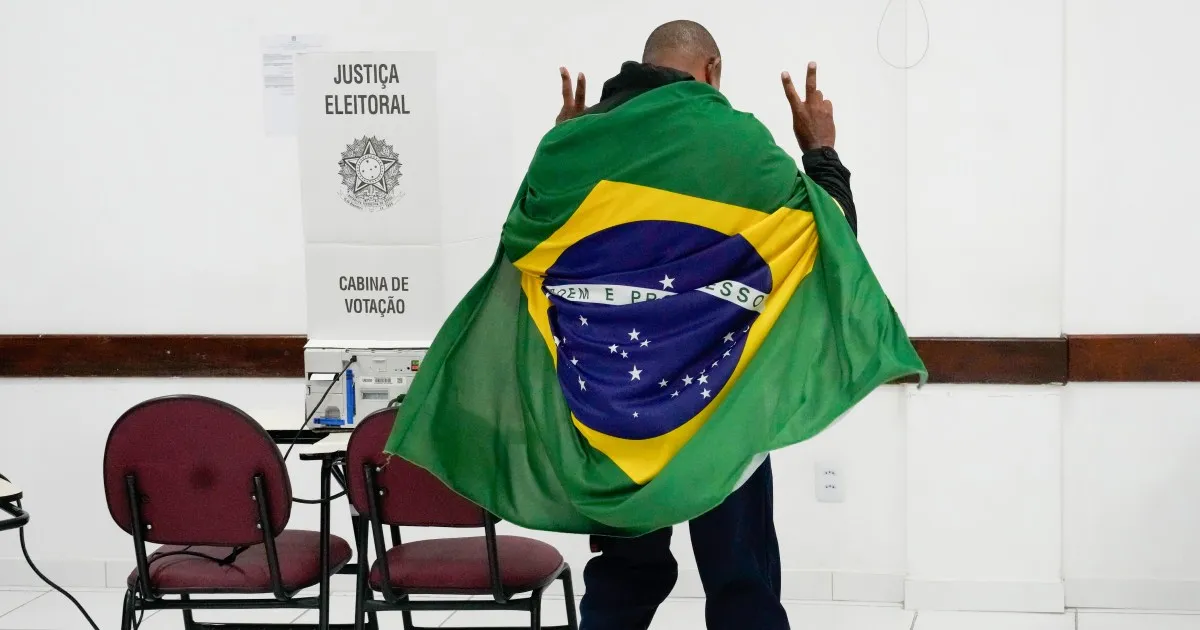
The Supreme Court of Brazil has ordered that voting in the presidential runoff be extended by two hours, a decision that directly responds to a request from President Luiz Inacio Lula da Silva’s campaign. The original closing time of 5 p.m. local time (20:00 GMT) was pushed back to 7 p.m., giving the nation’s nearly 160 million eligible voters additional time to reach the polls. Justice Cristiano Zanin announced the extension on Sunday, the day the runoff between Lula and Senator Flavio Bolsonaro took place.
The ruling came just as the first wave of results was beginning to trickle in, with early counts suggesting a tightly contested race. Lula, the incumbent left‑wing president, faces a determined challenge from Bolsonaro, the son of former president Jair Bolsonaro and a prominent figure in the centre‑right opposition. Both candidates have campaigned heavily across Brazil’s diverse regions, from the Amazon basin to the industrial south, and the extended voting window could prove decisive in a race where margins are expected to be slim.
Justice Zanin’s order was issued after Lula’s campaign formally asked the court for extra time, arguing that logistical bottlenecks and long queues at polling stations risked disenfranchising voters in remote areas. The request was presented to the Supreme Court on the afternoon of the runoff, and the justices acted swiftly, citing the need to ensure that all citizens who arrived before the original deadline could still cast their ballots. The court’s decision reflects Brazil’s legal framework, which allows the judiciary to intervene in elections to safeguard the integrity of the democratic process.
Electoral officials across the country moved quickly to implement the change. Polling stations that had already begun to close were instructed to keep their doors open until the new deadline, and additional staff were deployed to manage the extended hours. In major cities such as São Paulo and Rio de Janeiro, where voter turnout was already high, the extension helped ease congestion at voting sites that had been experiencing long lines since the morning. In more isolated municipalities, the extra two hours gave transport services a chance to bring voters from outlying areas to the ballot boxes.
Observers from the Tribunal Superior Eleitoral (TSE), Brazil’s electoral authority, noted that the extension was a rare but permissible measure under the country’s electoral code. “The priority is to guarantee that every eligible voter has the opportunity to express their choice,” a TSE spokesperson said, emphasizing that the decision was taken to preserve the legitimacy of the runoff. The spokesperson added that the electoral board would continue to monitor the process closely to ensure that the additional time did not lead to irregularities.
The move has drawn mixed reactions from political analysts. Some see it as a pragmatic solution to logistical challenges that have plagued past elections, especially in the vast and varied geography of Brazil. Others caution that extending voting hours could set a precedent for future contests, potentially opening the door for legal challenges or claims of bias. Nevertheless, most agree that the immediate impact will be measured in the final vote tally, which is expected to be announced in the coming hours.
For Lula’s supporters, the extension is welcomed as a chance to mobilize voters who were delayed by transport strikes or equipment failures at some polling stations. Campaign volunteers have been seen distributing water and snacks to voters waiting in line, hoping to keep morale high until the final minutes of voting. In contrast, Bolsonaro’s campaign has urged its supporters to remain calm and respect the court’s decision, emphasizing that the outcome will be decided by the numbers, not by procedural disputes.
International observers from the Organization of American States (OAS) have confirmed that they are closely watching the runoff and the court’s intervention. A statement from the OAS mission in Brazil noted that the extension “does not compromise the overall transparency of the process” and that they will continue to provide independent monitoring as the results are compiled. The statement reflects the broader regional interest in Brazil’s election, given its influence on trade, climate policy, and regional security.
The extended voting period also has practical implications for the media and for the public awaiting results. Television networks and online news portals have adjusted their programming schedules to accommodate a later start to the final count. Social media platforms are seeing a surge in discussions about the extension, with hashtags related to both candidates and the Supreme Court gaining traction. Citizens are using the extra time to verify information, share personal experiences at the polls, and speculate on how the additional votes might shift the balance.
As the clock ticks toward the new 7 p.m. deadline, election officials are preparing to seal the ballot boxes and begin the official tally. The TSE has pledged to release preliminary results shortly after the polls close, followed by a full certification process that could take several days. In the meantime, both campaigns are urging their supporters to respect the outcome, regardless of the final numbers.
The Supreme Court’s decision to add two hours to Brazil’s runoff voting marks a notable moment in the nation’s democratic timeline, illustrating the interplay between the judiciary and electoral mechanisms. Whether the extra time will alter the final outcome remains to be seen, but the extension ensures that the country’s nearly 160 million voters have the maximum possible opportunity to be heard. The next steps will involve the careful counting of votes, verification of any disputes, and the eventual proclamation of the president-elect, setting the stage for Brazil’s political direction in the years ahead.

Comments