
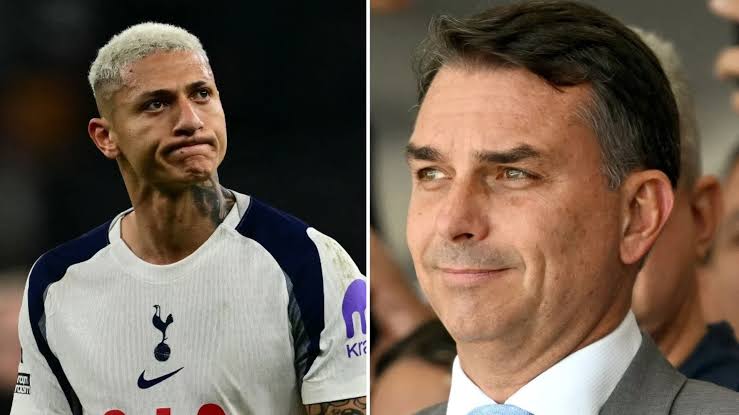
Richarlison island accusations erupted when the Tottenham Hotspur striker posted a video on social media saying Senator Flávio Bolsonaro, the son of former president Jair Bolsonaro, had taken control of his private island off Rio de Janeiro without paying. The 29‑year‑old Brazil international, who bought the property between 2020 and 2021, said he invested roughly 10 million reals, about £1.4 million, in the luxury estate. In the video he repeated that he never agreed to sell the island and now faces a loss he believes is the result of a corrupt court process.
The footballer explained that after he refused repeated offers to sell, Bolsonaro’s allies acted quickly. “Since I refused, these people took advantage of the situation in court. Flávio Bolsonaro and this man, Willer Tomaz, went there and took possession of the island in 24 hours,” he said. Richarlison added that, to his knowledge, the seizure happened without any payment and left him without any return on the ten‑million‑real investment. He urged Brazil’s Federal Police to open a formal investigation and promised that any recovered funds would partly fund a hospital in his hometown.
Senator Flávio Bolsonaro responded on the same platform, labeling the claim as “fake news”. He offered no further details, simply dismissing the footballer’s allegations. Richarlison replied directly to the denial with a brief question: “And my island?” The exchange quickly drew attention from both sports fans and political observers, amplifying an already tense pre‑election atmosphere.
The island in question lies off the coast of Rio de Janeiro, an area known for high‑value beachfront properties that attract wealthy Brazilians and foreign investors. Ownership of such parcels typically involves complex title registrations and, in many cases, lengthy legal procedures to resolve disputes. Richarlison’s claim that a court was used to transfer the land to Bolsonaro’s side in a single day, if true, would raise serious questions about the impartiality of the judicial system and the influence of powerful political families.
Brazil’s electoral calendar adds another layer of significance. The nation is gearing up for a second round of the presidential election, with Flávio Bolsonaro positioned as a key candidate for the ruling coalition. Allegations of property seizure could affect public perception of his integrity, especially as voters scrutinise the conduct of the Bolsonaro family. Opponents have already warned that any hint of corruption could sway undecided voters in a tightly contested race.
Legal experts note that property disputes in Brazil often end up in civil courts, where judges examine documentation, contracts and evidence of payment. If the footballer indeed failed to receive any compensation, a formal complaint to the Federal Police could trigger a criminal investigation into abuse of power, fraud or illegal expropriation. Such cases can take months, sometimes years, to resolve, especially when high‑profile political figures are involved.
Richarlison’s public appeal to the Federal Police reflects a broader trend of athletes using their platforms to address personal grievances and social issues. By linking a potential financial recovery to a charitable donation for a local hospital, he aims to frame the dispute as more than a private loss, casting it as a matter of public interest. This strategy may resonate with ordinary Nigerians and other observers who see sport figures as advocates for community causes.
Meanwhile, the senator’s quick dismissal of the story as “fake news” mirrors a defensive posture frequently adopted by Brazilian politicians when confronted with allegations. The term has become a common retort in the country’s polarized media environment, often used to deflect scrutiny without providing evidence. Whether the claim will be investigated depends on the Federal Police’s assessment of the evidence presented and the political pressure surrounding the upcoming vote.
The incident also show how social media has reshaped the way disputes are aired. A video posted by a football star can instantly reach millions, forcing political figures to respond in the same digital arena. Traditional media outlets are now racing to verify the facts, seek comments from legal representatives and trace the chain of ownership documents that could confirm or refute the accusations.
As the story develops, authorities have not yet confirmed whether an official probe will be launched. The Federal Police typically requires a formal complaint, supporting documentation and a preliminary assessment before opening a case. If they decide to proceed, the investigation could involve forensic accountants, land registry checks and interviews with both parties and any witnesses to the alleged court proceedings.
The next steps will likely hinge on whether Richarlison can produce the paperwork that proves his purchase and the lack of payment from Bolsonaro’s camp. Should the investigation move forward, it may become a focal point in the broader debate over political accountability in Brazil. For now, the footballer remains firm in his demand for justice, while the senator continues to reject the allegations, leaving the public to await the outcome of any official inquiry.


Comments