
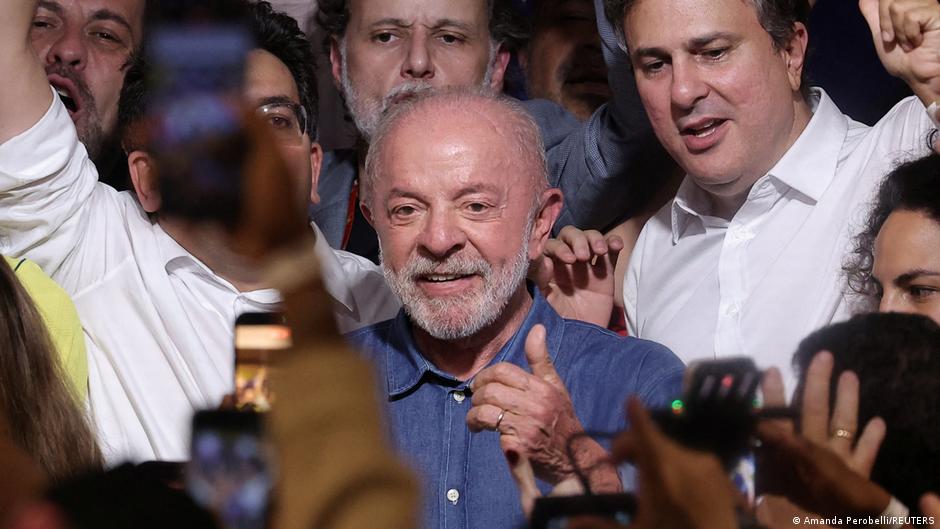
Brazil’s left‑wing incumbent Luiz Inácio Lula da Silva emerged as the winner of the tightly contested presidential runoff held on Sunday, October 25, 2026. Official tallies released by the country’s electoral authorities gave Lula 51.7 % of the vote while his right‑wing opponent, Flávio Bolsonaro, son of former President Jair Bolsonaro, obtained 48.2 %. The result, announced after the Supreme Court extended voting by two hours to address complaints of transport disruptions, hands the 81‑year‑old leader a fourth non‑consecutive term at the nation’s helm.
The final count came after a marathon day at the polls that began at 8 a.m. and was originally set to close at 5 p.m. local time. A last‑minute ruling by the Superior Electoral Court added two extra hours, pushing the closing time to 7 p.m., after President Lula’s team argued that public buses in São Paulo had been withdrawn, effectively barring thousands of voters. Bolsonaro’s camp raised a separate grievance, saying inclement weather in some regions hindered turnout. Both complaints were deemed sufficient to merit the extension, allowing the electoral machinery to process the surge of ballots from the country’s most populous northeastern states, where Lula traditionally enjoys strong support.
Lula’s victory marked a reversal of his first‑round defeat to Bolsonaro, a reversal that pollsters attribute to higher‑than‑expected turnout among poorer voters. In Brazil’s electronic voting system, results can be tabulated within hours, and the president of the Superior Electoral Court, Kassio Nunes Marques, had projected an official announcement between 8.30 p.m. and 9 p.m. on election night. When the numbers were finally certified, the margin of victory, just over three percentage points, show the country’s deep political polarization.
The runoff campaign was dominated by accusations and personal attacks. Bolsonaro’s platform promised closer cooperation with Washington, echoing his father’s alignment with former U.S. President Donald Trump, who has never formally endorsed either candidate but maintains close ties to the Bolsonaro family. Lula, by contrast, framed his bid as a defence against foreign interference, warning that a Bolsonaro win would “govern with the American flag.” After casting his ballot in São Bernardo do Campo, near São Paulo, Lula told reporters that the streets were filled with people defending their gains, and he cautioned against political violence, citing a recent incident where a brick was thrown at a Workers’ Party supporter in Montes Claros.
International observers noted that the election’s outcome will shape Brazil’s foreign policy, particularly its relationship with the United States. While the Trump administration has been seeking to expand its influence across Latin America, Lula has cultivated an anti‑imperialist stance, positioning Brazil as a sovereign actor in global affairs. The new term will likely see the president balancing these competing pressures, especially as the Amazon basin, whose preservation is vital to the planet’s climate, remains a focal point of international concern.
In the diaspora, Brazilian voters in Germany displayed overwhelming support for Lula, delivering 79.09 % of the 20 923 ballots cast at embassies in Berlin, Hamburg, Cologne, Frankfurt and Munich. Berlin alone recorded an 88.77 % share for the incumbent, while Frankfurt gave Bolsonaro his strongest overseas showing at 29.03 %. Turnout among the overseas electorate rose modestly from the first round, though it still represented roughly half of the 41 552 eligible voters abroad. These figures reflect a broader trend of expatriate Brazilians aligning with the left‑wing candidate, mirroring domestic patterns in the country’s poorer regions.
The Supreme Federal Court’s president, Edson Fachin, appealed for calm after the polls closed, urging both candidates to respect the will of the people. “All authority and power comes from the people,” he said, emphasizing the need for peace as Brazil confronts pressing challenges in health, security and the economy. While no formal concession has yet been made, analysts warn that Flávio Bolsonaro could follow his father’s example of refusing to accept defeat, raising the specter of unrest. Security forces remain on high alert in major cities, and the government has called for restraint to avoid any escalation.
Looking ahead, Lula’s administration will inherit a nation still grappling with high crime rates, inflationary pressures and a fragmented Congress. The president’s next steps include forming a cabinet, negotiating with opposition legislators, and outlining his strategy for the Amazon, which faces ongoing deforestation and illegal mining. His foreign‑policy agenda will also involve navigating the United States’ renewed assertiveness in the region, a dynamic that could test his anti‑imperialist credentials.
As the nation processes the runoff results, the immediate focus turns to the formal inauguration, scheduled for early next year. The electoral commission will certify the final numbers, and the president‑elect is expected to address the nation within days, outlining his priorities for the coming term. The coming months will reveal how Brazil’s political system manages this transition and whether the promised stability will translate into concrete policies for its 213 million citizens.
Comments