

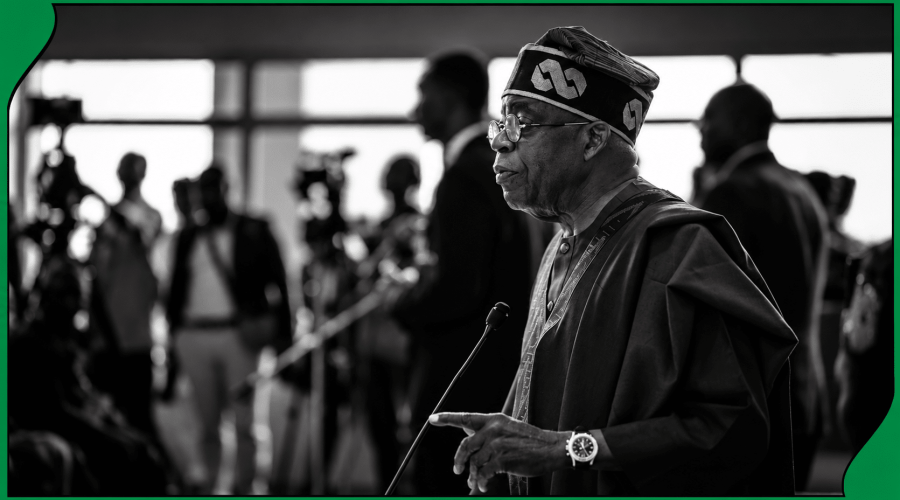
Tinubu criticism erupted on Tuesday after The Economist published a piece suggesting that a growing share of Nigerians harbor dislike for President Bola Ahmed Tinubu. The Presidency, through Special Adviser on Media and Public Communications Sunday Dare, dismissed the foreign magazine’s assessment as “intellectual fraud.” In a forceful statement, Dare argued that the article ignored the severe fiscal challenges Tinubu inherited in May 2023 and used the controversy to showcase a string of reforms the government says have begun to reshape the nation’s economy and social landscape.
Presidential adviser rebukes the magazine
The response, titled “Beyond the Economist Condescension: Nigeria’s Re‑engineering Under Tinubu is Unstoppable,” opened with a direct attack on the publication’s narrative, calling it a “sensationalist half‑truth.” Dare reminded readers that before Tinubu took office the country’s finances were on the brink of collapse, with a fuel‑subsidy regime that drained “trillions” of naira and a debt‑service‑to‑revenue ratio hovering close to 95 percent. He said the magazine’s claim that Nigerians dislike their President “smells of opposition and is riddled with inconsistencies.”
Dare warned that external commentators often examine Nigeria from a “cracked, distorted lens,” a phrase he used to describe the comfortable drawing rooms of foreign publications that, in his view, fail to grasp the “monumental, Herculean task of national salvage” the Tinubu administration has undertaken. He described the suggestion of “widespread citizen despair” as an “intellectual fraud” that overlooks the government’s hard‑line policies aimed at stabilising public finances.
He also stressed that any assessment of Tinubu’s stewardship must start with the “catastrophic baseline” of a broken economic ecosystem on the verge of sovereign bankruptcy. According to Dare, the former president inherited a state where the fuel subsidy had become a “resource‑draining, rent‑seeking” leak, and the foreign‑exchange market operated through multiple distorted windows that encouraged corruption and hampered legitimate business. He said it would be “economically illiterate” to expect those structural cancers to be removed without a period of transitional pain.
Listed achievements under Tinubu
The presidency’s rebuttal then turned to a catalogue of policy moves it attributes to Tinubu’s leadership. The immediate termination of the fuel subsidy, Dare noted, stopped a “bleeding” of national resources and, according to the statement, saved the federation “trillions of naira.” By redirecting those funds, the government says it can now invest in capital projects and pursue fiscal sustainability.
Forex market reforms, another cornerstone of the administration’s agenda, are said to have eliminated the multiple distorted windows that previously allowed arbitrage. The statement claims this rationalisation has encouraged foreign portfolio investment, helped external reserves rebound, and signalled renewed confidence among international investors.
Education also features prominently. The Nigerian Education Loan Fund (NELFUND), the administration argues, now enables “hundreds of thousands of indigent students” to attend university without tuition burdens. Dare pointed to lecture halls across federal and state institutions where “students and relieved parents” are reportedly benefiting from the scheme, using the example to counter the idea of “blind hatred” for the president.
Other reforms highlighted include granting financial autonomy to local governments, an action the statement says brings allocations directly to grassroots communities and reduces bottlenecks at the state level. The national minimum wage has been raised to what the presidency calls a “dignified floor,” a measure intended to cushion low‑income earners against rising prices.
Transport and energy policies were also mentioned. The deployment of compressed natural gas (CNG) buses, the statement asserts, lowers commuting costs for millions of city dwellers, while the broader push for CNG aligns with efforts to diversify Nigeria’s energy mix and reduce dependence on diesel.
In the agricultural sector, the government claims to have laid the groundwork for “genuine national food sovereignty.” Massive fertilizer distributions, agro‑loans, and the provision of thousands of tractors are presented as steps toward revitalising rural economies and increasing domestic food production.
“The upward review of the national minimum wage to a dignified floor, alongside targeted palliatives and the deployment of mass‑transit CNG buses, has cushioned millions against inflationary pressures,” the statement read, underscoring the administration’s view that these measures collectively soften the impact of the reforms on ordinary Nigerians.
Context and reaction
The Economist’s article, which suggested a growing hostility toward the president, quickly sparked a wave of commentary on social media platforms. Critics of the administration have previously warned that removing the fuel subsidy and tightening foreign‑exchange controls could cause short‑term pain for households, especially those reliant on subsidised fuel and stable exchange rates for imports.
Dare’s rebuttal acknowledges “transitional pain” but frames it as a necessary price for “structural surgery” that will ultimately stabilise the economy. He argued that the everyday experiences of students benefiting from NELFUND, commuters using cheaper CNG buses, and farmers receiving inputs contradict the notion of “widespread citizen despair.”
While the presidency has not announced any legal action against The Economist, the strong language used by Dare, describing the magazine’s piece as “intellectual fraud”, signals a willingness to challenge foreign narratives it deems inaccurate. The statement suggests that the administration will continue to communicate its reform agenda both domestically and abroad, seeking to shape public perception and reassure investors.
As the government monitors the reaction to its policies, the next step appears to be a sustained outreach effort, using official statements, town‑hall meetings and media appearances to reinforce the message that the Tinubu administration is committed to “un‑stoppable” re‑engineering of the Nigerian economy. Further statements are expected in the coming weeks as the presidency tracks public sentiment and the impact of its reform programme.




Comments
No comments yet. Be the first to share your thoughts!