
BBC journalist recounts minister encounter at party conference
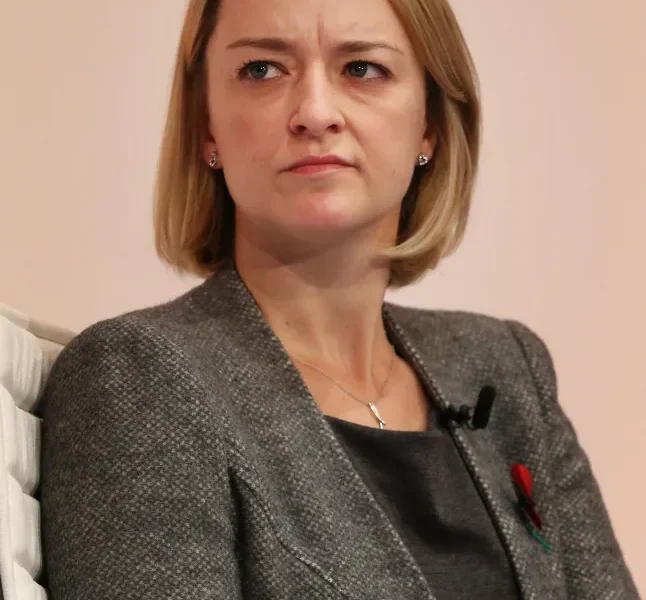
Laura Kuenssberg, the former BBC political editor, has spoken publicly about a disturbing minister encounter that occurred during a recent party conference. In her new memoir Pay Attention, the 50‑year‑old journalist describes walking into a hotel room expecting a routine interview with a minister and his adviser, only to find the politician lying on a bed with his wife. Kuenssberg says the surprise left her feeling “very uncomfortable” and has sparked a broader conversation about the treatment of junior staff in the capital.
The episode took place in a hotel that hosted the party’s annual conference, a setting where politicians and media personnel normally mingle in formal settings. Kuenssberg wrote that she arrived with a clear agenda: to discuss policy matters with the minister and to gain insight for upcoming coverage. Instead, the room’s atmosphere was intimate, and the couple’s presence on the bed was unexpected. When asked whether the pair might have been arranging a threesome, Kuenssberg admitted she could not read their intentions, noting “maybe they were and maybe they weren’t” and that she “got it completely wrong.”
In the same memoir, Kuenssberg recounts another unsettling meeting with a different married minister. That encounter began with a scheduled coffee to talk about work, but the politician later invited her to the theatre and reportedly suggested “a little grope.” The journalist says the comment crossed a professional boundary and contributed to her decision to cease communication with the individual. She also mentions other instances where politicians greeted her with kisses on the forehead or sent messages commenting on her clothing, actions she describes as inappropriate.
Kuenssberg’s revelations were first reported in The Times, where she acknowledged that “people do things. And human behaviour is a complicated thing, and sometimes people behave badly.” She did not name the ministers involved, citing concerns about privacy and potential legal ramifications. The former political editor emphasized that the incidents are part of a pattern she observed, rather than isolated missteps, and that they underline a lingering vulnerability among newcomers to Westminster’s fast‑paced environment.
The former BBC News political editor served in the role from 2015 to 2022, becoming the first woman to hold the post. Since stepping down, she has hosted the programme Sunday with Laura Kuenssberg, continuing to shape political discourse from a different angle. Her decision to publish these accounts comes at a time when the media industry is grappling with questions of power dynamics, consent, and workplace safety. By sharing her experiences, Kuenssberg hopes to bring attention to the subtle ways in which authority can be misused, especially against those who are still building their careers.
Political insiders say that the culture of informal networking at conferences can sometimes blur professional lines. While some journalists view such encounters as harmless camaraderie, others argue that they create an environment where young reporters may feel pressured to tolerate unwanted advances. The BBC has previously issued guidelines on appropriate conduct between its staff and elected officials, yet Kuenssberg’s account suggests that enforcement of those rules remains uneven.
Advocates for press freedom have welcomed Kuenssberg’s openness, noting that her high profile lends weight to calls for clearer protections. Organizations that monitor workplace harassment argue that the media sector needs stronger mechanisms for reporting and addressing misconduct without fear of retaliation. They point to the fact that Kuenssberg, despite her senior status, felt compelled to stop communicating with certain politicians after these incidents, highlighting the power imbalance that can exist even between seasoned journalists and elected officials.
Critics, however, caution against drawing sweeping conclusions from a single memoir. Some commentators argue that personal anecdotes, while compelling, may not reflect the broader experience of all journalists covering Westminster. They stress the importance of distinguishing between isolated lapses in judgment and systemic issues that require institutional reform. Nonetheless, the conversation sparked by Kuenssberg’s statements appears to have resonated across political and media circles alike.
The BBC’s corporate communications department declined to comment on the specifics of Kuenssberg’s memoir, reiterating the organization’s commitment to a safe working environment for its staff. In past statements, the corporation has emphasized its zero‑tolerance policy for harassment and has outlined channels through which employees can report concerns confidentially. Whether those procedures will be revisited in light of the new allegations remains to be seen.
Meanwhile, members of the political party whose conference hosted the uncomfortable meeting have not publicly responded to Kuenssberg’s allegations. Party officials typically avoid commenting on individual incidents involving their members, instead focusing on broader initiatives aimed at improving conduct. Observers note that the timing of the memoir’s release, just months before the next general election, could place additional pressure on parties to demonstrate a commitment to respectful interactions with the press.
In the wider context of Westminster, the issue of journalist vulnerability has been raised repeatedly in recent years. Several high‑profile inquiries have examined the relationship between lawmakers and the media, seeking to balance access with accountability. Kuenssberg’s account adds another layer to that ongoing debate, suggesting that informal social settings, such as conference hotels or theatre outings, may present unique challenges for maintaining professional boundaries.
As the story circulates, the BBC has signaled that it will monitor the reaction to Kuenssberg’s book and assess whether any policy revisions are warranted. The network’s editorial board is expected to convene later this month to discuss the implications of the memoir for future reporting protocols. Kuenssberg herself has indicated she will continue to advocate for safer working conditions, though she stopped short of outlining specific reforms she would like to see enacted.
The next step for stakeholders will likely involve a careful review of existing guidelines and possibly the introduction of new training modules aimed at preventing similar uncomfortable encounters. Whether these measures will translate into tangible change for young journalists navigating Westminster’s corridors remains an open question, but the heightened awareness generated by Kuenssberg’s revelations suggests that the conversation will not fade quickly.

Reporter at 03naija.com.








Join the conversation