
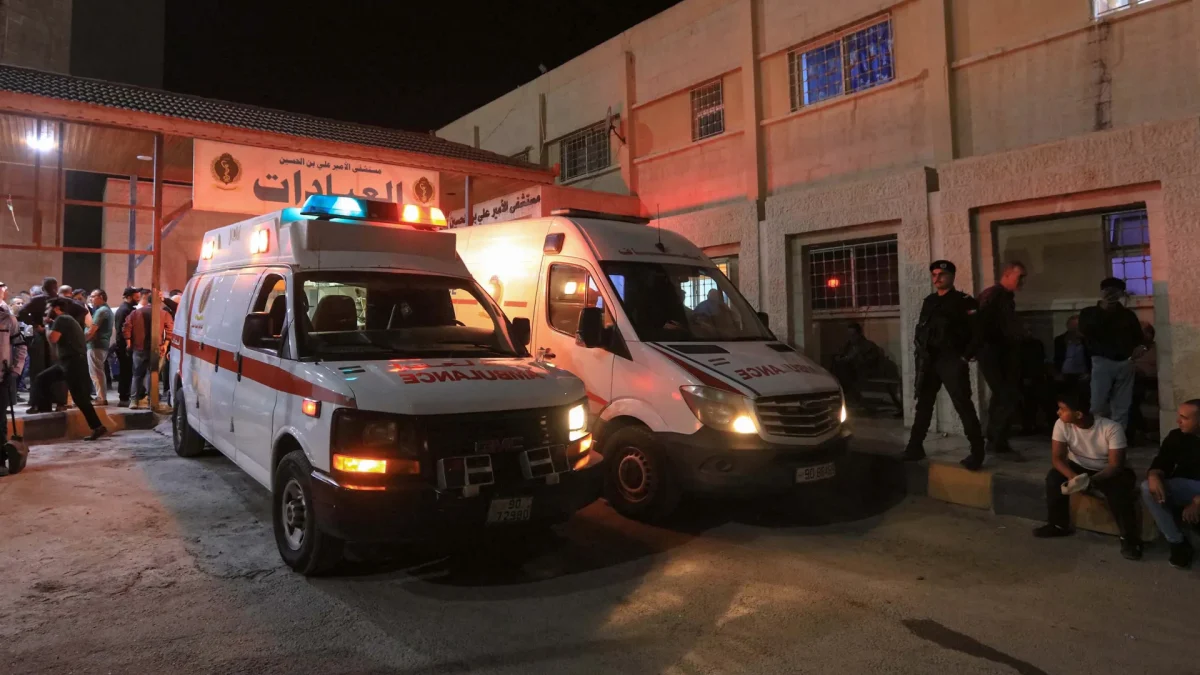
The Jordanian armed forces launched a series of air strikes on Syrian territory on Monday, saying the raids were aimed at “hideouts” of armed groups in the southeast of the country. The operation was presented as a direct response to the gun attack on a Greek‑Orthodox church in Jordan’s Karak governorate that left nine dead and dozens wounded on Friday.
Jordan’s military statement said the strikes were carried out “in coordination with the Syrian government” and were intended to inflict “the killing and wounding of many members of these terrorist groups and the destruction of a number of their vehicles”. Syrian authorities, however, rejected the claim of coordination. In a separate statement the Syrian government said the operation was conducted without prior notification and that an investigation had been opened into the incident.
According to Syria’s civil defence service, four locations in the rural provinces of Deraa and Suweyda were hit during the evening raids. Crews recovered seven bodies, three men, a woman and three children. Five of the dead, a man, a woman and three children, belonged to the same family that had taken shelter in a tent in the village of Al Tai in Deraa Province. The strike struck the makeshift shelter, killing the family members and wounding three other relatives, including a child.
The second strike hit the village of Al Shayyah, also in Deraa, where an 80‑year‑old man was killed. A third raid targeted a residential building in Muzayrib, in the Ain al‑Basal area of Deraa, but caused no casualties. The fourth strike hit a residential building in the town of Shahba in Suweyda province, killing a 60‑year‑old man. Syrian officials added that several vehicles believed to belong to the groups they say operate in the area were also damaged.
In the wake of the attacks, Syrian border authorities shut the Nassib crossing, the sole passenger and commercial gateway between the two neighbours. The closure suspended traffic in both directions, halting the flow of goods and the daily movement of families who rely on the crossing for trade, work and visits. The move highlights the fragility of the already strained Jordan‑Syria relationship, which has been under pressure since the outbreak of the Syrian conflict more than a decade ago. The two countries have long shared a porous frontier, and the Nassib crossing has traditionally been a lifeline for communities on both sides of the border.
Jordan’s response to the church shooting went beyond the aerial strikes. Earlier on Monday, security forces conducted a dawn raid in the village of Al‑Jadeeda, near the Jordanian‑Syrian frontier. The operation resulted in the arrest of two brothers and their brother‑in‑law on suspicion of involvement in the Karak attack. According to a Jordanian government source, the three suspects were seriously injured during a three‑hour shootout with the troops. The arrests came after King Abdullah II pledged a “stern response” and warned that those responsible would face the harshest penalties.
The church attack itself took place in Karak, a town about 56 miles south of Amman that is home to a minority Christian community of roughly 300,000 people, part of Jordan’s 11.5 million population. Three gunmen opened fire on mourners gathered for a funeral at the Greek‑Orthodox church, killing nine and wounding dozens. The incident sparked nationwide outrage and revived concerns about sectarian violence in a country that has generally been praised for its religious tolerance.
Jordan’s security crackdown, which now includes both ground arrests and cross‑border strikes, reflects the kingdom’s broader strategy of preventing the spill‑over of the Syrian war into its own territory. Since 2011, Jordan has hosted large numbers of Syrian refugees and has been vigilant about militant infiltration. The decision to carry out air strikes, despite Syrian denial of coordination, signals a willingness to act militarily when the kingdom perceives a direct threat to its citizens.
Syria’s decision to close the Nassib crossing is likely to have immediate economic repercussions. The crossing handles a significant share of Jordanian imports of Syrian agricultural products and the export of Jordanian goods such as cement and fertilizers. For families on both sides, the closure interrupts regular visits and the transport of remittances that many rely on. The suspension also adds pressure on Jordan’s already stretched budget, which has been supporting refugee assistance and heightened security measures.
Both governments have said they will use diplomatic channels to manage the fallout. Jordan has not announced any further military action, while Syrian officials continue their investigation into the strikes. In the short term, the priority for humanitarian agencies is to provide assistance to the families of the victims, especially the children who lost parents in the Al Tai tent strike.
The episode show how a single act of violence can quickly expand into a broader regional confrontation, drawing in state actors and affecting ordinary people far beyond the initial flashpoint. As the border remains closed and investigations proceed, the next steps will likely involve negotiations over the reopening of Nassib and possible talks on preventing further escalations.


Comments