
Fibre Cuts Strain Nigeria’s Digital Growth, Who Bears the Cost?
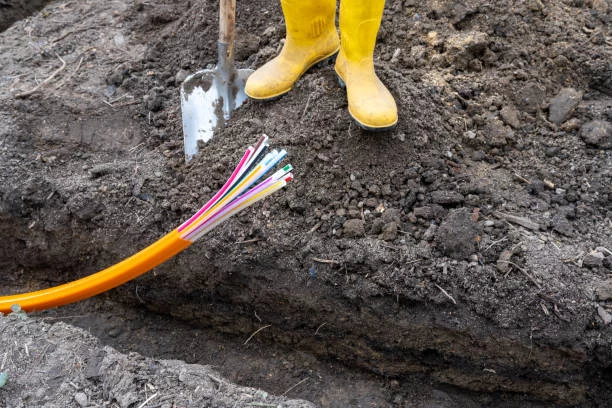
The rapid rise in fibre cuts across Nigeria has reignited the debate over who ultimately foots the bill for these disruptions, a question that resurfaced even after President Bola Tinubu signed the 2024 Designation and Protection of Critical National Information Infrastructure (CNII) Order. The executive order was meant to protect telecommunications assets, including fibre lines, base stations and data centres, by classifying them as vital national security installations and by imposing tougher penalties on vandalism and uncoordinated construction. Yet the data show that the problem has intensified, with operators spending billions of naira on emergency repairs rather than on expanding networks.
Before the CNII Order took effect, MTN Nigeria logged more than 6,000 fibre cuts in 2023, an average of roughly 16‑17 severed lines each day. After the order, the telco recorded 5,478 cuts between January and July 2025, pushing its daily average above 26. The broader telecoms sector fared no better. From January to August 2025, industry reports tallied 19,384 cuts, a daily average of 80, and in the first nine months of 2026 the figure surged to over 44,000, more than 160 cuts each day. Uncoordinated road construction, ditch digging and outright theft remain the chief culprits.
Financially, the impact is stark. Direct repair costs for 5,934 incidents in the first half of 2026 exceeded ₦2.2 billion ($1.64 million). That sum chips away at the ₦2.13 trillion ($1.58 billion) capital expenditure that network and tower firms have earmarked for new rollouts. Historical figures from the GSMA Nigeria Digital Economy Report reveal that MTN spent ₦11.1 billion ($8.26 million) fixing and relocating 2,502 km of fibre in 2022‑2023, funds that could have financed 870 km of new greenfield fibre in underserved areas. Across the sector, 2023 losses from repairs and lost revenue were estimated at ₦27 billion ($20.08 million).
The economic stakes extend beyond telecom operators. The ICT sector contributed over ₦6 trillion ($4.46 billion) to real output in the second quarter of 2026, with telecoms alone accounting for 9.72 % of total GDP. Each severed cable therefore reduces national output, not merely causing a temporary glitch. The fallout also threatens financial stability: the Nigeria Inter‑Bank Settlement System processed more than ₦1.053 quadrillion ($783.2 billion) in transactions in the first quarter of 2026, while millions of daily mobile‑money payments rely on uninterrupted backhaul links. When fibre is cut, base stations lose connectivity to core data centres, leading to dropped calls, slowed data speeds and service outages that ripple through banks, merchants and ordinary subscribers.
The CNII Order gives the Office of the National Security Adviser and the Nigeria Security and Civil Defence Corps legal authority to monitor and protect critical digital infrastructure. However, enforcement gaps have hampered its effectiveness. Aminu Maida, Executive Vice Chairman of the Nigerian Communications Commission, warned in August 2026 that “our interests are aligned; what has too often been missing is a dependable system of early coordination.” He noted that the NSCDC, with about 63,000 personnel spread across 774 local government areas, cannot feasibly guard thousands of kilometres of buried fibre. Limited manpower, combined with inadequate surveillance resources, means that legal protections remain largely symbolic unless offenders are swiftly prosecuted.
The persistent fibre cuts have also fed into broader consumer grievances. The NCC’s recent tariff revision allowed operators to raise prices by up to 50 % to offset soaring operational costs. When operators divert revenue to repair work, network optimisation stalls, prompting users to bear the burden through higher bills and degraded service quality. Enterprises face additional losses as payment gateways collapse, staff productivity drops and cloud services experience downtime.
Underlying these challenges is a wider infrastructure context. African operators, on average, hold less spectrum below 7 GHz than global peers and pay higher per‑unit costs. Higher spectrum prices compress operators’ margins, making it harder to invest in the robust underground cabling that 5G networks demand. Robust fibre backhaul is essential for banking apps, POS machines and online money transfers to function instantly; any interruption can therefore reverberate through the financial system.
Why has the CNII Order not solved the problem? The NCC acknowledged the continuing challenge of stakeholder coordination in its August 2026 intervention, stressing that “what has too often been missing is a dependable system of early coordination.” Effective coordination requires that construction firms, civil engineers and telecom providers share plans before digging. Without a reliable early‑warning mechanism, contractors often encounter buried cables unknowingly, leading to accidental cuts. Even where coordination exists, deliberate theft still occurs, driven by the resale value of copper and fibre components.
Looking ahead, the government’s success with the CNII Order will be measured by tangible outcomes: fewer cuts, faster remediation and reduced repair expenses. Industry observers argue that without strengthened coordination among construction firms, civil engineers and telecom providers, the cycle of damage will continue. Regulators say the next step is to improve early‑warning mechanisms and allocate more resources to the NSCDC for static protection of buried infrastructure. Enhancing surveillance technology, expanding the corps’ footprint in high‑risk zones and ensuring swift prosecution of offenders are also on the agenda.
Until those measures take effect, operators are likely to keep burning capital on repeated repairs, leaving the digital economy, and the consumers who depend on it, exposed to ongoing risk. The looming question remains: will future policy and enforcement actions finally curb the tide of fibre cuts, or will the cost of inaction continue to be shouldered by Nigeria’s telecoms and its citizens?











Join the conversation