
Armed thugs who attacked Sowore must be arrested, says Falana
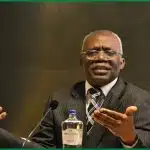
The senior advocate of Nigeria, Femi Falana, has called on the Ekiti State police to move quickly against the armed thugs who attacked AAC presidential candidate Omoyele Sowore in Ado‑Ekiti. Falana’s demand comes after Sowore’s own account of the assault, in which he alleged that the men were linked to the Ekiti Government House and enjoyed the backing of the Department of State Services (DSS). The incident, which unfolded on a Friday, has sparked a heated exchange between the candidate, security officials and civil society lawyers.
Sowore, who was campaigning in the southern state ahead of the upcoming presidential election, posted photographs on his social media showing himself and an aide lying on hospital beds. In his post he claimed the attackers emerged from the government house compound and that the DSS, Nigeria’s internal security agency, had facilitated the assault. The candidate’s narrative painted a picture of a politically motivated ambush designed to intimidate opposition voices ahead of the election. He did not, however, provide any formal police report or notification of his itinerary to the security agencies operating in Ekiti.
The Ekiti Police Command, responding to the allegations, said Sowore failed to inform security operatives of his arrival and movements within the state. According to the police, such a notification would have enabled them to arrange proper protection and possibly prevent the confrontation. The command’s statement did not address the claim that the attackers were government‑linked, but it highlighted procedural lapses on the part of the candidate’s campaign team.
In a statement issued on Sunday, Falana condemned the alleged involvement of well‑known thugs in the attack and demanded immediate legal action. “Since the armed thugs who attacked Mr. Omoyele Sowore are well known, the Ekiti State police command should arrest and arraign them in the Magistrate Court at Ado‑Ekiti without any further delay,” he wrote. Falana’s appeal show the broader concern among rights lawyers that politically motivated violence is being tolerated, especially when the perpetrators enjoy connections to state structures.
Falana also seized the moment to raise another unresolved case in the state. He referenced the murder of 45‑year‑old Sunday Ogunsakin, a case that has lingered without a final verdict. The senior advocate urged the Ekiti Ministry of Justice to take over the investigation and to charge the two suspects already detained, Rotimi Olabiowonu, a former chairman of the Road Transport Employers Association of Nigeria (RTEAN), and Opeyemi Adedoyin, at the High Court for murder. By linking the two incidents, Falana signaled a broader pattern of perceived impunity for violent acts in Ekiti.
The background to Sowore’s complaint is rooted in a tense political atmosphere. The African Action Congress, a relatively new party, has been positioning itself as a challenger to the dominant parties in the 2023 election cycle. Sowore, a former journalist and activist, has previously faced arrests and harassment, most notably a high‑profile detention by the DSS in 2019 over alleged treason charges. His claim that the DSS assisted the attackers therefore resonated with a segment of the public that views the security apparatus as a tool for political suppression.
Ekiti State, meanwhile, has a history of sporadic political violence, especially during election periods. Observers note that the state’s security forces have at times been accused of partiality, which fuels distrust among opposition candidates. The police’s insistence that Sowore’s team failed to notify them of his movements could be seen as an attempt to shift responsibility away from any lapses in state protection.
Reaction from civil society groups has been cautious. While they have not issued formal statements, several human‑rights NGOs have called for an independent inquiry into the alleged involvement of the DSS. The call for an impartial investigation aligns with broader demands across Nigeria for reforms in the security sector, particularly concerning the handling of political dissent.
For Sowore, the immediate concern remains his health and the safety of his campaign team. The hospital images he shared suggest he sustained injuries serious enough to require medical attention, though details of the injuries have not been disclosed. His campaign has not announced whether he will continue his tour of the southern states, but the incident may force a reassessment of security protocols for upcoming rallies.
The Ekiti State police have not yet indicated whether they intend to act on Falana’s demand. No arrests have been reported as of the latest update, and the police have not commented on the alleged involvement of the DSS. The Ministry of Justice, which Falana urged to intervene in the Ogunsakin murder case, also remains silent on the matter. The lack of a swift response could fuel further criticism from opposition figures who argue that the state is slow to address violence against political opponents.
Legal experts point out that, under Nigerian law, any individual accused of assault can be detained and arraigned if sufficient evidence is presented. However, the burden of proof lies with the complainant, and without a formal police report or corroborating witnesses, the case may face procedural hurdles. Falana’s emphasis on the “well‑known” nature of the thugs suggests that he believes the identities of the perpetrators are already documented, perhaps in previous investigations or intelligence reports.
As the nation heads toward a crucial election, the episode adds another layer to the already volatile security landscape. Stakeholders across the political spectrum will be watching closely to see whether the Ekiti police will act on the senior advocate’s call, and whether the DSS will be compelled to clarify its role. The outcome could set a precedent for how alleged politically motivated attacks are handled in the run‑up to the polls.
The next step appears to be a formal request from Falana’s office to the police, potentially followed by a petition to the courts if no arrests are made. Meanwhile, Sowore’s campaign may need to adjust its security arrangements, and opposition parties are likely to demand greater transparency from the security agencies to restore public confidence ahead of the vote.






Join the conversation