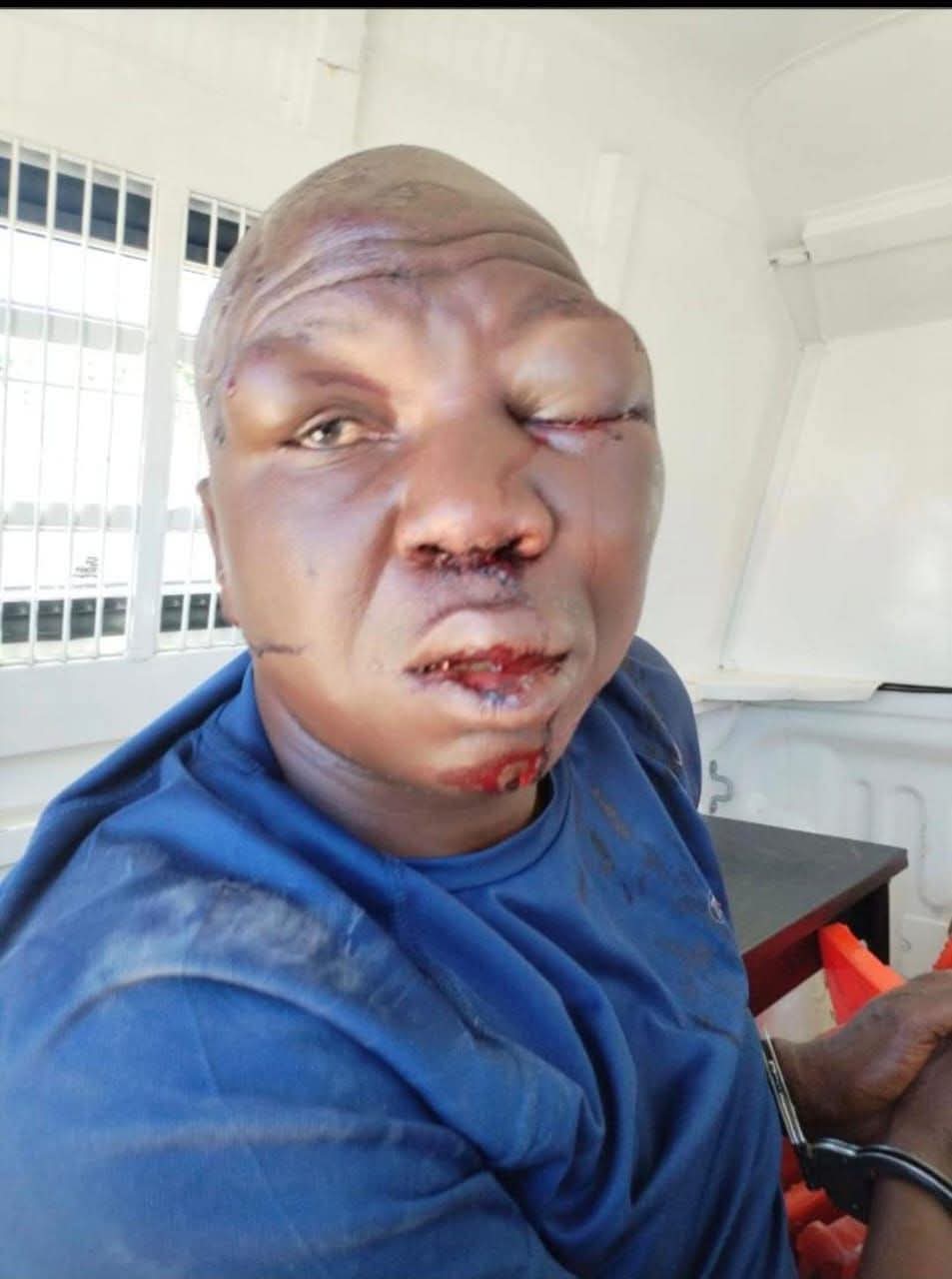
Disturbing images and video footage of a suspected vehicle hijacker left severely battered and barely recognisable after being set upon by an angry mob have begun circulating across Nigerian social media platforms, reigniting one of the country’s most persistent and painful debates — the phenomenon of jungle justice and the dangerous consequences of law enforcement gaps that continue to fuel it.
The incident, the exact location of which has not been independently verified at the time of this report, reportedly unfolded after the suspect was apprehended by members of the public following an alleged attempt to hijack a vehicle. Eyewitness accounts suggest that once word spread through the area that a hijacker had been caught, a crowd gathered quickly and took matters decisively into their own hands before any security personnel could arrive to take the individual into lawful custody.
The images that emerged from the scene show a man whose face and body bear the unmistakable marks of a severe and sustained beating. Those who viewed the footage described it as deeply unsettling, with many noting that the individual was rendered almost completely unrecognisable — a phrase that in this context carries a weight far heavier than its literal meaning. Whether the man survived the ordeal or received any medical attention in the aftermath remains unclear from the information currently available.
Reactions online have been, as is almost always the case with such incidents in Nigeria, bitterly divided. One camp, drawing from a place of deep frustration with rising vehicle theft, kidnapping, and violent crime across the country, expressed little sympathy for the suspect. For many Nigerians who have personally experienced or know someone who has fallen victim to car hijacking — a crime that frequently involves weapons and can turn fatal for victims — the mob’s response, however brutal, is seen as an understandable expression of a community pushed beyond its limits by a justice system that too often fails to deliver consequences.
“When the law doesn’t protect you, people will protect themselves,” one commenter wrote, capturing a sentiment that resonated strongly in the replies. Stories of suspected criminals being arrested, processed through the courts, and released back into communities far too quickly — or simply escaping accountability altogether due to corruption and systemic failure — were shared liberally, each one offered as context for why ordinary people sometimes feel that physical retribution is the only language that works.
The opposing view, voiced equally strongly by human rights advocates, lawyers, and civil society voices, was unambiguous in its condemnation. No accusation, they argued — however credible it may appear in the heat of a moment — justifies bypassing the legal process and inflicting potentially fatal violence on another human being. The word “suspected” is not incidental; it is the entire point. Mob justice operates without investigation, without evidence, without the possibility of innocence. Innocent people have been beaten to death in Nigeria over mistaken identity, false accusations, and personal vendettas dressed up as community outrage.
Amnesty International and local human rights organisations have documented numerous cases of mob violence in Nigeria resulting in death, many of which later revealed that the victim had committed no crime at all. The emotional momentum of a crowd, once it reaches a certain threshold, does not pause to verify facts — and by the time the truth emerges, it is often too late for the person at the centre of it.
Beyond the immediate moral question lies a structural one that Nigeria has struggled to answer for decades. Mob justice does not thrive in a vacuum. It thrives precisely where formal institutions of law and order have failed to inspire confidence — where police response times are slow, where prosecution rates are low, where bail is easily obtained, and where victims feel that reporting crimes is a process that costs them more than it delivers. Until those structural failures are meaningfully addressed, the cycle of community violence will continue, each incident feeding both outrage and a grim sense of inevitability.
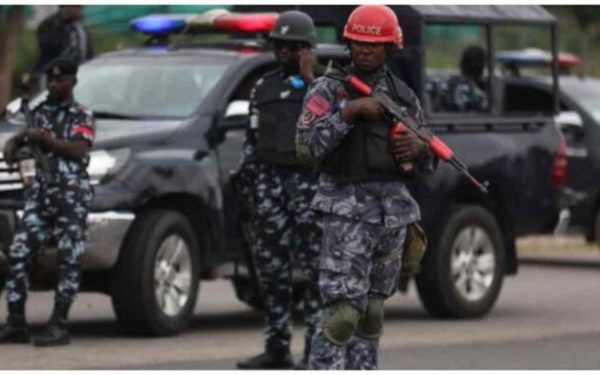
The Nigerian Police Force has not yet issued a statement regarding this specific incident. No charges have been confirmed, and the condition of the suspect remains unknown.
What the images leave behind, regardless of what the man did or did not do, is a haunting question that Nigerian society must eventually sit with long enough to answer honestly: at what point does the pursuit of justice become something else entirely — and who decides when that line has been crossed?