





“My Clock Is Ticking” — 37-Year-Old Single Nigerian Woman’s Emotional Cry for Love Sparks Massive Online Debate
A 37-year-old Nigerian woman's emotional post about being unmarried and feeling like her clock is ticking has gone viral, sparking a massive debate about love, age, and marriage pressure in Nigeria. Read the full story.

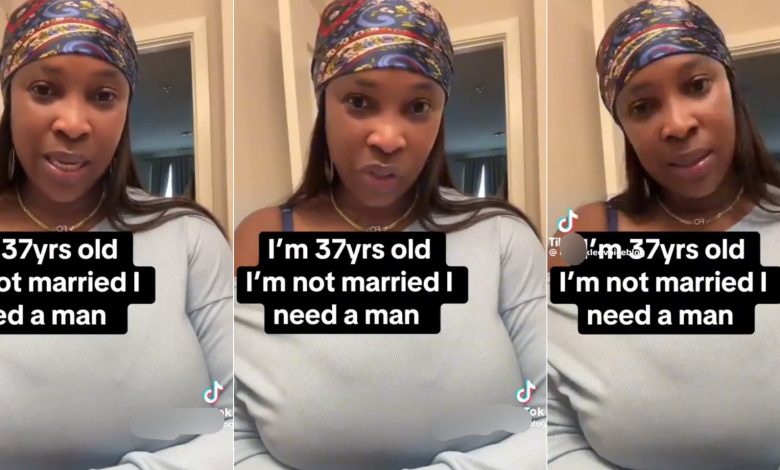
A Nigerian woman has poured her heart out on social media in a moment of raw vulnerability, revealing that at 37 years old she remains unmarried and is increasingly gripped by the fear that time is running out for her to find a partner, start a family, and build the life she has always envisioned for herself. Her words, brief but heavy with emotion, have struck a nerve across the country and set off one of the most passionately contested conversations Nigerian social media has seen in recent weeks.
“I’m 37 years old, and unmarried. I think my clock is ticking. I need a man,” she wrote — and in those few sentences, she managed to say what millions of Nigerian women her age feel but rarely say out loud, at least not in public. The post spread rapidly, not because it was dramatic or sensational, but because it was honest in a way that cuts through the noise. For every woman who has sat across a dining table at a family gathering and deflected questions about marriage with a rehearsed smile, her words felt like someone finally choosing truth over performance.
The reactions came in waves. The first and most overwhelming was one of solidarity. Women from across the country flooded the comment sections with messages of identification, many sharing their own stories of navigating the suffocating social pressure that Nigerian society places on women to be married by a certain age. The unofficial deadline — invisible but universally understood — has long hovered somewhere in the late twenties, and every year beyond it tends to bring a fresh round of questions, unsolicited advice, and the particularly Nigerian brand of spiritual warfare that involves entire prayer circles dedicated to the problem of a woman’s single status.

“You are not alone,” became a rallying phrase in the replies. Stories poured in — of women who had prioritised education and career only to find that the years had moved faster than they expected, of women who had walked away from relationships that were not right for them and were now quietly questioning that decision, and of women who were simply waiting for a love that felt real and had not yet found it. Their collective presence in that comment section transformed one woman’s cry into something larger: a community exhale.
But the conversation did not stay in that register for long. A second wave of responses brought a sharper, more complicated energy. Relationship commentators, therapists, and self-development voices urged the woman to examine whether the pressure she was feeling was genuinely her own desire or the internalised expectations of a society that has historically defined a woman’s worth almost entirely through her marital status. They drew a distinction between genuinely wanting a partner and wanting marriage because the clock the world has set for you says it is past due.
“There is a difference between wanting love and wanting to escape the shame of being seen as unmarried,” one widely shared response read. “Figure out which one is driving you before you make a decision you will spend the next thirty years living with.”
That observation opened up yet another strand of debate — about biological reality, about whether the concept of a ticking clock is cultural mythology or medical fact, and about the degree to which women are uniquely burdened by timelines that men rarely face with the same intensity. A 37-year-old man in Nigeria announcing that he needs a woman tends not to generate the same quality of public anguish or the same urgency of communal response. The asymmetry did not go unnoticed.
Fertility specialists and medical professionals who weighed in offered a more nuanced picture than the all-or-nothing narrative that often surrounds female age and reproduction. While it is medically accurate that fertility declines with age and that certain risks increase for older mothers, the timeline is more individual than the cultural panic around it suggests. Many women have healthy pregnancies well into their forties, and advances in reproductive medicine have expanded options that previous generations did not have access to. The medical facts, in other words, are real but are frequently used to stoke an anxiety that goes beyond anything the biology alone would justify.
What this woman’s post has laid bare, perhaps more clearly than any think-piece or television segment could, is the quiet internal war that many Nigerian women in their thirties are fighting simultaneously — between their own authentic desires and the desires the world has scripted for them, between the fear of ending up alone and the fear of settling, between self-worth and social acceptance.
At 37, she is not running out of time. But she is living in a society that has spent her entire life telling her she is. And sometimes, the loudest voice in the room is the one that has been telling you the same thing since you were old enough to be a bridesmaid.
Watch video below….
“I’m 37 years old, I’m not married ,
I think my clock is ticking, I need a man” pic.twitter.com/xb9lxN0gWQAdvertisement— 𝑻𝑯𝑬 𝑮𝑬𝑵𝑬𝑹𝑨𝑳 𝑺𝑵𝑶𝑾 🇨🇮 (@GeneralSnow_) March 15, 2026