
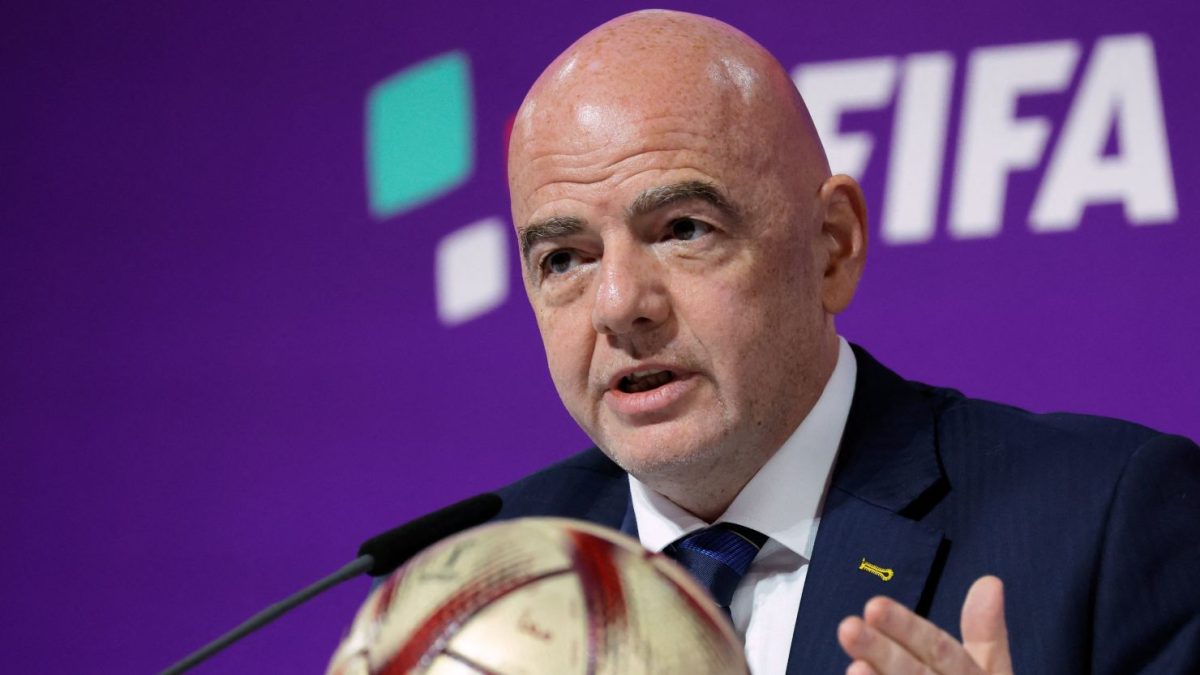
FIFA has announced a plan to increase its development budget by $3.4 billion (£2.6 billion), a move that would more than double the funds earmarked for the 2027‑2030 cycle. The additional money, drawn from the organisation’s reserves, is slated to bring the total development pool to $6.35 billion (₦8.46 trillion), according to a statement released ahead of a council meeting on Thursday. The proposal, which targets women’s and youth football, infrastructure upgrades and a range of development projects, will be discussed by FIFA’s council before a final decision is taken at the 77th FIFA Congress in March 2027.
If the plan is approved, each of FIFA’s 211 member associations would receive a base allocation of $25 million (£19 million). The six continental confederations, UEFA, CONMEBOL, CONCACAF, CAF, AFC and OFC, would each be granted $99 million (£75 million). In addition, the 13 zonal and regional bodies would obtain $8.25 million (£6.3 million) apiece, while a further 100 member associations would qualify for an extra $1.1 million (£836,000) earmarked for travel and equipment support. The funding would be divided into three equal parts: one third for women’s and youth football development, one third for infrastructure that provides equal access for those groups, and the remaining third for broader development projects.
The governing body attributes the extra cash to the commercial success of the recent summer World Cup, which generated record revenues and strengthened FIFA’s financial position. By tapping into its reserves, the organisation hopes to channel the windfall into grassroots programmes that can sustain the sport’s growth across diverse markets. The proposal also outlines a detailed framework covering eligibility criteria, application procedures, approval processes, disbursement mechanisms, and monitoring and auditing requirements. This structure is intended to ensure transparency and accountability as the funds are distributed over the three‑year period.
The move comes after a period of criticism surrounding President Gianni Infantino’s earlier “FIFA Forward Enterprise” plan, which aimed to sell stakes in the World Cup and other competitions to private investors. UEFA, CONCACAF and the Asian Football Confederation had publicly questioned the commercial‑focused approach, arguing that the sport’s development needed more direct investment. In September, UEFA and CONCACAF wrote to Infantino urging the governing body to allocate at least $10 million (£7.5 million) from its reserves to each member association. In response, Infantino sent a letter to the six continental confederations pledging to deliver “the greatest level of additional funding that can responsibly be delivered”.
Supporters of the new funding scheme argue that the increased allocations will address long‑standing gaps in women’s and youth programmes, especially in regions where financial constraints have limited participation. The earmarked infrastructure portion is expected to fund the construction and refurbishment of training facilities, pitches and community centres that meet gender‑inclusive standards. For many smaller associations, the $1.1 million travel and equipment grant could be the difference between fielding a team in regional tournaments and remaining inactive.
Critics, however, caution that the reliance on reserves may set a precedent that could strain FIFA’s financial stability if future tournaments underperform. They also point out that the distribution formula, while generous on paper, may still leave some nations with insufficient resources to meet the stipulated eligibility criteria. The forthcoming council meeting on Thursday will be the first formal test of the proposal’s viability, as members will debate the balance between ambition and fiscal prudence.
The next step after the council’s deliberations is a detailed review scheduled for December 2026, when the funding framework is expected to be finalised. Assuming the council endorses the plan, it will then move to the 77th FIFA Congress in March 2027, where delegates from all member associations will vote on the package. That congress will also see Infantino standing for a fourth term as president, a contest that could influence the final shape of the development budget.
For national associations, the potential approval of the $3.4 billion boost signals a period of heightened investment that could transform local football ecosystems. Associations are already preparing applications, outlining projects that range from grassroots coaching clinics to the construction of all‑weather pitches in remote communities. If the funds are released as outlined, the impact could be felt across the continent, from increased participation among girls in West Africa to improved youth academies in Southeast Asia.
The council’s decision on Thursday will therefore set the tone for how FIFA translates the commercial success of the World Cup into tangible benefits for its global membership. As the sport continues to expand its reach, the allocation of these resources will be closely watched by stakeholders eager to see whether the promised “greatest level of additional funding” materialises in concrete development outcomes.



Comments